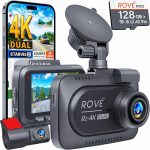
Behind the rearview mirror is the best spot – this dash cam mounting position gives you the clearest view while staying out of your way. It’s the sweet spot for safety and video quality.
I’ve tested a lot of spots in my car over the years. Some places block your view. Others make the video useless. Getting this right matters a lot for your safety and for proof if something happens.
Think about your own car for a second. Where would you stick a small camera? The windshield is big, but not every inch of it works well. You need to think about the law, your sight lines, and what you want to record.
Why Your Dash Cam Mounting Position Matters So Much
Here’s the deal. Where you put your camera changes everything. It’s not just about sticking it anywhere it fits.
A bad dash cam mounting position can block your view of the road. That’s dangerous and might even get you a ticket. You need to see traffic, pedestrians, and street signs without anything in the way.
The right dash cam mounting position also captures the best video. You want to see license plates, traffic lights, and the whole scene. If the camera points at the sky or your hood, you miss the important stuff.
I learned this the hard way. My first camera was too low on the windshield. All my videos showed mostly dashboard and hood. I missed key details in two close calls.
Your chosen dash cam mounting position affects how well it stays put. Heat from the sun can weaken adhesive mounts. A spot with less direct sun helps your camera last longer.
Think about wiring too. A good dash cam mounting position lets you hide the power cord easily. You can tuck it along the windshield frame and down the pillar for a clean look.
The Best Dash Cam Mounting Position: Behind the Rearview Mirror
For most people and most cars, this is the winner. Mounting your dash cam behind the rearview mirror checks all the boxes.
This dash cam mounting position keeps the camera out of your line of sight. You look over or around the rearview mirror already. Adding a small camera right behind it doesn’t block anything new.
It gives the camera a great view of the road. The camera sits high and centered, just like your eyes. This perspective shows lanes, signals, and other cars clearly.
According to NHTSA, driver visibility is key for crash prevention. A good dash cam mounting position should never compromise this. The area behind the mirror is often a natural blind spot in your vision.
This spot also hides the camera from outside view. Thieves are less likely to see it and break in. It stays discreet and safe.
Wiring is simple from this dash cam mounting position. You can run the cord along the top of the windshield to the headliner. Then drop it down the side pillar to your power source.
Is this dash cam mounting position perfect for every single car? Almost, but not always. Very small cars or unique windshield shapes might need a slight adjustment. But it’s the best place to start.
Passenger Side Dash Cam Mounting Positions
Sometimes the driver’s side isn’t the best choice. The passenger side offers some real benefits.
A passenger side dash cam mounting position is often further from the driver. This means it blocks your view even less. You can place it low on the windshield without it being in your way.
This dash cam mounting position can get a wider angle of the dashboard. Some people like to record the inside of the car too. A camera on the passenger side sees more of the interior.
It might be easier to reach for maintenance. You can lean over and press buttons or remove the memory card without stretching too far.
But there’s a trade-off. A passenger side dash cam mounting position is not centered. Your video will be angled, showing more of the right side of the road.
This can miss some action on the driver’s side. A car merging from your left might not be fully in the frame. You need a camera with a very wide lens to compensate.
Check your local laws first. Some places have rules about how much windshield area can be covered on the passenger side. The US Department of Transportation provides general safety guidelines, but states make their own rules.
Central Lower Windshield Dash Cam Mounting Positions
Putting the camera low and in the middle is another common idea. This dash cam mounting position has some fans.
The main plus is easy access. You can reach the camera without taking your eyes far off the road. Changing settings or turning it off is simple.
This dash cam mounting position often puts the camera in a cooler spot. It’s away from the top of the windshield where the sun beats down. This can help on very hot days.
But the downsides are big. A low, central dash cam mounting position blocks a crucial part of your view. You need to see the road right in front of your car.
The video angle is terrible from down there. You get a huge view of your own hood and a tiny slice of sky. Other cars look small and distant until they are right on top of you.
It’s also very obvious to people outside the car. This might attract unwanted attention. I don’t recommend this dash cam mounting position for daily use.
Rear Windshield Dash Cam Mounting Positions
Many kits come with two cameras. The second one goes in the back. Your rear dash cam mounting position needs just as much thought.
The best rear dash cam mounting position is usually centered at the top of the rear window. This gives a clear view out the back, capturing rear-end collisions.
Make sure your rear wiper doesn’t hit the camera. Test the wiper’s full range before you stick the mount on for good. A bad dash cam mounting position here can break your wiper or the camera.
Consider your car’s shape. SUVs and hatchbacks have a rear window close to the back bumper. Sedans have a trunk in between. Your rear dash cam mounting position will see a different distance to traffic.
Running the wire for a rear camera is a bigger job. You have to hide the cable along the headliner, down a pillar, and under the trim along the floor. Take your time to do it neatly.
This dash cam mounting position is vital for complete coverage. A front-only camera misses what happens behind you. According to IIHS, rear-end crashes are very common. A rear camera provides proof in these cases.
Dash Cam Mounting Positions to Avoid Completely
Some spots are just bad ideas. Knowing where not to put your camera keeps you safe and legal.
Never choose a dash cam mounting position on the dashboard itself. In a crash, the camera becomes a flying object. It can hurt you or your passengers.
Avoid any dash cam mounting position directly in front of the driver. This is the area covered by the windshield wipers. It’s a critical part of your field of vision.
Don’t stick it to the tinted strip at the top of the windshield. The adhesive might not bond well to the tint film. More importantly, the dark tint will make your video too dark and murky.
Steer clear of airbag areas. A common bad dash cam mounting position is on the side pillar where a curtain airbag is. If the airbag goes off, it will launch the camera like a missile.
The Safercar.gov site warns about placing objects in airbag deployment zones. Always check your car’s manual to know where airbags are before you pick a spot.
Also, don’t put it where you have to look away from the road to see it. Your focus should be on driving, not on a camera screen.
How to Test Your Dash Cam Mounting Position
Don’t just stick it on and hope. Test your chosen dash cam mounting position first. It’s easy to do.
Use removable putty or weak tape for the first try. Temporarily fix the camera in the spot you think is best. Don’t use the strong adhesive mount yet.
Sit in the driver’s seat. Look forward like you’re driving. Can you see the camera in your normal view? If yes, it’s too low or too central. Adjust it.
Take a short drive. Record some video. Then watch it on your computer. Does it show the road, the hood, and the sides well? Are license plates readable from a car length away?
Check for reflections. A dash cam mounting position too close to the glass can catch dashboard reflections at night. This can ruin the video with glare.
Make sure the suction cup or adhesive will have a flat, clean surface. Wipe the spot with rubbing alcohol to remove grease. A clean surface makes the mount stick for good.
Only use the permanent mount once you are 100% happy with the spot. A good dash cam mounting position is worth this extra testing time.
Legal Rules for Dash Cam Mounting Positions
The law cares about where you put things on your windshield. You must follow the rules for your state or country.
Most places in the US have rules based on the AS-1 line. This is a marking etched on most windshields near the top. It shows the area that must stay clear.
Generally, a dash cam mounting position must be outside the area swept by the wipers on the driver’s side. It also must not be placed more than a certain number of inches down from the top of the windshield.
For example, some states say it must be within a 5-inch square in the lower corner of the windshield. Others are more strict. The Governors Highway Safety Association has links to state laws, but you should check your own state’s vehicle code.
In the UK and Europe, rules are often stricter. The camera cannot block the driver’s view in any way. A high, behind-the-mirror dash cam mounting position is usually the only safe choice there.
The key is to check before you mount. A ticket for an obstructed view is no fun. It can also cause problems if you need to use the video in court.
Your perfect dash cam mounting position is one that gives great video and keeps you on the right side of the law. Always prioritize safety and legality.
Fixing Common Dash Cam Mounting Position Problems
Even a good spot can have issues. Here’s how to solve typical problems.
Problem: The camera shakes and makes blurry video. This often happens with a long arm mount. Solution: Shorten the arm or use a direct stick-on mount. A solid dash cam mounting position is a stable one.
Problem: The suction cup falls off in heat or cold. Solution: Clean the glass and cup perfectly. Use a tiny drop of water on the cup for a better seal. Or switch to an adhesive mount for your dash cam mounting position.
Problem: The power cord dangles in the way. Solution: Use plastic trim tools to tuck the cord. Run it along the seams of your car’s interior. A clean dash cam mounting position includes hidden wires.
Problem: The camera angle is wrong after mounting. Solution: Many mounts have a ball joint. Loosen it, set the angle, and tighten it. Test the angle by recording a short clip of a straight road horizon.
Problem: The camera blocks your sun visor. Solution: Test the visor before final mounting. Your dash cam mounting position should let the visor flip down all the way. This is a common oversight.
Fixing these issues makes your chosen dash cam mounting position work better. A little troubleshooting goes a long way for clear, reliable video.
Frequently Asked Questions
What is the best dash cam mounting position for clear video?
The best spot is high on the windshield, behind the rearview mirror. This dash cam mounting position is centered and gives a view similar to your own eyes. It captures lanes, signals, and other cars without a big slice of your hood in the way.
Is it legal to have a dash cam on your windshield?
Yes, but rules vary. Most states allow it if the dash cam mounting position does not obstruct the driver’s view. It usually must be placed outside the critical area swept by the wipers and often within a specific zone near the top or sides. Check your local laws.
Can a dash cam mounting position be on the dashboard?
It’s not recommended. A dash cam mounting position on the dashboard is unsafe in a crash. The camera can become a projectile. It also gets a very low, poor video angle and can overheat in the sun.
How do I hide the wires for a clean dash cam mounting position?
Run the power cord along the top edge of the windshield to the pillar. Tuck it into the

Tony Kilmer is an auto mechanic and the author behind CarTruckAdvisor.com. He shares practical, no-nonsense guidance on car and truck maintenance, common problems, and repair decisions—helping drivers understand what’s going on and what to do next.