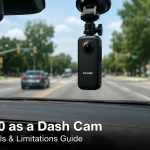
You've invested in a dash cam, a silent guardian for your daily drives. But simply tossing it on the dashboard is a surefire way to compromise its most critical functions: capturing clear evidence and ensuring your safety. The single most important decision after purchase isn't which model you chose, but where you decide to mount it. Precise placement is the difference between a useless blur and court-admissible clarity, between a safe driving aid and a dangerous distraction.
This topic matters because improper dash cam installation can lead to obscured footage, legal complications, and even increased risk on the road. A poorly placed camera might miss a license plate in a critical moment, create dangerous blind spots, or violate local windshield obstruction laws. In this comprehensive guide, you will learn the science and strategy behind optimal dash cam placement for both front and rear cameras, understand the legal and safety considerations, and discover professional tips for installation and maintenance to ensure your device performs flawlessly when you need it most.
The Golden Rules of Front Camera Placement
The primary goal for front dash cam placement is to achieve an unobstructed, panoramic view of the road ahead without compromising the driver's field of vision. The ideal location is typically behind the rearview mirror, on the passenger side of the mirror assembly. This spot is naturally within the swept area of your windshield wipers, ensuring a clear view during rain or snow, and it remains mostly hidden from the driver's direct line of sight, minimizing distraction. The camera should be mounted as high up on the windshield as possible, close to the headliner, to maximize the field of view and reduce the instrument hood's intrusion into the footage.
Centering the camera's lens is crucial. You want the horizon to sit roughly in the lower third of the frame. This composition ensures you capture the road immediately in front of your bumper, the lanes to your left and right, traffic lights and signs, and a slice of your own hood for spatial reference. Before permanently fixing the adhesive mount, do a test drive. Ensure the camera does not record an excessive amount of your car's dashboard or the rearview mirror itself, as this wastes valuable pixels that should be dedicated to the external scene. The lens should be parallel to the road; a tilted camera will produce skewed, unreliable footage.
From a legal and practical standpoint, you must be aware of your state or country's regulations regarding windshield obstructions. Most jurisdictions in the U.S. have a "AS-1" line etched into the windshield—a tinted band at the top. It is generally illegal to place any object, including a dash cam, within the driver's critical viewing area, which is often defined as the area swept by the windshield wipers on the driver's side. By placing the camera high and on the passenger side, you almost always remain compliant. Furthermore, ensure the mount is secure; a camera that falls while driving is a significant hazard.
Strategic Rear Camera Installation
A rear-facing dash cam is essential for documenting rear-end collisions, hit-and-runs while parked, or disputes during lane changes. Placement here presents unique challenges, primarily due to varying vehicle designs like hatchbacks, sedans, and SUVs. The universal principle is to center the camera on the rear windshield, as high as possible, to provide the widest possible view of traffic behind you. For sedans, this is usually straightforward on the rear glass. For hatchbacks and SUVs, you must consider the opening tailgate; the camera and its wiring must be routed so they are not pinched or damaged when the hatch is opened and closed.
The field of view for a rear camera is just as important as the front. You want to capture the lanes behind you, the edges of your own vehicle's rear for context, and, if possible, a slight view out the side windows to capture vehicles in adjacent lanes. Be mindful of rear wiper coverage and defroster lines. Mounting directly over a defroster line can weaken its adhesion over time due to heat cycles and may slightly distort footage. It's often best to mount the camera just to the side of these elements, ensuring the lens peers between them for a clear view.
Wiring a rear camera requires careful planning. The power cable must be routed from the front of the vehicle, along the headliner, down a door pillar, and under the trim or carpet along the sill of the vehicle to the rear. Use plastic trim tools to tuck the wire neatly, avoiding airbags (commonly located in the A-pillar and roof rails). Never force wires or interfere with side-curtain airbag deployments. The goal is a clean, invisible installation where the only visible components are the cameras themselves, with no dangling wires to cause distraction or get caught.
Interior-Facing and Dual-View Camera Considerations
Interior-facing cameras, often part of a three-channel system or a ride-share driver's setup, serve to record the cabin's interior. This is invaluable for ride-share drivers documenting passenger interactions or for capturing events inside the vehicle during an incident. Placement must balance a comprehensive view of the cabin with passenger privacy and driver distraction. The optimal spot is typically on the front of the rearview mirror assembly or on the windshield directly behind the mirror, angled to capture both front seats and the back seat area.
When positioning an interior camera, consider what you need to record. For ride-share, you'll want a clear view of all passenger seats and the driver. Ensure the lens can capture faces and actions without being obtrusive. Be acutely aware of privacy laws in your region; in some places, you are required to inform passengers they are being recorded. The camera's field of view should not be so wide that it constantly records the driver's face in a distracting manner, but it should be sufficient to document any relevant interactions or events.
For dual-lens cameras (a single unit with a front and interior lens), placement becomes a compromise. You must find a single location that allows the front lens to have an optimal road view while the interior lens is angled correctly into the cabin. This often means mounting the unit slightly lower than a front-only camera, potentially sacrificing a bit of the forward field of view. Test this setup thoroughly. Review footage from both lenses after installation to ensure neither is compromised—the interior view shouldn't be mostly of the ceiling, and the forward view shouldn't be dominated by your hood.
Power Source and Parking Mode Setup
Where you get power is as strategic as where you place the camera. The standard 12V cigarette lighter socket is convenient but often leaves a visible power cable dangling across the dashboard and does not support parking surveillance when the car is off. For a clean, permanent installation and to enable parking mode, hardwiring the dash cam to your vehicle's fuse box is the professional solution. This uses an add-a-circuit fuse tap to draw power from a circuit that is either always-on (for parking mode) or switched with the ignition (for driving-only mode).
Choosing the right fuse is critical for safety and function. You must use a fuse tap compatible with your vehicle's fuse type (mini, micro, etc.). The dash cam should be connected to a circuit with an appropriate amperage rating, often using an empty slot or a non-critical circuit like the sunroof or power windows. A dedicated hardwiring kit includes a low-voltage cutoff device to prevent your car's battery from being drained completely when using parking mode. This device monitors battery voltage and will shut off the camera before the battery is too low to start the engine.
For parking mode to be effective, camera placement must be optimized for a parked vehicle. Ensure the front camera's view isn't easily blocked by a parking ticket on the windshield or a tall vehicle parking too close. The rear camera should have a clear view of the area behind the car. The hardwiring kit allows the camera to enter a low-power state when the ignition is off, recording only when motion or an impact (G-sensor) is detected. This setup turns your dash cam into a 24/7 sentry, capturing hit-and-runs, vandalism, or break-in attempts while you're away from the vehicle.
Maintenance and Periodic Review
Installation is not a "set it and forget it" process. Regular maintenance ensures your dash cam remains a reliable witness. The most critical task is periodically formatting the memory card within the camera itself, not on a computer. Dash cams use continuous loop recording, and formatting in the camera helps prevent file corruption and ensures compatibility. Depending on use, a monthly format is a good practice. Also, inspect the memory card's health annually and replace it every 12-24 months, as constant writing wears it out.
Physically check the camera and its mount every few months. Ensure the adhesive mount hasn't loosened due to temperature extremes. Clean the camera's lens gently with a microfiber cloth to remove dust, fingerprints, and grime that can significantly degrade video quality—this is as important as cleaning your windshield. Check the cable connections, especially if you used a hardwiring kit, to ensure they are secure and not interfering with any vehicle controls or airbags.
Finally, make it a habit to review your footage. Don't wait for an incident to discover your camera isn't working correctly. Every season, take a short clip from your front and rear cameras and watch it on a computer. Look for clarity, proper audio recording (if applicable), correct time/date stamps, and a wide, unobstructed field of view. This proactive review confirms your strategic placement is still effective and that your entire system is functioning as intended, giving you peace of mind on every journey.
Key Takeaways
- ✓ The optimal front camera placement is high on the windshield, behind the rearview mirror on the passenger side, ensuring an unobstructed road view and legal compliance.
- ✓ Rear camera installation requires centering on the rear glass, careful routing of wires to avoid damage from hatchbacks, and avoiding obstruction from defroster lines.
- ✓ Interior-facing cameras must balance cabin coverage with minimal distraction and require awareness of local privacy laws regarding audio/video recording.
- ✓ Hardwiring to the fuse box with a proper kit is essential for a clean install, enabling parking mode, and protecting your vehicle's battery from drainage.
- ✓ Regular maintenance, including in-camera memory card formatting, lens cleaning, and periodic footage review, is crucial for long-term dash cam reliability and performance.
Frequently Asked Questions
Is it illegal to mount a dash cam in the middle of the windshield?
In many regions, yes. Laws typically prohibit mounting anything that obstructs the driver's view within the area swept by the windshield wipers (often marked by the AS-1 line). Placing a dash cam in the center of the windshield, low down, is likely illegal and dangerous. Always mount it as high as possible, preferably behind the rearview mirror on the passenger side, to stay within legal guidelines.
Can I mount my dash cam on the dashboard instead of the windshield?
While possible, dashboard mounting is generally not recommended. It often results in a much lower field of view, capturing excessive hood and missing vital information like traffic lights. The camera is also more susceptible to vibration and heat on the dashboard. Furthermore, the adhesive on most mounts is designed for glass, not textured plastic, and may not hold securely. Windshield mounting provides a stable, high vantage point.
How do I route the power cable for a clean look without hardwiring?
For a cigarette lighter power source, tuck the cable into the headliner above the windshield, then guide it down the A-pillar (on the passenger side). Carefully route it under the dashboard trim and weather sealing along the door sill, finally bringing it up to the center console power port. Use plastic pry tools to avoid damage and never force cables near airbag covers. This method hides almost the entire cable.
Will a dash cam's adhesive mount damage my windshield or leave residue?
High-quality mounts use a strong, automotive-grade adhesive that is designed to hold securely through temperature swings but can be removed. To remove, use a hairdryer or heat gun on a low setting to gently warm the adhesive, then slowly twist and pull the mount off. Any remaining residue can be cleaned with isopropyl alcohol or a dedicated adhesive remover and a razor blade at a shallow angle, which will not scratch glass.
My rear windshield is heavily tinted. Will that affect my rear dash cam's footage?
Yes, especially at night. Tint, particularly dark or metallic tint, can significantly reduce the amount of light reaching the camera's sensor, leading to very dark, grainy, or unusable nighttime footage. For rear cameras, it is best to place them in an area with no tint, such as the area cleared by the rear wiper, or on the exterior if using a waterproof model. Check your local laws, as exterior mounting may have its own regulations.
Conclusion
Strategic dash cam placement is a blend of art and science, requiring careful consideration of visibility, legality, safety, and vehicle-specific design. From the high, discreet mounting of the front camera to the centered, secure installation of the rear unit, each decision directly impacts the quality and usefulness of your recorded evidence. Incorporating interior views and parking mode adds layers of protection but introduces new complexities in positioning and power management. Remember, the device itself is only as good as its installation.
Take action today to audit your current setup or plan your new installation. Use the guidelines here to find the optimal spots in your specific vehicle. Invest in a hardwiring kit for a professional, full-featured installation, and commit to the simple maintenance routine of formatting and lens cleaning. By treating your dash cam as a critical component of your vehicle's safety system, you ensure it stands ready as an unbiased witness, providing clarity and security on every road you travel.

Tony Kilmer is an auto mechanic and the author behind CarTruckAdvisor.com. He shares practical, no-nonsense guidance on car and truck maintenance, common problems, and repair decisions—helping drivers understand what’s going on and what to do next.