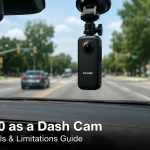
Imagine installing a dash cam in your car without ever having to wrestle with a tangled power cord, fish wires behind your headliner, or plug into your vehicle's 12V socket. The promise of a truly wireless dash cam feels like the next logical step in automotive technology, offering ultimate convenience and a clean, professional installation. But as you browse online, you're met with confusing terminology and products that don't quite live up to the "wireless" dream. So, what's the real story?
This topic matters because understanding the technology behind dash cams can save you time, money, and frustration. A misinformed purchase could leave you with a dead camera when you need it most or a messy installation you'll regret. In this comprehensive guide, you will learn the precise meaning of "wireless" in the dash cam world, explore the different technologies available in 2026, weigh their pros and cons, and discover how to choose the right system for your specific needs. We'll cut through the marketing hype to give you the clear, actionable information required to make a smart decision for your vehicle's security.
Demystifying "Wireless": Battery, Wi-Fi, and Cellular
In the consumer electronics landscape, "wireless" can mean several different things, and dash cams are no exception. It is crucial to distinguish between three primary wireless functionalities: wireless power, wireless data transfer, and wireless connectivity. A truly wireless dash cam, in the purest sense, would be one that requires no physical cable for power and uses wireless methods for all data handling. However, most products on the market only fulfill one or two of these functions, leading to consumer confusion. Understanding this distinction is the first step to navigating the market effectively.
First, let's consider wireless power. This typically refers to a dash cam with a built-in rechargeable battery or supercapacitor that allows it to operate independently of your car's electrical system. These cameras are often used for parking mode or as portable cameras you can move between vehicles. However, their recording time is limited by battery capacity. Second, wireless data transfer almost always refers to built-in Wi-Fi. This allows the camera to create a local network to which you connect your smartphone via an app. This wireless connection lets you view live footage, download video clips, and change settings without removing the memory card. Third, a newer category involves wireless cellular connectivity (4G/5G), where the cam uses a SIM card to upload footage to the cloud and send real-time alerts, functioning independently of your phone's hotspot.
In practical terms, when a 2026 product is advertised as "wireless," you must read the fine print. A "wireless dash cam" usually means it has Wi-Fi for data transfer, not that it is free from a power cable. For example, the popular "Vantrue E2" is marketed as a wireless dash cam but requires a hardwiring kit for parking mode; its "wireless" feature is the Wi-Fi app connection. Always verify which specific wireless capabilities a product offers before assuming it means a completely cable-free installation.
The Current State of Technology in 2026
As of 2026, the dash cam market has evolved significantly, but a perfect, fully wireless solution remains elusive for continuous, high-quality recording. The core challenge is power. High-resolution video recording, especially in dual-channel setups (front and interior/rear), is extremely power-intensive. A battery large enough to support continuous driving coverage for, say, a 4-hour road trip would be bulky, generate heat, and pose longevity issues in extreme car temperatures. Therefore, most dash cams designed for primary, always-on driving duty still require a connection to the vehicle's power via the 12V socket or a hardwiring kit.
However, advancements are notable in specific niches. Compact, battery-powered "wireless" cams have improved, with better battery management and solar charging options for extended parking surveillance. These are excellent for ride-share drivers monitoring the cabin or for occasional use in a fleet vehicle. Furthermore, cellular-connected dash cams have become more mainstream and affordable. Brands like BlackVue and Thinkware offer models with built-in 4G LTE (and now 5G) modules. These cams are typically hardwired for power but are "wireless" in that they transmit data over cellular networks, enabling features like real-time GPS tracking, cloud backup of incident videos, and instant collision notifications to your phone, all without needing your phone's Wi-Fi.
The most practical and reliable setup in 2026 for the average driver continues to be a high-quality dash cam hardwired into the fuse box for clean power and parking mode, equipped with Wi-Fi for easy local access. The "wireless" dream is partially realized through seamless data handling and connectivity, while the power delivery remains wired for uncompromised reliability. For professional or high-security needs, the cellular-connected models represent the cutting edge of wireless functionality.
Pros and Cons of Different Wireless Approaches
Each type of wireless technology in dash cams comes with its own set of advantages and trade-offs. Evaluating these will help you align your purchase with your priorities. Starting with battery-powered (truly cable-free) cams, the primary pro is effortless installation and portability. You can move it from car to car, use it as a temporary security camera, or mount it discreetly without routing wires. The major con is limited recording time. Battery life is consumed quickly, especially in extreme temperatures or with high-resolution recording, making them unsuitable for all-day driving or reliable parking mode beyond a few hours.
Wi-Fi-enabled dash cams (with wired power) offer the best balance for most users. The pro is incredible convenience for managing your footage. After an incident, you can pull over, connect your phone to the cam's Wi-Fi network, and immediately review, save, or share the clip without fumbling with a tiny memory card. The con is that the Wi-Fi connection is only active when you initiate it; the camera itself doesn't use Wi-Fi to automatically send you alerts. You are still responsible for manually checking and saving important footage before it gets overwritten.
Cellular-connected dash cams provide the highest level of automation and remote access. The biggest pro is true peace of mind through real-time notifications and cloud backup. If someone hits your parked car, you get an alert with a video clip on your phone within seconds, and the footage is safely stored online. The cons are the ongoing costs and complexity. These cams require a monthly or annual data subscription plan for the SIM card, and the initial hardware cost is significantly higher. They also still need to be hardwired for power, so installation is not any simpler than a standard wired cam.
How to Choose the Right System for Your Needs
Installation and Maintenance Considerations
Regardless of the wireless features you choose, proper installation and upkeep are critical for performance. For any dash cam that uses wired power (even Wi-Fi or cellular models), a clean installation is key. This involves routing the power cable along the headliner, down the door seal, and to the fuse box or 12V socket. Using trim tools and taking your time can result in a nearly invisible installation that doesn't obstruct your view or look unsightly. For hardwiring, a professional installation is often worth the $50-$100 cost to ensure it's done safely and correctly.
For battery-powered wireless cams, installation is simpler but maintenance is more hands-on. You must develop a habit of charging the camera regularly. Mounting it with a removable adhesive pad or suction cup is advisable so you can easily take it down for charging. Be acutely aware of temperature limits; lithium-ion batteries can degrade quickly or become hazardous in direct, hot sunlight. Never leave a battery-powered dash cam in a scorching car if you can avoid it, and consider models with supercapacitors if you live in a very hot climate.
For all dash cams, routine maintenance is simple but essential. Periodically format your microSD card within the camera's menu to prevent file corruption. Use only high-endurance cards designed for continuous recording. For Wi-Fi and cellular models, ensure the camera's firmware is updated through the app to benefit from bug fixes and new features. Finally, once every few months, quickly review a short clip of footage to ensure both video and audio (if applicable) are recording clearly, verifying that your system is always ready.
Key Takeaways
- ✓ "Wireless" in dash cams primarily refers to Wi-Fi data transfer or battery power, not a complete absence of cables for primary driving cameras.
- ✓ In 2026, the most reliable setup for continuous recording remains a dash cam hardwired for power but equipped with Wi-Fi for convenient app-based management.
- ✓ Cellular-connected dash cams offer real-time alerts and cloud backup but come with higher upfront costs and mandatory monthly service fees.
- ✓ Battery-powered "truly wireless" cams are best for portability and short-term or interior monitoring but lack the endurance for all-day driving coverage.
- ✓ Your ideal choice depends on your specific needs: daily commuting evidence, rideshare cabin monitoring, or high-security parking surveillance.
Frequently Asked Questions
Can a wireless dash cam record while my car is parked and turned off?
Yes, but it depends on the type. A battery-powered wireless cam can record in parking mode until its battery depletes, which may be a few hours. A hardwired dash cam (even with Wi-Fi or cellular) can use your car's battery to record for days in low-power parking surveillance mode, but it must be professionally installed with a voltage cutoff to prevent draining your car battery.
How long does the battery last on a truly wireless dash cam?
Battery life varies greatly by model and usage. In continuous recording mode at high resolution, a built-in battery may last only 1-3 hours. In parking mode, which only records when motion or impact is detected, it might last 8-24 hours. Always check the manufacturer's specifications for battery capacity (measured in mAh) and assume real-world performance will be less, especially in cold or hot weather.
Is the video quality worse on a wireless dash cam?
Not necessarily. Video quality is determined by the camera's sensor, lens, and processor, not its method of data transfer. A Wi-Fi or cellular dash cam can record in 4K resolution just like a wired-only model. However, when you stream video live to your phone over Wi-Fi, the streamed preview may be a lower resolution for smooth transfer; the original file saved on the memory card will still be full quality.
Do I need to pay for a subscription for a Wi-Fi dash cam?
No. Wi-Fi connectivity uses a direct, local connection between your camera and your smartphone. There are no ongoing fees for this feature. Subscription plans are only required for dash cams with built-in cellular connectivity (4G/5G), as they use a mobile network to send data to the cloud and require a data plan from a carrier.
Can someone hack my wireless dash cam's signal?
The risk is low but not zero. For Wi-Fi cams, the connection is local and typically encrypted. The greater vulnerability for any internet-connected device (like a cellular cam) is through the cloud server or a weak password. To protect yourself, always change the default password on your dash cam's app or cloud account, use strong, unique passwords, and keep the camera's firmware updated to patch any security vulnerabilities.
Conclusion
Navigating the world of wireless dash cams in 2026 requires peeling back the layers of marketing terminology to understand the underlying technology. As we've explored, the ideal of a completely cable-free, perpetually powered, and instantly connected dash cam is still a work in progress. However, the current market offers superb solutions that leverage wireless technology in practical ways: Wi-Fi for effortless footage access, cellular for real-time security, and improved batteries for specific portable applications. The key is to match the technology to your individual requirements, balancing convenience, reliability, and cost.
Your next step is to audit your own needs. Determine your budget, your primary use case, and your tolerance for ongoing subscriptions. Then, research specific models that fit that profile, paying close attention to user reviews about real-world battery life, app functionality, and video quality. Whether you choose a simple Wi-Fi model or invest in a full cellular surveillance system, taking an informed step will ensure you gain a valuable tool for safety, security, and peace of mind on the road.

Tony Kilmer is an auto mechanic and the author behind CarTruckAdvisor.com. He shares practical, no-nonsense guidance on car and truck maintenance, common problems, and repair decisions—helping drivers understand what’s going on and what to do next.