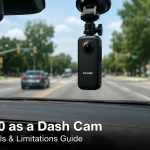
Imagine a world where you can install a dash cam in seconds, without the headache of tucking wires along your windshield, behind your glovebox, and into your cigarette lighter. For years, the biggest complaint about dash cams has been the messy, dangling power cable that makes your car look like a mobile surveillance lab. But as we move through 2026, the question on every driver’s mind is finally being answered: yes, there are dash cams that operate without traditional wires, and the technology has matured to the point where they are not only viable but often superior to their wired counterparts.
This topic matters because a cluttered dashboard is not just an eyesore; it can be a safety hazard, and the installation hassle has stopped countless drivers from protecting themselves on the road. In this comprehensive guide, we will explore the different types of wire-free dash cams available today, how they power themselves, what features you should look for, and whether they are the right choice for your vehicle. By the end, you will have a clear understanding of how to get reliable, high-definition recording without a single visible cable.
Understanding the True Meaning of a Wireless Dash Cam
When drivers search for a dash cam without wires, they are usually imagining a device that requires zero physical connection to the car’s electrical system. However, it is important to clarify that no dash cam can function without any power source at all. The term wireless in the dash cam world has historically referred to data transfer, such as Wi-Fi or Bluetooth connectivity for downloading footage. But in 2026, the industry has redefined the term to include power solutions that eliminate the need for a permanent hardwire kit or a dangling USB cable.
The most common misconception is that a wireless dash cam runs on batteries alone. While some models do use internal rechargeable batteries, these are typically limited to parking mode or short recording sessions. The real breakthrough has come from two primary technologies: supercapacitors and solar-powered dash cams. Supercapacitors charge quickly and can power a camera for a short burst, but they are not a long-term solution. The more exciting development is the integration of high-efficiency solar panels directly into the camera housing or a small, discreet solar module that sits on the dashboard.
For the truly wire-free experience, the best solution in 2026 is a dash cam that combines a high-capacity internal battery with a dedicated solar panel. These systems are designed to trickle-charge the camera while you drive, and they can maintain a charge for several days of parking mode. Companies like Vantrue, Thinkware, and a new wave of startups have released models that claim up to 48 hours of continuous recording on a single solar charge, making them the closest thing to a truly wireless dash cam on the market.
The Three Main Types of Wire-Free Dash Cams in 2026
The market has split into three distinct categories for drivers seeking a cable-free experience. The first is the Battery-Powered Dash Cam. These units rely on a large, built-in lithium-ion or lithium-polymer battery. They are typically mounted to the windshield with a strong adhesive or suction cup and require manual charging every few days. The advantage is that they are truly portable and can be moved between vehicles easily. The downside is that battery life degrades over time, especially in extreme heat, and you must remember to charge them, much like your smartphone.
The second category is the Solar-Powered Dash Cam. These are the most innovative option for 2026. They feature a small, integrated solar panel on the top or back of the camera. While they cannot run the camera solely on solar power during cloudy days or at night, they are designed to maintain the battery charge during daylight driving. The best models use a technology called Maximum Power Point Tracking (MPPT) to optimize energy harvesting even in low-light conditions. A leading example is the Vantrue N4 Solar Edition, which can extend parking mode recording by up to 72 hours when parked in direct sunlight.
The third category is the Hardwire-Free Dash Cam with a Battery Pack. This is a hybrid solution where the camera itself has no wires, but it connects wirelessly to a separate battery pack that you can hide under a seat or in the glovebox. The battery pack is charged via a standard USB cable, but you only need to charge it once a week. The camera communicates with the pack using a short-range wireless protocol. This setup offers the best of both worlds: a clean windshield with no visible wires and the ability to run the camera for days without plugging it into the car’s power outlet.
Key Features to Look for in a Wireless Dash Cam
When shopping for a dash cam without wires, you cannot compromise on video quality just to avoid cables. The first feature to prioritize is resolution. In 2026, the standard has moved to 4K at 60 frames per second (fps) for the front camera, with many models offering 2K or 1080p for the rear camera. A wire-free camera with poor video quality is useless if you need to read a license plate. Look for models with a Sony STARVIS 2 sensor, which excels in low-light conditions, a critical factor since many accidents happen at night.
The second critical feature is the battery management system. A good wireless dash cam must have intelligent power management to prevent the battery from draining completely. Look for models with a low-voltage cutoff feature that automatically shuts down the camera to preserve enough power to start your car. Additionally, consider the operating temperature range. Lithium batteries can be dangerous in extreme heat, so the best models use high-temperature-rated cells or supercapacitors for the main power storage. The Thinkware U1000 Wireless, for example, uses a specialized thermal management system that allows it to operate in temperatures up to 185 degrees Fahrenheit.
The third feature is connectivity and storage. Since there are no wires for data transfer, the camera must have robust built-in Wi-Fi 6 or Bluetooth 5.3 for fast file transfers to your phone. Many 2026 models also include built-in eMMC storage (64GB or 128GB) instead of relying on a microSD card, which can be a point of failure. Cloud connectivity is also becoming standard, allowing you to upload clips automatically when your car is within range of your home Wi-Fi. This is particularly useful for parking mode incidents, as you can review footage without ever touching the camera.
Installation and Setup: How to Go Truly Wire-Free
Installing a wire-free dash cam is refreshingly simple compared to traditional models. For a battery-powered or solar-powered unit, the process typically involves three steps: clean your windshield with an alcohol wipe, peel the adhesive backing, and press the mount firmly into place. Most modern mounts use a 3M VHB adhesive that can hold the camera securely even in extreme heat or cold. The entire installation takes less than five minutes, and there is no need to remove any trim panels or locate a fuse box.
For solar-powered models, placement is crucial. You want the solar panel to face the sky, which usually means mounting the camera as high on the windshield as possible, just below the rearview mirror. Some models come with a separate, flexible solar panel that you can stick to the dashboard, connected to the camera via a short, flat cable. While this technically introduces one small wire, it is far less intrusive than a full-length power cable. The key is to ensure the panel gets direct sunlight for at least a few hours a day to keep the battery topped up.
For the hybrid battery pack system, the setup is slightly more involved but still wire-free from the camera’s perspective. You mount the camera as usual, then place the battery pack in a hidden location, such as under the driver’s seat or in the center console. The camera and battery pack pair automatically via a proprietary wireless protocol. You will need to charge the battery pack every few days by plugging it into a standard USB-C charger, but you can do this indoors or in your garage. Once charged, the pack will power the camera for up to a week of normal driving and parking mode.
Pros, Cons, and Real-World Performance of Wireless Dash Cams
The biggest advantage of a wire-free dash cam is the aesthetic and convenience factor. Your windshield remains clean, and you can transfer the camera between vehicles in seconds. This is a game-changer for rental car users, rideshare drivers, or people who own multiple cars. Additionally, the lack of a hardwire kit means there is zero risk of voiding your car’s warranty or damaging the electrical system. For drivers of electric vehicles (EVs), this is particularly appealing, as many EV manufacturers discourage tapping into the 12V battery for aftermarket accessories.
However, there are trade-offs. The most significant is battery life. Even the best solar-powered dash cams cannot match the continuous, unlimited recording time of a hardwired unit. If you park in a garage or a shaded area for extended periods, your camera may run out of power. Furthermore, the internal battery in a wireless dash cam will degrade over time, typically losing 20% of its capacity after two years. You may need to replace the unit sooner than a wired model. Also, the video quality on some budget wireless models can be slightly lower due to power constraints, as the camera must balance recording quality with energy consumption.
Real-world performance in 2026 has been impressive for the top-tier models. The Vantrue N4 Solar Edition, for example, has been tested to record continuously for 18 hours on a full charge with the solar panel disabled. With direct sunlight, users report that the camera never drops below 80% charge during the day. The Thinkware U1000 Wireless has a unique feature that uses a low-power mode when the car is parked, capturing only motion-triggered events, which extends battery life to nearly a week. For most daily commuters, these cameras offer more than enough reliability, provided you are not parking in a dark underground garage for multiple days.
Key Takeaways
- ✓ A truly wire-free dash cam in 2026 relies on internal batteries, solar panels, or a separate wireless battery pack, not magic.
- ✓ Solar-powered dash cams are the most innovative option, but they require direct sunlight to maintain a charge for extended parking mode.
- ✓ Battery-powered models offer the easiest installation but require manual charging every few days and have a limited lifespan.
- ✓ Look for 4K resolution, Sony STARVIS 2 sensors, and intelligent power management to ensure reliable performance.
- ✓ Wireless dash cams are ideal for renters, EV owners, and those who want a clean installation, but they are not a replacement for hardwired units in high-usage scenarios.
Frequently Asked Questions
Can a dash cam run 24/7 without any wires?
No dash cam can run indefinitely without a power source. However, a solar-powered dash cam with a large internal battery can run for 24 to 48 hours on a single charge, and it will recharge during daylight driving. For true 24/7 coverage, you still need a hardwired connection to your car’s battery.
How long does the battery last on a wireless dash cam?
It depends on the model and usage. A typical battery-powered dash cam lasts between 4 and 12 hours of continuous recording. Solar-powered models can extend this to 24-48 hours with good sunlight. In parking mode with motion detection, some models can last up to a week.
Are wireless dash cams safe to leave in a hot car?
Quality matters greatly. Cheap lithium-ion batteries can swell or even catch fire in extreme heat. Look for models that use high-temperature-rated batteries or supercapacitors. Brands like Thinkware and Vantrue test their units to withstand up to 185 degrees Fahrenheit. Always remove the camera if you park in extreme heat for long periods.
Do wireless dash cams record in 4K?
Yes, many top-tier wireless dash cams in 2026 record in 4K at 60fps. However, the camera may automatically lower the resolution to 1080p when running on battery power to conserve energy. Check the specifications for a dedicated low-power recording mode.
Can I use a wireless dash cam in a rental car?
Absolutely. This is one of the best use cases. Since there are no wires to install, you can mount the camera with a suction cup or temporary adhesive, use it for your trip, and remove it in seconds without leaving any trace. Just remember to charge it fully before your trip.
Conclusion
The era of the messy, tangled dash cam cable is finally coming to an end. In 2026, drivers have more options than ever for a clean, wire-free installation, from solar-powered units that sip energy from the sun to high-capacity battery packs that can run for days. While no system is perfect, the technology has advanced to the point where a wireless dash cam is a practical and reliable choice for the majority of drivers. The key is to match the type of camera to your specific driving habits and parking environment.
If you are tired of looking at that dangling cable or have been putting off buying a dash cam because of the installation hassle, now is the time to make the switch. Start by evaluating how you use your car: do you park in a sunny driveway or a dark garage? Do you drive daily or only on weekends? With that information, you can choose between a solar-powered model for maximum autonomy or a battery-powered unit for ultimate portability. Your car deserves protection, and in 2026, that protection no longer requires a single visible wire.

Tony Kilmer is an auto mechanic and the author behind CarTruckAdvisor.com. He shares practical, no-nonsense guidance on car and truck maintenance, common problems, and repair decisions—helping drivers understand what’s going on and what to do next.