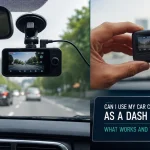
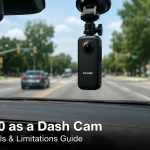
You have just parked your car after a long day, locked the doors, and walked away. But what if someone sideswipes your bumper in the parking lot or a vandal decides to target your vehicle while you are asleep? The question that plagues every car owner is whether their dash cam continues to act as a silent guardian even when the engine is off. The short answer is yes, many modern dash cams can record when the car is off, but the reality is far more nuanced, depending on your camera model, wiring setup, and battery configuration.
Understanding how dash cams function in parking mode is no longer a luxury feature; it is a necessity for protecting your investment in an era where hit-and-run incidents and parking lot disputes are increasingly common. In this comprehensive guide, we will explore the different technologies that allow dash cams to record while parked, the power sources that make it possible, and the critical considerations you must weigh to avoid draining your car battery. By the end, you will know exactly what to look for when purchasing a dash cam for 24/7 surveillance and how to set it up correctly for your specific driving habits.
The Mechanics of Parking Mode: How Dash Cams Stay Awake
At its core, a dash cam is a small computer that requires a constant flow of electricity to record video. When you turn off your car, the standard 12-volt accessory socket (cigarette lighter) typically loses power, which means a dash cam plugged into that port will shut down immediately. However, dash cams designed with parking mode are engineered to detect when the vehicle has stopped moving and the ignition is off, then switch into a low-power state that continues recording using either an internal battery, a supercapacitor, or a hardwired connection to your car's fuse box.
The most common method for enabling parking mode is through a hardwiring kit. This kit connects your dash cam directly to your vehicle's electrical system, usually tapping into a circuit that provides constant power (like the interior lights or door locks) and another that provides switched power (like the radio). The dash cam uses the switched power line to know when the car is running, and when that line goes dead, it assumes the car is parked and activates its parking mode settings. This setup allows the camera to remain powered indefinitely, limited only by your car's battery capacity.
Modern dash cams in 2026 have become incredibly sophisticated in their power management. Many models now feature voltage monitoring, which automatically shuts off the camera if the car battery drops below a certain threshold (typically 11.8 to 12.2 volts). This prevents you from returning to a car that cannot start because the dash cam drained the battery overnight. Additionally, some premium cameras use supercapacitors instead of lithium-ion batteries, which are safer in extreme temperatures and can still provide enough stored energy to save the last few seconds of footage after power is cut.
Three Types of Parking Mode Recording: Motion Detection, Time-Lapse, and Buffered
Not all parking mode recordings are created equal. The most common type is motion detection recording, where the dash cam remains in a standby state, consuming very little power, until its built-in accelerometer or image sensor detects movement or a significant change in the scene. When triggered, the camera wakes up and records a short clip, typically 15 to 30 seconds, before returning to standby. This is the most battery-efficient method and works well for capturing vandals, thieves, or animals that approach your vehicle. However, it can miss events that happen outside the camera's field of view or if the motion sensor is not sensitive enough.
The second type is time-lapse recording, which captures a single frame every second or every few seconds and compiles it into a smooth, fast-forward video. This mode consumes significantly less power than continuous recording because the camera is not writing full video data to the memory card at 30 frames per second. Time-lapse is ideal for parking lots where you want to see the entire duration of your absence, such as catching a hit-and-run that happens over several hours. The downside is that the video quality is lower, and you may miss very fast events like a door ding that happens in a fraction of a second.
The third and most advanced type is buffered parking mode, also known as event detection or pre-buffered recording. In this mode, the camera is continuously recording but only saving the footage to a temporary buffer in its memory. When an impact or motion is detected, the camera saves the buffer (usually 5 to 10 seconds before the event) along with the footage after the event. This ensures you never miss the moment leading up to an incident, which is crucial for proving fault in an accident. Buffered mode uses more power than motion detection but less than full continuous recording, making it a popular middle ground for users who want comprehensive coverage without draining their battery.
Power Sources and Battery Life: What You Need to Know Before Buying
The single biggest concern for anyone considering parking mode is whether their car battery can handle the extra load. A standard 12-volt lead-acid car battery has a capacity of roughly 45 to 60 amp-hours. A typical dash cam in parking mode draws between 0.1 and 0.5 amps, depending on the recording mode and features like Wi-Fi or GPS. At 0.3 amps, a dash cam would drain a 50 amp-hour battery in about 167 hours, or roughly seven days, before the battery is completely dead. However, most cars need at least 12.4 volts to start reliably, so the usable time is closer to two to three days of continuous parking mode.
To extend this time, many dash cam users in 2026 are turning to external battery packs specifically designed for dash cams. These are small lithium-ion or lithium-iron-phosphate batteries that sit in your glove box or under a seat and charge while you drive. When the car is off, the dash cam draws power from the external battery instead of the car's starter battery. A good external battery pack can power a dash cam for 12 to 48 hours of parking mode, depending on its capacity and the camera's power draw. Brands like BlackVue, Thinkware, and Cellink offer dedicated battery packs that integrate seamlessly with their cameras.
Another emerging solution is the use of supercapacitor-based dash cams combined with solar-powered battery maintainers. A small solar panel placed on your dashboard can trickle-charge a dedicated dash cam battery during the day, effectively providing indefinite parking mode coverage for cars parked outdoors. This is particularly useful for people who live in sunny climates or who park in open lots for extended periods. For those who park in garages, a simple hardwire connection with a voltage cutoff is usually sufficient for overnight protection.
Legal and Privacy Considerations for Continuous Recording
While the technical aspects of parking mode are fascinating, the legal landscape surrounding continuous recording is equally important. In most jurisdictions, it is legal to record video in public spaces, and your parked car is considered private property. However, laws vary significantly when it comes to audio recording. In 12 states in the U.S., including California, Florida, and Pennsylvania, all parties must consent to audio recording, meaning your dash cam cannot legally record conversations inside or near your car without the knowledge of everyone involved. If your dash cam records audio in parking mode, you could be violating wiretapping laws.
Privacy concerns also extend to where your camera is pointing. If your dash cam is aimed directly at a neighbor's front door or a public sidewalk, you may be infringing on their reasonable expectation of privacy. While this is rarely enforced in practice, it is a consideration for ethical use. Many dash cams now offer privacy zones, which allow you to black out specific areas of the video frame, such as a neighbor's window or a license plate, to avoid legal complications. You should also be aware that parking mode footage can be subpoenaed in legal disputes, so it is wise to treat your dash cam as a potential witness that can be called to testify.
For businesses or fleet vehicles, the rules become even stricter. If you are using dash cams in company vehicles with parking mode, you must inform employees and obtain their consent, as continuous monitoring in a workplace vehicle can be considered an invasion of privacy. In the European Union, the General Data Protection Regulation (GDPR) imposes strict requirements on the collection and storage of video data, including mandatory deletion periods and the right for individuals to request access to footage that includes them. Always check your local laws before enabling parking mode, and consider disabling audio recording if you are unsure.
How to Choose the Right Dash Cam for Parking Mode in 2026
With hundreds of dash cam models on the market, selecting the right one for parking mode can be overwhelming. The first and most important feature to look for is a dedicated parking mode that supports your preferred recording type (motion, time-lapse, or buffered). Avoid cheap cameras that claim to have parking mode but simply run on a low-quality internal battery that lasts only a few minutes. Instead, look for reputable brands like VIOFO, BlackVue, Thinkware, and Garmin, which have proven track records for reliable parking mode performance.
The second critical factor is the camera's power management system. Ensure the dash cam supports a hardwiring kit with an adjustable voltage cutoff. This allows you to set the minimum battery voltage at which the camera will shut down to preserve starting power. A good hardwiring kit will also include a low-voltage protection circuit that is separate from the camera itself, providing an extra layer of safety. If you are not comfortable with electrical work, many car audio shops and mobile electronics installers can hardwire a dash cam for a reasonable fee, typically between $50 and $150.
Finally, consider the camera's storage and build quality. Parking mode generates a lot of footage, so you will need a high-endurance microSD card rated for continuous recording, such as those from Samsung Pro Endurance or SanDisk Max Endurance. Look for a camera with a supercapacitor instead of a lithium battery if you live in a hot climate, as batteries can swell and fail in high temperatures. Also, check for features like GPS logging, which can record your car's location and speed at the time of an incident, and cloud connectivity, which allows you to receive real-time alerts and view footage remotely if your camera is connected to a Wi-Fi hotspot.
Key Takeaways
- ✓ Dash cams can record when the car is off using parking mode, but they require a hardwiring kit or external battery to avoid draining the car's starter battery.
- ✓ The three main types of parking mode are motion detection (battery-efficient), time-lapse (good for long periods), and buffered recording (captures events before they happen).
- ✓ Always use a hardwiring kit with an adjustable voltage cutoff to prevent your car battery from dying, typically set to 12.0 to 12.2 volts.
- ✓ Check your local laws regarding audio recording and video privacy before enabling continuous parking mode, especially in two-party consent states.
- ✓ Invest in a high-endurance microSD card and a dash cam with a supercapacitor for reliable performance in extreme temperatures.
Frequently Asked Questions
Will a dash cam drain my car battery if I leave it plugged in overnight?
Yes, if the dash cam is hardwired to a constant power source and does not have a voltage cutoff, it can drain your battery in one to three days. However, most modern dash cams with parking mode include low-voltage protection that automatically shuts off the camera when the battery drops to a safe level, typically around 12.0 volts. For overnight parking, a properly configured hardwire kit with a voltage cutoff will leave plenty of power to start your car the next morning.
Can I use a dash cam in parking mode without hardwiring?
Yes, but with significant limitations. Some dash cams have internal batteries that can power parking mode for 10 to 30 minutes, which is only useful for very short stops. Alternatively, you can use an external battery pack designed for dash cams, which charges while you drive and provides power when parked. This avoids the need to tap into your car's fuse box but requires you to remember to charge the external battery if you do not drive frequently.
How long can a dash cam record in parking mode on a single charge?
The recording time depends on the camera's power draw and the battery capacity. A dash cam hardwired to a car battery can typically record for 12 to 48 hours in motion detection mode before the voltage cutoff engages. With an external battery pack, you can expect 12 to 24 hours of continuous recording or up to 48 hours in time-lapse mode. For indefinite recording, you would need a solar panel or a larger auxiliary battery system.
Does parking mode record audio?
Most dash cams record audio by default in all modes, including parking mode. However, you can usually disable audio recording in the camera's settings menu. This is highly recommended if you live in a two-party consent state or if you park in areas where recording conversations could be considered illegal. Some cameras also have a privacy mode that mutes audio while still recording video.
What happens if my dash cam runs out of power while recording an event?
If the dash cam loses power during an event, it will save the footage that is already in its memory buffer before shutting down. Most dash cams use supercapacitors or small internal batteries that provide enough energy to finalize the current video file and shut down safely. However, you will lose any footage that was not yet written to the memory card. This is why it is crucial to set your voltage cutoff high enough to give the camera time to save files before the battery dies completely.
Conclusion
Dash cams have evolved from simple driving recorders into sophisticated security devices that can protect your vehicle 24 hours a day. The ability to record when the car is off is no longer a gimmick but a practical feature that can save you thousands of dollars in insurance claims and legal disputes. By understanding the differences between motion detection, time-lapse, and buffered recording, and by choosing the right power solution for your needs, you can ensure that your dash cam is always ready to capture the unexpected.
As you move forward, take the time to research your local laws, invest in a quality hardwiring kit, and select a dash cam that matches your driving habits and climate. Whether you park on a busy city street or a quiet suburban driveway, a properly configured parking mode system is one of the best investments you can make for your peace of mind. Do not wait until after an incident to wish you had set it up correctly. Install your dash cam today, configure parking mode, and drive with the confidence that your car is always being watched.

Tony Kilmer is an auto mechanic and the author behind CarTruckAdvisor.com. He shares practical, no-nonsense guidance on car and truck maintenance, common problems, and repair decisions—helping drivers understand what’s going on and what to do next.