You are driving down the highway when a car swerves into your lane, forcing you to brake hard. The driver behind you is not so lucky, and you hear the sickening crunch of metal on metal. In the chaos that follows, the other driver claims you were at fault. Without a dash cam, it is your word against theirs. With one, you have irrefutable evidence. This scenario is playing out on roads everywhere, and it is the primary reason dash cam sales have skyrocketed over the past decade.
But before you rush to buy one, the most pressing question is almost always about the price. How much does a dash cam actually cost in 2026? The answer is not a single number but a wide spectrum ranging from under thirty dollars to over six hundred dollars. This article will break down every price tier, explain what you get for your money, and help you determine the perfect dash cam for your specific needs and budget. Whether you are a rideshare driver, a parent of a new teen driver, or simply a commuter looking for peace of mind, understanding the true cost is the first step to making a smart investment.
Budget Dash Cams: Under $50 – The Entry Level
The most affordable dash cams on the market in 2026 typically fall between $20 and $50. These are basic, no-frills devices designed to provide a simple recording function. At this price point, you can expect a 1080p resolution, a narrow field of view (usually around 120 to 140 degrees), and a small screen for playback. Brands like Apeman, Crosstour, and certain entry-level models from Vantrue dominate this category. They are often powered by a cigarette lighter adapter and use a simple suction cup mount.
However, there are significant trade-offs to consider with budget models. The video quality, while acceptable in bright daylight, often suffers dramatically at night. You may encounter grainy footage, poor license plate readability, and a lack of advanced features like GPS logging or parking mode. The internal battery life is also very short, typically lasting only a few minutes without external power. For a driver who only wants basic protection during daytime commutes and is willing to manually manage the device, a budget dash cam can be a perfectly adequate solution.
Despite the limitations, the value proposition is undeniable. For the price of a single tank of gas, you can have a device that might save you thousands in insurance disputes. The key is to manage your expectations. Do not expect 4K clarity or sophisticated safety features. Instead, view these as a basic insurance policy. A practical tip for budget buyers is to invest an extra ten dollars in a high-quality, high-endurance microSD card, as the included cards are often slow and prone to failure, which can corrupt your footage when you need it most.
Mid-Range Dash Cams: $50 to $150 – The Sweet Spot
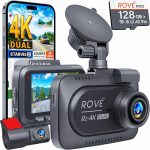
The mid-range segment is where the vast majority of consumers find their ideal dash cam in 2026. Priced between $50 and $150, these devices offer a dramatic leap in quality and features without breaking the bank. You will find 1440p (2K) or even entry-level 4K resolution, wider fields of (150 to 170 degrees), and superior low-light performance thanks to larger sensors and better image processing. Popular models from brands like Viofo, Thinkware, and Garmin dominate this price bracket.
This price range is also where you start seeing genuinely useful features. GPS logging, which records your speed and location, is common. Many models include a buffered parking mode, which uses a capacitor instead of a battery to power the camera for a short time after the car is off, capturing any impact that occurs while you are away. The build quality is noticeably better, with more durable mounts and heat-resistant components. For example, the Viofo A229 series, a perennial favorite, sits squarely in this range and offers dual-channel recording (front and rear) with excellent video quality.
For most drivers, this is the smartest investment. You get reliable, high-quality footage that can actually capture a license plate at night, and the added features like parking mode provide 24/7 protection. A practical piece of advice for this tier is to consider the total cost of ownership. While the camera itself is $100 to $150, you will likely need to purchase a hardwiring kit (around $15 to $25) to enable parking mode without draining your car battery. This small additional expense unlocks the full potential of your mid-range dash cam.
Premium Dash Cams: $150 to $400 – Professional Grade
Ultra-Premium and Specialty Dash Cams: $400 and Above
At the very top of the market, dash cams costing $400 and above are reserved for specialized use cases and cutting-edge technology. This category includes multi-channel systems that can record the front, rear, and interior of a vehicle simultaneously in high resolution. Thinkware's U1000 and BlackVue's DR900X-2CH series are prime examples, often retailing for $400 to $600 or more when bundled with accessories. These are not just cameras; they are comprehensive vehicle surveillance systems.
The differentiating features at this level are extraordinary. Some models offer 4K HDR (High Dynamic Range) for handling extreme lighting conditions, like driving from a dark tunnel into bright sunlight. Radar-based parking mode is a game-changer, using a built-in radar sensor to detect motion and wake the camera up, saving battery life and storage space compared to traditional motion detection. You also get premium cloud services with features like geofencing alerts (notifying you if your car leaves a designated area) and time-lapse recording for long-term parking surveillance.
This tier is overkill for the average commuter but essential for specific users. Owners of expensive vehicles, classic cars, or RVs often find the investment worthwhile. For a delivery driver who parks on busy city streets, a radar-based parking mode system can catch hit-and-run drivers with crystal-clear detail. The actionable advice here is to factor in the subscription costs for cloud services, which can add $10 to $20 per month. Also, professional installation is highly recommended for these complex systems, adding another $100 to $200 to the total cost.
Hidden Costs: What You Need to Buy Beyond the Camera
Key Takeaways
- ✓ Budget dash cams under $50 offer basic protection but struggle with night vision and lack advanced features like parking mode.
- ✓ The $50 to $150 mid-range is the best value for most drivers, offering 2K or 4K video, GPS, and reliable parking mode.
- ✓ Premium dash cams ($150-$400) provide true 4K 60fps, cloud connectivity, and superior low-light sensors for professional use.
- ✓ Ultraium systems over $400 include radar-based parking and multi-channel recording, but require professional installation and cloud subscriptions.
- ✓ Always budget for hidden costs like a high-endurance microSD card ($20-$50), a hardwiring kit ($1030), and potential installation fees.
Frequently Asked Questions
Q Do I really need a 4K dash cam, or is 1080p good enough?
For most drivers, a good 1080p or 1440p dash cam is sufficient for daytime use and general accident documentation. However, 4K becomes essential if you need to reliably read license plates at night or at highway speeds. The higher resolution provides more detail that can be zoomed in on later. If you drive frequently at night or in heavy traffic, investing in a 4K model from the mid-range or premium tier is highly recommended.
I install a dash cam myself, or do I need a professional?
You can absolutely install a basic dash cam yourself using the included cigarette lighter adapter. It is a simple plug-and-play process. However, if you want a clean, hidden wire installation or want to use parking mode, you will need a hardwiring kit. Installing a hardwiring kit involves connecting wires to your car's fuse box, which is a moderate DIY task. If you are not comfortable working with car electronics, paying a professional $50 to $150 for installation is a wise investment to avoid damaging your vehicle.
What is the best memory card for a dash cam?
The best memory card for a dash cam is a high-endurance microSD card from a reputable brand like Samsung, SanDisk, or Lexar. Standard microSD cards are not designed for the constant, looped writing that dash cams perform and will fail quickly. A high-endurance card is built to withstand this workload. For most users, a 128GB or 256GB card provides a good balance of storage space and cost, allowing for several hours of continuous recording before older footage is overwritten.
How long do dash cams typically last?
The lifespan of a dash cam depends heavily on its build quality and the environment it is exposed to. A budget dash cam might last one to two years, especially if it uses a battery that degrades in heat. A mid-range or premium dash cam with a supercapacitor can last three to five years or more. The supercapacitor is much more resistant to extreme temperatures than a lithium-ion battery. The most common failure point is the memory card, which should be replaced every one to two years as a preventative measure.
Is parking mode worth the extra cost and effort?
For anyone who parks on the street, in a shared lot, or in a high-traffic area, parking mode is absolutely worth it. It can catch hit-and-run drivers, vandalism, and theft. The cost is minimal (a $10 to $30 hardwiring kit) compared to the potential savings from an insurance claim. However, if you always park in a secure, private garage, parking mode may be unnecessary. Be aware that parking mode will put a small, continuous drain on your car battery, so it is not recommended for older vehicles with weak batteries.
Conclusion
Choosing the right dash cam in 2026 is a balancing act between your budget, your driving habits, and the level of protection you desire. We have explored the full spectrum, from the bare-bones functionality of a $30 camera to the sophisticated, cloud-connected surveillance of a $600 system. The key is to match the camera's capabilities to your specific needs. A daily commuter with a secure garage may be perfectly happy with a $70 mid-range model, while a rideshare driver parking in a busy city will benefit greatly from a premium system with parking mode and cloud alerts.
Your next step is simple. Assess your primary concern: is it basic accident documentation, or do you need 24/7 surveillance? Set a realistic total budget that includes the camera, memory card, and installation. Then, choose a model from the tier that best fits your needs. Do not let the wide range of prices overwhelm you. The best dash cam is the one you actually install and use every day. Take the information from this guide, make an informed decision, and drive with the confidence that comes from knowing you have the evidence you need, no matter what happens on the road.

Tony Kilmer is an auto mechanic and the author behind CarTruckAdvisor.com. He shares practical, no-nonsense guidance on car and truck maintenance, common problems, and repair decisions—helping drivers understand what’s going on and what to do next.