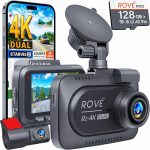
You have just parked your car, and as you walk away, you hear a sickening crunch. You spin around to see a driver backing out of a spot, their bumper now intimately acquainted with your rear panel. Without a rear-facing camera, this becomes a frustrating he-said-she-said dispute. In 2026, with traffic congestion at an all-time high and insurance fraud schemes becoming more sophisticated, the question of whether a rear dash cam is necessary has shifted from a luxury to a near-essential component of modern vehicle safety.
This article will explore the critical role of rear dash cams in protecting you from liability, capturing hit-and-run incidents, and providing complete evidence in the event of an accident. We will examine the limitations of single-channel systems, the unique benefits of rear-facing coverage, and the practical considerations for installation and use. By the end you will have a clear understanding of whether investing in a rear dash cam is the right decision for your driving habits and peace of mind.
The Growing Case for Complete Coverage: Why One Camera Is No Longer Enough
Beyond Accidents: The Hidden Benefits of a Rear Dash Cam
While accident documentation is the primary function, a rear dash cam offers several other valuable benefits that many drivers overlook. One of the most practical is monitoring what happens behind you while you are driving. If you are towing a trailer, a rear camera allows you to see if your load is shifting or if a tire is going flat. For families, it provides a way to keep an eye on children in the back seat, especially if you have a camera that can be angled to face inward. This can be a game-changer for parents of young children, allowing them to see if a child is unbuckling their seatbelt or becoming distressed without turning around.
Another significant advantage is protection against vandalism and theft. Many rear dash cams come with parking mode, which activates the camera when motion is detected while the vehicle is parked. If someone keys your car, slashes your tires, or attempts to break into your trunk, the rear camera captures their face and actions. This footage can be crucial for police investigations and insurance claims. In urban areas where street parking is common, this feature alone can justify the investment.
Finally, a rear dash cam can improve your driving habits. Knowing you are being recorded from both angles encourages safer behavior, such as checking your blind spots more thoroughly and maintaining a safe following distance. Some advanced models even include lane departure warnings and forward collision alerts, creating a comprehensive safety net. The psychological effect of being recorded can lead to a more attentive and defensive driving style, which benefits everyone on the road.
Choosing the Right System: Hardwired vs. Plug-in and Resolution Considerations
When selecting a rear dash cam, you have two primary installation options: hardwired or plug-in. A hardwired system connects directly to your vehicle's fuse box, providing constant power and allowing for 24/7 parking mode surveillance. This is the preferred choice for drivers who want maximum protection, as the camera will record even when the car is off. Professional installation is recommended, but many modern kits are designed for DIY installation with fuse taps and detailed instructions. The downside is that hardwiring can be more complex and may void certain warranties if not done correctly.
The plug-in option is simpler and more affordable. These cameras connect to your vehicle's 12V power outlet (cigarette lighter) and typically only record when the car is running. While this is sufficient for capturing incidents while driving, it leaves you vulnerable during parking. Some plug-in models offer a battery pack that can power the camera for a few hours after the car is turned off, but this is a compromise. For most drivers in 2026, the convenience and lower cost of a plug-in system make it a popular choice, especially if you primarily drive during the day and park in a garage at night.
Resolution is another critical factor. A rear camera should have at least 1080p resolution to capture clear license plates and faces. However, 1440p or 4K is becoming the standard for high-end models. The higher the resolution, the better the detail, especially in low-light conditions. Look for cameras with a wide dynamic range (WDR) and good night vision capabilities. A camera that produces grainy or blurry footage at night is nearly useless. Also, consider the field of view. A wider angle (140-170 degrees) captures more of the surrounding area, reducing blind spots. However, be aware that extremely wide angles can distort the image, making it harder to judge distances.
Real-World Scenarios: How a Rear Dash Cam Saved the Day
Consider the case of Sarah, a commuter in Chicago. She was stopped at a red light when a delivery truck behind her failed to brake and rear-ended her car. The truck driver immediately claimed that Sarah had reversed into him. Because Sarah had a rear dash cam, the footage clearly showed her brake lights were on and her car was stationary for over 10 seconds before the impact. The insurance company sided with Sarah, and the truck driver's company was held liable for the full cost of repairs, which exceeded $4,000. Without the rear camera, Sarah would have been found partially at fault, and her premiums would have skyrocketed.
Another example involves a hit-and-run in a grocery store parking lot. Mark returned to his car to find a large dent in his rear bumper and a note with a fake phone number. His rear dash cam, which had been in parking mode, captured the entire event. The footage showed a minivan backing out of a space and striking his car, then driving away. Mark was able to provide the police with the license plate number and a clear image of the driver. The driver was identified and charged with leaving the scene of an accident, and Mark's insurance covered the repairs with no deductible because the at-fault party was identified.
Finally, there is the story of a rideshare driver named David. He frequently picked up passengers at night. One passenger accused him of reckless driving and filed a complaint with the rideshare company, threatening to sue. David's dual-channel dash cam recorded the entire trip, including the passenger's loud and aggressive behavior. The audio and video footage exonerated David, and the passenger's account was suspended. For rideshare drivers, a rear dash cam is not just a safety tool; it is a professional necessity that protects their livelihood from false claims.
Installation Tips and Common Mistakes to Avoid in 2026
Installing a rear dash cam is a straightforward process, but there are common pitfalls that can ruin the experience. The most frequent mistake is poor cable management. Running the cable from the front camera to the rear window can be tricky. The best method is to tuck the cable along the headliner, down the A-pillar, and along the door sills. Avoid running the cable across the floor mats, as it can be a tripping hazard and get damaged. Use a plastic trim removal tool to gently pry up the trim and hide the cable. This gives a professional, clean look and prevents the cable from dangling.
Another common mistake is mounting the rear camera in the wrong location. The ideal spot is at the top center of the rear windshield, just below the rear wiper (if you have one). This provides the best field of view and minimizes glare from headlights behind you. Avoid mounting it too low, as the rear seats and headrests can block the view. Also, ensure the camera lens is clean and free of obstructions. Some drivers make the error of mounting the camera on the rear deck, which can be unstable and prone to vibration, resulting in blurry footage.
Finally, do not forget to format your memory card regularly. Dash cams write data continuously, and over time, the card can become fragmented or corrupted. Most cameras have a built-in formatting option in the settings menu. Format the card every two to four weeks to ensure reliable recording. Also, invest in a high-endurance microSD card designed for continuous recording, such as those from Samsung or SanDisk. A standard card can fail quickly under the heat and constant write cycles of a dash cam. In 2026, a 128GB or 256GB card is recommended for dual-channel systems to store several days of footage.
Key Takeaways
- ✓ A rear dash cam provides critical evidence in rear-end collisions, parking lot incidents, and hit-and-run scenarios, protecting you from false claims and insurance fraud.
- ✓ Dual-channel systems offer complete coverage, capturing both front and rear events, which is essential for modern driving conditions.
- ✓ Parking mode is a valuable feature that records incidents while your car is parked, deterring vandalism and theft.
- ✓ Choose a camera with at least 1080p resolution, wide dynamic range, and good night vision for clear footage in all conditions.
- ✓ Proper installation, including cable management and regular memory card formatting, ensures reliable performance and longevity of your dash cam.
Frequently Asked Questions
Can a rear dash cam drain my car battery?
Yes, if you use parking mode with a hardwired connection. However, most modern dash cams have a voltage cutoff feature that automatically shuts off the camera when the battery drops below a certain level (usually 11.8V to 12.2V). This prevents your car from being unable to start. Plug-in models that only record when the car is running do not drain the battery.
Is it legal to have a rear dash cam pointing at the back seat?
Laws vary by state and country. In general, it is legal to record video in your own vehicle, but audio recording laws are stricter. Many states require one-party consent for audio recording, meaning you must inform passengers if you are recording sound. For privacy, it is best to angle the camera to focus on the road behind you rather than the interior, unless you have a specific need to monitor children or pets.
How do I access footage from my rear dash cam?
Most dash cams use a microSD card to store footage. You can remove the card and insert it into a computer or use a USB cable to connect the camera directly. Many modern cameras also have Wi-Fi connectivity, allowing you to download footage to your smartphone via a dedicated app. This is the most convenient method for quickly sharing evidence with police or insurance.
Will a rear dash cam work in extreme heat or cold?
Most dash cams are designed to operate in a wide temperature range, typically from -20°C to 65°C (-4°F to 149°F). However, extreme heat is the biggest enemy of dash cams. Parking in direct sunlight can cause the internal temperature to exceed the operating limit, leading to shutdown or battery damage. Look for cameras with supercapacitors instead of lithium-ion batteries, as they are more heat-resistant and safer.
Do I need a separate rear camera, or can I use a single dual-channel system?
A dual-channel system is the best option. It uses a single main unit (usually mounted on the windshield) and a separate rear camera that connects via a cable. This simplifies installation and ensures both cameras are synchronized. Buying two separate single-channel cameras is possible but more complex and expensive, and they may not sync footage properly.
Conclusion
In 2026, the question is no longer whether a rear dash cam is necessary, but rather how you can afford to drive without one. The evidence is clear: a single front-facing camera leaves you exposed to a wide range of common and costly incidents, from parking lot hit-and-runs to fraudulent rear-end claims. A rear dash cam provides the complete picture, offering peace of mind, legal protection, and even improved driving habits. The investment is relatively small compared to the potential cost of a single accident or insurance dispute.
Take the next step today. Research dual-channel dash cam models that fit your budget and vehicle. Consider your driving habits: do you park on the street? Do you have a long commute? Do you carry passengers or valuable cargo? The answers will guide you to the right system. Install it properly, format your memory card regularly, and drive with the confidence that you have a silent witness protecting you from every angle. Your future self will thank you.

Tony Kilmer is an auto mechanic and the author behind CarTruckAdvisor.com. He shares practical, no-nonsense guidance on car and truck maintenance, common problems, and repair decisions—helping drivers understand what’s going on and what to do next.