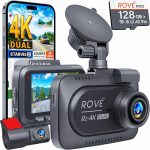
Picture this: you are driving down a busy Philadelphia street, and a car suddenly swerves into your lane, causing a collision. The other driver claims you ran a red light, but you know the truth. Without a dash cam, it becomes your word against theirs, a stressful and often expensive he-said-she-said battle. Dash cams have become essential tools for drivers seeking protection against fraudulent claims, hit-and-runs, and unfair traffic citations, but many Pennsylvania drivers hesitate, unsure if these devices are even legal to use in the state.
This comprehensive guide will answer the pressing question: are dash cams legal in PA? We will explore the specific laws governing dash cam placement, audio recording, and windshield obstruction in Pennsylvania for 2026. Whether you are a daily commuter in Pittsburgh, a rideshare driver in Harrisburg, or a family road-tripping through the Poconos, understanding these regulations will help you stay protected without risking a ticket. By the end of this article, you will know exactly how to install and use a dash cam legally and effectively in the Keystone State.
The Short Answer: Yes, Dash Cams Are Legal in Pennsylvania
The straightforward answer to the question "are dash cams legal in PA" is a resounding yes. Pennsylvania does not have any state law that explicitly prohibits the use of dashboard cameras in private vehicles. This means you can legally install a dash cam to record your driving, capture evidence in the event of an accident, and monitor your vehicle while parked. However, like many states, Pennsylvania imposes specific conditions on how and where you can mount these devices to ensure they do not interfere with safe driving or violate privacy laws.
The primary legal concern for dash cam users in Pennsylvania revolves around windshield obstruction. Under Pennsylvania law, specifically Title 75, Section 4524 of the Pennsylvania Vehicle Code, it is illegal to drive a vehicle with any object or material placed on the windshield that obstructs the driver's clear view of the road. This applies to stickers, decals, and yes, dash cams. The key is placement: your dash cam must be mounted in a location that does not block your vision of the road, traffic signals, or pedestrians. Most drivers find that mounting the camera behind the rearview mirror or in the lower corner of the windshield keeps it out of the primary field of view.
Another important consideration is the size of the device. While Pennsylvania law does not specify exact dimensions, the general rule is that the camera should not be larger than five inches square, which is the standard size allowed for GPS devices and similar electronics. If your dash cam is a bulky model with a large screen, you may want to consider a smaller, more discreet unit or mount it on the dashboard rather than the windshield. As long as your camera is positioned correctly and does not create an obstruction, you are fully compliant with Pennsylvania law.
Audio Recording Laws: The Two-Party Consent Trap
While video recording is generally permitted in public spaces, audio recording introduces a significant legal wrinkle for dash cam users in Pennsylvania. Pennsylvania is a "two-party consent" state when it comes to recording private conversations. This means that, under the Pennsylvania Wiretapping and Electronic Surveillance Control Act, it is illegal to record an audio conversation without the consent of all parties. If your dash cam captures audio inside your vehicle, and you have passengers who have not explicitly agreed to be recorded, you could be violating state law.
This law has real-world implications for dash cam users. For example, if you are in a minor fender bender and your dash cam records audio of the other driver apologizing or admitting fault, that recording might not be admissible in court if the other driver did not consent to being recorded. Similarly, if you are a rideshare driver and your passenger has a private phone conversation that your dash cam captures, you could face legal liability. The safest approach is to disable the audio recording feature on your dash cam entirely, or to use camera that does not have a built-in microphone.
However, there is an important exception. The two-party consent law applies to conversations where there is a "reasonable expectation of privacy." A conversation inside a private vehicle generally qualifies, but conversations that occur in public, such as through an open window or in a parking lot, may not. Additionally, if you clearly post a sign inside your vehicle stating that audio recording is in progress, you may be able to argue that passengers have implied consent by remaining in the vehicle. For most drivers, the simplest and most legally sound choice is to turn off audio recording and rely solely on video evidence, which is almost always sufficient for accident documentation.
Windshield Mounting: Where to Place Your Dash Cam Legally
Proper placement of your dash cam is the most critical factor in staying legal in Pennsylvania. As mentioned, Pennsylvania law prohibits any object that obstructs the driver's view. This includes objects mounted on the windshield, dashboard, or rear window. The law is intentionally broad to give law enforcement discretion, but it generally means your dash cam not be placed in the center of the windshield, directly in front of the driver's face, or in a position that blocks the view of the road, mirrors, or traffic signals.
The ideal mounting location is behind the rearview mirror. This spot is typically out of the driver's direct line of sight and does not obstruct the view of the road ahead. If your vehicle has a large rearview mirror housing, you can often mount the camera directly below it. Another legal option is the lower left or lower right corner of the windshield, as long as the does not block your view of the side mirror or the road. For drivers with smaller windshields, a dashboard mount that sits on the dashboard itself, rather than the glass, is a great alternative that avoids any windshield obstruction concerns.
It is also important to consider the rear window if you are using a rear-facing dash cam. Pennsylvania law applies to all windows that are essential for safe driving. If your rear-facing camera blocks your view through the rearview mirror, you may be in violation. Many drivers mount rear cameras on the rear deck or the top of the rear window, just below the roofline, to minimize obstruction. Finally, remember that Pennsylvania law enforcement officers can pull you over if they believe your dash cam is obstructing your view. To avoid this, always test your camera placement before driving and adjust it until you have a clear, unobstructed view of the from your normal driving position.
Privacy Concerns and Legal Use of Dash Cam Footage
Practical Tips for Choosing and Installing a Dash Cam in PA
Now that you understand the legal landscape, the next step is choosing the right dash cam for your needs. For Pennsylvania drivers, the most important features to look for are a compact size, a high-quality lens, and the ability to disable audio recording. A camera with a wide-angle lens (120 to 160 degrees) is ideal for capturing a broad view of the road, but be aware that extremely wide lenses can distort images. Look for a model with a capacitor rather than a battery, as capacitors perform better in extreme temperatures, which is important for Pennsylvania's hot summers and cold winters.
Installation is straightforward, but there are best practices to follow. For a clean, professional look, you can hardwire your dash cam into your vehicle's fuse box. This allows the camera to turn on and off with the car and supports parking mode without draining your battery. If hardwiring seems too complex, a simple plug-in to the 12V power outlet (cigarette lighter) works fine, though you will have a visible cable. Use cable clips to route the wire along the edge of the windshield and down the A-pillar, keeping it out of your way and maintaining a tidy interior.
Finally, consider the legal implications of using your dash cam footage with insurance companies. In Pennsylvania, which is a "choice no-fault" state for auto insurance, having dash cam footage can significantly speed up the claims process and help prove fault in an accident. Many insurance companies now offer discounts for drivers who use dash cams, so check with your provider. Always keep your dash cam's memory card formatted and regularly back up important footage to your computer or cloud storage. By following these practical tips, you can enjoy the peace of mind that comes with knowing you have a reliable witness on every drive.
Key Takeaways
- ✓ Dash cams are legal in Pennsylvania, but must be mounted so they do not obstruct the driver's view of the.
- ✓ Pennsylvania is a two-party consent state for audio recording; disable your dash cam's microphone to avoid legal issues.
- ✓ your dash cam behind the rearview mirror or on the dashboard to comply with windshield obstruction laws.
- ✓ Use dash cam footage only legitimate purposes like insurance claims and avoid sharing unblurred videos online.
- ✓ Choose a compact, capacitor-based dash cam and consider hardwiring it for a clean installation and parking mode support.
Frequently Asked Questions
Can I get a ticket for having a dash cam on my windshield in Pennsylvania?
Yes, you can be ticketed if your dash cam obstructs your view of the road. Pennsylvania law prohibits any object on the windshield that blocks the driver's clear view. If a police officer determines your dash cam is in a dangerous location, such as directly in front of your face or blocking a traffic signal, you may receive a citation. To avoid this, always mount your camera behind the rearview mirror or in a low corner of the windshield.
Q Is it legal to record audio with my dash cam in Pennsylvania?
It is risky. Pennsylvania is a two-party consent state, meaning all parties must agree to be recorded for a private conversation. If your dash cam records audio of passengers or other drivers without their knowledge, could be violating the state's wiretapping law. The safest option is to disable the audio recording feature on your dash cam entirely and rely solely on video evidence.
Can use dash cam footage as evidence in a Pennsylvania court?
Yes, dash cam footage is generally admissible as evidence in Pennsylvania civil and criminal courts, provided it was obtained legally. This means the camera must have been mounted legally (not obstructing your view) and, if audio is recorded, it must comply with the two-party consent law. Video-only footage is almost always admissible and can be powerful evidence in accident or traffic violation cases.
Do I need to inform passengers that I have a dash cam?
While not strictly required by law for video recording, it is a good practice inform passengers, especially if your dash cam records audio. Because Pennsylvania requires consent for audio recording, telling passengers about the camera and giving them the option to not ride in the vehicle can help establish implied consent. A small sticker on your window or dashboard stating "Audio and Video Recording in Progress" can also provide legal protection.
Are there any restrictions on dash cams for commercial drivers in Pennsylvania?
Commercial drivers, including truckers and rideshare drivers, must follow the same basic laws as private drivers regarding windshield obstruction and audio recording. However, commercial vehicles may have additional regulations from the Federal Motor Carrier Safety Administration (FMCSA) regarding the placement of electronic devices. Rideshare drivers should also check their company's specific policies, as some platforms have rules about camera placement and passenger notification.
Conclusion
In summary, dash cams are legal in Pennsylvania, but their use comes with important caveats. You must mount the camera in a location that does not obstruct your view of the road, and you should disable audio recording to avoid violating the state's strict two-party consent laws. By following these simple guidelines, you can equip your vehicle with a powerful tool that protects you from fraudulent claims, documents accidents, and provides invaluable peace of mind on Pennsylvania's roads.
Now is the perfect time to invest in a dash cam and install it correctly. Start by researching compact models with good low-light performance and a capacitor power source. Once you have your camera, take a few minutes to mount it behind your rearview mirror, route the cable neatly, and turn off the audio recording feature. With your dash cam properly set up, you will be ready for whatever the road throws your way in 2026 and beyond. Drive safe, and let your camera be your witness.

Tony Kilmer is an auto mechanic and the author behind CarTruckAdvisor.com. He shares practical, no-nonsense guidance on car and truck maintenance, common problems, and repair decisions—helping drivers understand what’s going on and what to do next.