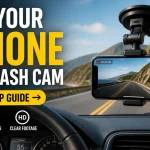
You have just finished installing a brand new GoPro Hero 13 Black on your motorcycle helmet, capturing stunning 5.3K footage of your morning commute. As you review the crisp video, a thought strikes you: could this same camera double as a dash cam for your car? It is a question more drivers are asking as action cameras become more powerful and traditional dash cams remain limited in resolution and versatility. The short answer is yes, a GoPro can be used as a dash cam, but the full answer involves understanding critical trade-offs in battery life, loop recording, and heat management that most users overlook.
In 2026, the line between action cameras and dash cams has blurred significantly, yet they remain fundamentally different tools designed for different jobs. This comprehensive guide will walk you through exactly how to set up a GoPro as a dash cam, the specific models that work best, the hidden costs you need to consider, and the situations where a dedicated dash cam still wins. By the end, you will know whether repurposing your GoPro is a smart money-saving hack or a compromise that could leave you without crucial footage when you need it most.
The Core Technical Challenges: Battery, Heat, and Recording Loops
The first and most significant hurdle when using a GoPro as a dash cam is power management. GoPro cameras are designed for short, high-intensity recording sessions, typically lasting 60 to 90 minutes on a single battery. A standard daily commute might be 30 minutes each way, but a road trip or long drive can easily exceed four hours. Without a continuous power source, your GoPro will die mid-journey, leaving you with no footage of the accident that happens on the way home. The solution is hardwiring a USB power cable to your car's fuse box or using a high-quality 12V adapter, but this introduces its own complications with cable management and camera mounting.
The second critical issue is heat dissipation. GoPro cameras run hot even in normal use, and placing them inside a car's windshield on a sunny day creates an oven-like environment. Internal temperatures can easily exceed 140 degrees Fahrenheit, triggering the camera's automatic shutdown to protect the electronics. In 2026, models like the GoPro Hero 12 and Hero 13 have improved thermal management, but they still lack the passive cooling fins and heat sinks found in dedicated dash cams. Users in warmer climates report that their GoPro dash cam setup fails after just 20 minutes of direct summer sun, a catastrophic failure point for a device meant to record accidents.
Finally, loop recording is the feature that makes or breaks a dash cam. Traditional dash cams automatically overwrite the oldest footage when the memory card is full, ensuring you always have the most recent recordings. GoPro cameras have a feature called "Looping Video" in their settings, but it is not as robust as dedicated dash cam implementations. The GoPro's looping mode can sometimes fail to properly segment files, leading to corrupted clips or gaps in coverage. Furthermore, the GoPro does not automatically start recording when the car turns on, a feature called "auto-record" that is standard on even budget dash cams. You must manually press the record button every time you drive, which is easy to forget.
Setting Up Your GoPro as a Dash Cam: A Step-by-Step Guide
If you have decided to proceed with using your GoPro as a dash cam, the first step is selecting the right mounting location. The ideal spot is behind the rearview mirror, as this keeps the camera out of your line of sight and provides a clear view of the road. Use the GoPro's adhesive flat mount, but ensure the surface is clean and dry before application. For a more permanent solution, consider a suction cup mount, but be aware that extreme heat can cause suction cups to fail, sending your expensive camera crashing onto the dashboard. A tether strap is a cheap insurance policy against this disaster.
Power management is the next critical step. You have three options: using the internal battery (limited to about one hour), plugging into a USB car charger (requires manual cable management), or hardwiring a USB power adapter to your car's fuse box. The hardwiring option is the most reliable and professional, providing continuous power and allowing you to hide the cable along the headliner and A-pillar. For 2026, GoPro offers the "GoPro Dash Cam Power Cable" accessory, which is a dedicated USB-C cable with a built-in voltage regulator that prevents draining your car battery when the engine is off. This accessory costs around $30 and is highly recommended.
The final configuration step is adjusting the GoPro's settings for dash cam use. Set the video resolution to 1080p at 60 frames per second, as this provides a good balance detail, file size, and heat generation. Enable "Looping Video" in the preferences menu and set the loop duration to 5 or 10 minutes. Turn off "Voice Control" and "Wireless Connections" to save battery and reduce heat. Most importantly, disable "Image Stabilization" (HyperSmooth) for dash cam use, as it can introduce a distracting wobble effect when your car is parked and the engine is idling. Finally, format your SD card as exFAT and use a high-endurance card rated for continuous recording, such as the SanDisk Max Endurance or Samsung Pro Endurance.
The Best GoPro Models for Dash Cam Duty in 2026
Not all GoPro models are created equal when it comes to dash cam use. The GoPro 13 Black, released in late 2025, is the current champion for this application. It features a larger heat sink, improved thermal management, and a dedicated "Dash Cam Mode" in its firmware that enables auto-recording when power is detected. This mode also includes a buffered parking mode, which records 30 seconds of footage before motion is detected, a feature previously exclusive to high-end dash cams. The Hero 13's 1/1.9-inch sensor also performs admirably in low light, capturing clear license plates at night.
The GoPro Hero 12 Black remains a solid budget option in 2026, often available for under $300. While it lacks the dedicated dash cam mode of the Hero 13, it still supports looping video and can be configured manually. The Hero 12's main weakness is its smaller battery and less efficient thermal design, meaning it will overheat faster in direct sunlight. Users in temperate climates or who primarily drive at night will find the Hero 12 perfectly adequate. Avoid the GoPro Hero 11 and older models, as their processors run significantly hotter and their image sensors struggle with the high dynamic range of headlights and taillights at night.
For those on a tight budget, the GoPro Hero 10 Black can work in a pinch, but with significant caveats. Its GP1 processor is notorious for overheating, and the camera will often shut down after 30 minutes of summer driving. The Hero 10 also lacks the 10-bit color and improved low-light performance of newer models, resulting in grainy footage at dusk. If you already own a Hero 10, it is worth trying, but do not expect reliability. The GoPro Hero 9 and earlier models are not recommended for dash cam use due to their poor thermal performance and outdated image processing.
GoPro vs. Dedicated Cam: The 2026 Comparison
Legal Considerations and Practical Use Cases for 2026
Before using a GoPro as a dash cam, you must understand the legal landscape in 2026. In most jurisdictions, recording video on public roads is legal, but audio recording laws vary significantly. GoPro cameras record audio by default, and in 12 US states (including California, Florida, and Pennsylvania), recording audio without the consent of all parties is illegal. You should disable audio recording in the GoPro settings or check your local laws. Additionally, mounting a camera on your windshield may violate your state's "obstruction of view" laws. In many states, the camera must be mounted behind the rearview mirror and cannot block more than a few inches of the windshield.
There are specific use cases where a GoPro dash cam setup excels. For rideshare drivers (Uber, Lyft), a GoPro mounted on the dashboard provides a clear view of both the road the passenger cabin, offering protection against false accusations. The GoPro's wide-angle lens captures the entire interior, which is difficult with a standard dash cam. For road trips and adventure driving, a GoPro can be easily removed from its mount and used to capture hiking, biking, or scenic footage, making it a versatile travel companion. For classic car owners who want to avoid drilling holes or running visible wires, a GoPro mounted on a suction cup is a non-permanent solution that preserves the vehicle's originality.
However, for daily commuting in heavy traffic, a dedicated dash cam remains the superior choice. The convenience of auto-record, parking mode, and dual-channel coverage cannot be overstated. If you are using a GoPro as a dash cam, you must develop a routine: plug in the camera, press record, verify the red light is blinking, and remember to check the footage regularly. Many users report missing crucial footage because they forgot to press record or the camera overheated and shut down without them noticing. In 2026, the best approach is to use a GoPro as a supplementary camera for specific trips or situations, while relying on a dedicated dash cam for your primary daily driving needs.
Key Takeaways
- ✓ A GoPro can function as a dash cam, but requires manual setup for power, looping, and auto-recording, which is less convenient than a dedicated unit.
- ✓ Heat management is the biggest weakness; GoPros overheat in direct sunlight and will shut down, potentially missing critical footage.
- ✓ The GoPro Hero 13 Black is the best model for dash cam use in 2026, featuring a dedicated Dash Cam Mode and improved thermal design.
- ✓ Dedicated dash cams offer superior parking mode, dual-channel recording, and cloud connectivity that GoPro cannot match.
- ✓ For rideshare drivers, road trips, or as a secondary camera, a GoPro dash cam setup provides unmatched video quality and versatility.
Frequently Asked Questions
Can I leave my GoPro in the car 24/7 as a dash cam?
It is not recommended. GoPro cameras are not designed for the extreme temperature fluctuations inside a parked car. In summer, interior temperatures can exceed 150 degrees Fahrenheit, which will damage the battery and potentially melt internal components. If you must leave it, remove the battery and power it exclusively via USB, but expect reduced lifespan. Dedicated dash cams use capacitors instead of batteries and are rated for continuous automotive use.
Will a GoPro drain my car battery if left plugged in?
Yes, if you use a standard USB adapter that provides constant power. GoPro cameras draw about 5 watts while recording, which will drain a typical car battery in 10-12 hours. To avoid this, use a hardwiring kit with a voltage cutoff feature, or plug into a USB port that only powers on when the ignition is on. The GoPro Dash Cam Power Cable includes a voltage regulator that cuts power at 11.8 volts to protect your battery.
How do I get my GoPro to automatically start recording when I start the car?
The GoPro Hero 13 Black has a built-in "Auto Record" feature in its Dash Cam Mode that starts recording when it detects USB power. For older models like the Hero 12 or Hero 11, you can use a third-party accessory called the "GoPro Auto Start Cable" which simulates pressing the shutter button when power is applied. Alternatively, you can use a smart plug with a timer, but this adds complexity.
What SD card should I use for a GoPro dash cam?
You must use a high-endurance microSD card rated for continuous recording. Standard cards will fail within weeks due to the constant write cycles. Recommended cards include the SanDisk Max Endurance (up to 60,000 hours), Samsung Pro Endurance (up to 43,800 hours), and Kingston Canvas React Plus. Use a 128GB or 256GB card formatted as exFAT. Avoid cards larger than 512GB, as GoPro cameras can have compatibility issues.
Can I use a GoPro as a rear-facing dash cam?
Yes, but it is complicated. You would need a second GoPro, a second mount, and a way to power both cameras. The GoPro Hero 13 does not support dual-camera synchronization like dedicated dash cams. You would need to manually start both cameras and sync the footage in editing software. For most users, a dedicated dual-channel dash cam is far more practical and cost-effective for rear-facing coverage.
Conclusion
Using a GoPro as a dash cam is a viable option for specific situations, but it is not a one-to-one replacement for a dedicated device. The GoPro excels in video quality, versatility, and portability, making it ideal for rideshare drivers, road trip enthusiasts, and those who want a camera that can pull double duty for action sports. However, the compromises in heat management, parking mode, and convenience mean that for daily commuting in heavy traffic, a dedicated dash cam remains the more reliable and practical choice.
If you decide to proceed with a GoPro dash cam setup, invest in the Hero 13 Black, a hardwiring kit, and a high-endurance SD card. Develop a strict routine of checking the camera before each drive and reviewing footage weekly. For everyone else, consider using your GoPro as a supplementary camera for special trips while purchasing a dedicated dash cam for your daily driver. The peace of mind that comes from a system that automatically records every moment of your drive, without you having to think about it, is worth the investment. Your future self, sitting in an insurance adjuster's office with crystal-clear footage of an accident, will thank you.

Tony Kilmer is an auto mechanic and the author behind CarTruckAdvisor.com. He shares practical, no-nonsense guidance on car and truck maintenance, common problems, and repair decisions—helping drivers understand what’s going on and what to do next.