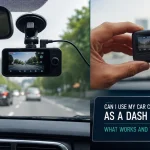
The Standard: How Most Dash Cams Automatically Start Recording
The vast majority of dash cams sold today are designed to be "plug-and-play" devices. They are engineered to turn on and begin recording automatically the moment they receive power. This power typically comes from your vehicle's 12-volt accessory port (the cigarette lighter) or a hardwired connection to your fuse box. When you start your engine, the port becomes live, the dash cam boots up, and recording begins within seconds. In 2026, this is the baseline expectation for any quality dash cam, from budget models to high-end 4K units.
This automatic start-up relies on a feature called "loop recording." Once the camera is powered on, it writes video files to a microSD card in short segments, usually one to five minutes long. When the card becomes full, the camera automatically overwrites the oldest footage, ensuring continuous recording without manual intervention. For example, if you drive to work every day, your dash cam will record each trip, and the oldest footage from last week will be erased to make room for today's commute. You never need to press a button or format the card unless you want to save a specific clip.
However, there is a critical nuance: the camera must be properly connected to a power source that is switched on and off with the ignition. If you plug your dash cam into a port that is always powered, even when the car is off, the camera may stay on indefinitely, draining your car battery. Conversely, if you use a cheap USB cable that does not supply enough power, the camera might not boot up at all. The key takeaway is that for 99% of daily driving, you do not need to turn on your dash cam manually—it will do it for you, provided the setup is correct.
When You Might Need to Press the Button: Manual Override and Special Modes
Hardwiring vs. Cigarette Lighter: Which Setup Ensures Automatic Recording?
The method you use to power your dash cam directly impacts whether you need to turn it on manually. The simplest approach is plugging into the cigarette lighter port. This works well for most drivers because the port is typically switched with the ignition. When you start the car, power flows; when you turn it off, power stops. The dash cam turns on and off automatically. However, this setup has a downside: the cable often dangles across the dashboard or windshield, which can be unsightly and distracting. It also leaves the port occupied, preventing you from charging other devices.
A more professional and reliable solution is hardwiring the dash cam directly into your vehicle's fuse box. This involves connecting the camera to a circuit that is only active when the ignition is on (for driving) and optionally to a constant power circuit (for parking mode). A hardwire kit includes a voltage cutoff feature, which automatically shuts off the camera if your car battery drops below a safe voltage, preventing a dead battery. With a proper hardwire installation, the dash cam will turn on and off with the car flawlessly, every time, with no manual intervention needed.
For drivers who want the ultimate in convenience, many 2026 dash c now support "ignition detection" via the OBD-II port. This plug-and-play adapter reads the vehicle's electrical system and powers the camera only when the engine is running. It also provides accurate voltage data for parking mode. Regardless of which method you choose, the goal is the same: a setup where the camera receives power only when the car is on, or intelligently manages power when off. If you are experiencing issues with your camera not turning on automatically, the first thing to check is your power connection—a loose or incompatible cable is the most common culprit.
Key Takeaways
- ✓ In 2026, nearly all dash cams are designed to turn on and start recording automatically when your car starts, provided they are properly connected to a switched power source.
- ✓ You may need to manually activate parking mode or press the lock button to save important clips, but daily driving requires no manual intervention.
- ✓ Hardwiring your dash cam to the fuse box or using an OBD-II adapter provides the most reliable automatic operation and enables parking mode features.
- ✓ Dash cams use supercapacitors, not traditional batteries, so they do not need to be manually turned on to conserve power; they rely on your car's electrical system.
- ✓ If your dash cam is not recording automatically, check the power cable, replace the microSD card with a high-endurance model, and review the camera's settings for any conflicting timers.
Frequently Asked Questions
Do I have to turn on my dash cam every time I drive?
No, you do not. The vast majority of dash cams sold in 2026 are designed to power on and begin recording automatically when they detect power from your vehicle's ignition. As long as the camera is properly plugged into a switched power source (like the cigarette lighter or a hardwired fuse tap), it will start recording without any manual action from you.
happens if my dash cam has a battery? Do I need to charge it?
Most modern dash cams use supercapacitors instead of traditional batteries. Supercapacitors do not need to be charged; they only provide a few seconds of power to save the last video file when the car turns off. If you have an older model with a lithium battery, it will charge while the car is running, but you should not need to manually charge it. However, battery-based cameras are less reliable in extreme temperatures.
How do I make sure my dash cam records when my car is parked?
To enable parking mode, you typically need to hardwire your dash cam to a constant power source in your fuse box. Many cameras then automatically switch to parking mode when the ignition is off, using motion detection or impact sensors to wake up and record. Some models require you to manually press a button to enter parking mode. Check your camera's manual for the specific activation method.
Why does my dash cam sometimes not turn on when I start the car?
The most common reasons are a loose power cable, a faulty cigarette lighter adapter, or a failing microSD card. Try a different USB cable or port. If the camera still does not turn on, format the microSD card in the camera or replace it with a new high-endurance card. Also, check that the camera's power settings are not set to a manual "off" timer.
Can I leave my dash cam plugged in all the time without draining my car battery?
If you plug your dash cam into a port that is always powered (not switched with the ignition), it will drain your car battery over time. To avoid this, always use a switched power source for normal driving. If you want parking mode, use a hardwire kit with a voltage cutoff feature that automatically turns off the camera when battery voltage drops too low, protecting your car from being stranded.

Tony Kilmer is an auto mechanic and the author behind CarTruckAdvisor.com. He shares practical, no-nonsense guidance on car and truck maintenance, common problems, and repair decisions—helping drivers understand what’s going on and what to do next.