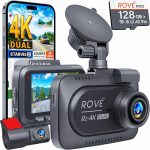
Imagine a world where you never have to fumble with suction cups, hide dangling power cables, or remember to format an SD card before every drive. That world is rapidly becoming a reality as major automakers begin integrating dash cams directly into their vehicles. In 2026, the question is no longer whether you should buy a dash cam, but rather which new car comes with one already built in, seamlessly blending into the vehicle's design and electronics.
This shift from aftermarket accessories to factory-installed technology matters more than you might think. Built-in dash cams offer superior integration with your car's existing safety systems, cleaner aesthetics, and often, features that aftermarket units simply cannot match, such as recording from multiple camera angles or automatically saving footage when the car detects an accident. In this comprehensive guide, we will explore every major car model currently offering a factory dash cam, explain how these systems work, and help you decide if a built-in solution is the right choice for your next vehicle purchase.
The Pioneers: Tesla and the Rise of Sentry Mode
When discussing built-in dash cams, Tesla the undisputed pioneer. Since 2019, Tesla has offered a feature called "TeslaCam" and "Sentry Mode" on nearly all its models, including the Model 3, Model Y, Model S, and Model X. These systems utilize the vehicle's existing Autopilot cameras—typically the forward-facing, side repeater, and rear cameras—to record driving footage and monitor the car's surroundings when parked. The footage is saved to a USB drive plugged into the vehicle's center console, making it a true software-defined dash cam solution.
The genius of Tesla's approach is that it requires no additional hardware. The cameras are already there for autonomous driving features, so the dash cam functionality is essentially a free software upgrade. In 2026, Tesla has refined this system significantly. The latest software updates allow for live viewing of camera feeds through the Tesla mobile app, automatic saving of clips when the car detects a collision or a security threat, and even the ability to review footage directly on the large center touchscreen. For example, if someone bumps your parked Model Y in a parking lot, Sentry Mode will automatically save a ten-minute clip from all four cameras, giving you undeniable evidence.
However, there are trade-offs. The system relies on a USB drive, which can fail or become corrupted if not a high-endurance model. Additionally, the video quality, while good, is not as high-resolution as some dedicated aftermarket 4K dash cams. The biggest drawback is that Tesla's system is designed for security and accident documentation, not for capturing scenic drives or high-quality vlogging. Despite these limitations, Tesla's implementation has set the standard for the industry, proving that built-in dash cams are not just a gimmick but a genuinely useful safety feature.
Korean Innovation: Hyundai, Kia, and Genesis Lead the Charge
While Tesla pioneered the software-based approach, Korean automakers Hyundai, Kia, and their luxury brand Genesis have taken a different, more hardware-focused path. In 2026, several of their models come with a dedicated, factory-installed dash cam system that is physically built into the windshield area. This system is not reliant on the car's ADAS cameras; instead, it uses its own high-resolution camera module designed specifically for recording. Models like the Hyundai Ioniq 6, Kia EV9, and Genesis GV70 offer this as either standard equipment or as part of a technology package.
The advantage of the Korean approach is superior video quality and dedicated storage. These systems typically record in 1080p or even 2K resolution, with a wide-angle lens that captures the entire road ahead. The footage is stored on an internal memory card or a dedicated slot in the overhead console, eliminating the need for a USB drive. Furthermore, these systems are deeply integrated with the car's infotainment system. You can view and save clips directly on the touchscreen, and in some models, the dash cam will automatically record for a few minutes after the car is parked if it detects an impact, acting as a basic parking mode.
A standout feature in the 2026 Genesis GV70 is the "Multi-Camera Recording System." This uses the surround-view cameras to record footage from all four sides of the vehicle simultaneously. If you are involved in an incident, you can review not just what happened in front, but also what happened to the sides and rear. This is a massive advantage over single-channel aftermarket dash cams. For example, if a car sideswipes you in an intersection, the Genesis system will have clear footage from the side camera, while a standard front-facing dash cam might miss the entire event. The only downside is that these systems are often limited to recording only when the car is on or for a short time after parking, unlike some aftermarket units that offer 24/7 low-power recording.
European Precision: BMW, Mercedes-Benz, and the Digital Rearview Mirror
European luxury manufacturers have been slower to adopt full built-in dash cams, but 2026 marks a turning point. BMW and Mercedes-Benz are now offering "Drive Recorder" or "Dash Cam" features that leverage their existing camera arrays, similar to Tesla. However, their implementation is more polished and legally compliant for European markets, where privacy laws are strict. For instance, the BMW Drive Recorder, available on models like the 5 Series and iX, can record up to 40 seconds of footage before and after a detected incident, automatically saving it to the car's internal hard drive.
Mercedes-Benz takes a slightly different approach with its "Guard 360" system. This is less of a traditional dash cam and more of a comprehensive vehicle security system that includes recording capabilities. When the car detects a potential theft or break-in, the system activates the surround-view cameras to record the event. In the 2026 Mercedes-Benz E-Class, you can also manually activate the dash cam function to record the road ahead. The footage is stored in the car's head unit and can be accessed via the Mercedes me app. This integration is seamless, but the recording duration is often limited to short clips around an incident, rather than continuous recording.
One unique innovation from European brands is the integration of dash cam functionality into the digital rearview mirror. In models like the 2026 Audi Q6 e-tron, the rearview mirror camera can double as a dash cam, recording the view behind the car. This is particularly useful for capturing tailgating incidents or rear-end collisions. The video quality from these systems is excellent, often exceeding 1080p, and the footage is automatically time-stamped and geo-tagged. The main limitation is that these systems are often optional extras costing several hundred dollars, and they typically do not offer the same level of manual control or continuous recording as a dedicated aftermarket unit.
The Chinese Disruption: BYD, NIO, and the Tech-First Approach
Chinese automakers, led by BYD and NIO, have embraced built-in dash cams with an enthusiasm that surpasses even Tesla. In 2026, it is almost impossible to find a new BYD or NIO model without a comprehensive built-in dash cam system. These vehicles treat the dash cam as a core feature, not an afterthought. For example, the BY Seal and the NIO ET7 come standard with a 360-degree camera system that doubles as a full-time dash cam, recording from all angles simultaneously. The footage is stored on the car's internal SSD, which can hold weeks of driving data.
The standout feature of these systems is their cloud integration. NIO's "NIO Pilot" system can automatically upload critical footage to the cloud in the event of a serious accident. This means that even if the car is severely damaged or the internal storage is destroyed, the evidence is safely stored online. Furthermore, these systems offer advanced features like "Driver Monitoring" integration, where the dash cam can also record the driver's face to detect drowsiness or distraction. In the 2026 BYD Han, you can even use the dash cam to take photos and videos for social media, with the footage automatically transferred to your phone via the car's 5G connection.
The sheer value proposition is staggering. In China, a BYD Atto 3, which costs the equivalent of $30,000, includes a built-in dash cam that rivals systems found in $100,000 luxury cars. This is forcing global automakers to reconsider their feature sets. The only potential drawback for international buyers is data privacy and localization. Some Chinese systems may store data on servers in China, which could raise privacy concerns for users in Europe or North America., the user interfaces are often designed for the Chinese market, though English versions are becoming more common in export models.
The Aftermarket Alternative: Why You Might Still Want a Dedicated Dash Cam
Key Takeaways
- ✓ Tesla pioneered built-in dash cams using existing Autopilot cameras, offering Sentry Mode and TeslaCam as a software-based solution.
- ✓ Hyundai, Kia, and Genesis offer dedicated hardware dash cams with superior video quality and multi-camera recording from all four sides of the vehicle.
- ✓ European brands like BMW and Mercedes-Benz provide integrated Drive Recorder systems that automatically save short clips around detected incidents.
- ✓ Chinese automakers BYD and NIO lead in value and cloud integration, often including 360-degree dash cams as standard equipment with cloud backup.
- ✓ Aftermarket dash cams still offer advantages in video resolution, parking mode duration, and portability between vehicles.
Frequently Asked Questions
Do all new cars come with built-in dash cams in 2026?
No, built-in dash cams are still a premium or optional feature on most vehicles. They are most common on electric vehicles and luxury models. Mainstream brands like Toyota, Honda, and Ford are only beginning to offer them on select high-trim models. You should always check the specifications of a specific trim level before purchasing.
Can I use a built-in dash cam to record continuously like an aftermarket unit?
It depends on the manufacturer. Tesla and most European systems only record short clips around detected events (accidents, impacts, or manual activation). Korean systems like those in Genesis and Hyundai often allow for continuous recording while driving. Chinese systems from BYD and NIO typically offer full-time continuous recording. Always verify the recording mode before relying on it.
What happens to the footage if the car is in a serious accident and loses power?
Most built-in systems have a supercapacitor or small battery that provides enough power to save the current recording to internal storage before shutting down. Premium systems like those in NIO vehicles also upload critical footage to the cloud in real-time. However, if the storage device is physically destroyed, the footage may be lost, which is why cloud backup is a valuable feature.
Is the video quality from a built-in dash cam as good as a dedicated aftermarket one?
Generally, no. Most factory systems record in 1080p or 2K resolution, while high-end aftermarket units offer true 4K at 60fps. However, the multi-camera coverage (front, rear, sides) in many built-in systems can provide more comprehensive evidence than a single 4K camera. For most drivers, the quality of factory systems is more than sufficient for insurance and legal purposes.
Can I add a built-in dash cam to my existing car that didn't come with one?
In most cases, no. Built-in dash cams are deeply integrated into the vehicle's electrical system, software, and camera hardware. Retrofitting is extremely complex and expensive, often requiring new wiring, software updates, and camera modules. For an existing car, an aftermarket dash cam is the only practical solution.
Conclusion
The integration of dash cams into new vehicles is one of the most significant safety and security trends in the automotive industry for 2026. From Tesla's software-driven approach to the dedicated hardware systems in Korean and Chinese models, drivers now have more factory options than ever before. These systems offer the undeniable benefits of seamless integration, clean aesthetics, and multi-camera coverage that can capture evidence from every angle. However, they are not a one-size-fits-all solution, and their limitations in video quality, parking mode, and portability mean that aftermarket dash cams still have a vital role to play.
As you shop for your next vehicle, we encourage you to treat a built-in dash cam as a serious consideration, much like you would a sunroof or a premium sound system. Test the system during your test drive, ask the dealer about recording modes and storage capacity, and compare it to what an aftermarket unit could offer. Whether you choose a factory system for its convenience or an aftermarket unit for its advanced features, the most important thing is that you have a dash cam at all. In an era where road incidents are common, having reliable video evidence is no longer a luxury—it is a necessity. Make your next car a smarter, safer one.

Tony Kilmer is an auto mechanic and the author behind CarTruckAdvisor.com. He shares practical, no-nonsense guidance on car and truck maintenance, common problems, and repair decisions—helping drivers understand what’s going on and what to do next.