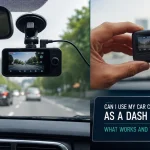
You are driving down the highway when a car suddenly swerves into your lane, forcing you to slam on the brakes. The driver behind you is not so lucky, and a minor fender bender becomes a chaotic scene of finger-pointing and insurance claims. In moments like these, a dash cam is not just a gadget; it is your silent, impartial witness that can save you thousands of dollars and countless headaches. In 2026, dash cams have evolved from simple recording devices into sophisticated safety tools with 4K resolution, cloud connectivity, and artificial intelligence features that can alert you to potential collisions before they happen.
Choosing the best dash cam to buy in 2026 can feel overwhelming with so many options on the market. This comprehensive guide will walk you through the critical features to consider, the top models available this year, and practical advice for installation and use. Whether you are a daily commuter, a rideshare driver, or a road trip enthusiast, understanding what makes a dash cam great will help you make an informed decision that protects you on the road.
Understanding the Core Features That Define a Great Dash Cam in 2026
The most important feature of any dash cam is video quality. In 2026, the standard has shifted decisively to 4K resolution, which captures license plates and road signs with remarkable clarity even in challenging lighting conditions. While 1080p cameras still exist and are more affordable, they often struggle to read plates at night or at highway speeds. A true 4K sensor, combined with a wide dynamic range (WDR), ensures that both bright sunlight and dark shadows are balanced, so you never miss a critical detail. Look for cameras that advertise at least 60 frames per second (fps) for smoother playback, though 30fps is acceptable for most users.
Night vision performance is equally critical. Many dash cams use Sony STARVIS sensors, which are specifically designed for low-light environments. These sensors amplify available light without introducing excessive noise or grain, making them ideal for nighttime driving or parking in dimly lit areas. Additionally, consider the lens aperture; a lower f-stop number (like f/1.6 or f/1.8) allows more light to hit the sensor, resulting in brighter and clearer after dark. A camera with poor night vision is essentially useless for the most common accident scenarios, which often occur during evening commutes or in parking lots.
Finally, storage and loop recording are practical considerations that directly impact usability. Most dash cams use microSD cards, and in 2026, a 128GB or 256GB card is recommended for 4K recording. Loop recording automatically overwrites the oldest footage when the card is full, ensuring you never run out of space. However, you must also look for a G-sensor, which detects sudden impacts and locks the current file so it is not overwritten. Without this feature, your most important evidence could be erased before you have a chance to save it.
Top Dash Cam Models to Buy in 2026: Our Expert Picks
For the best overall dash cam in 2026, the VIOFO A229 Pro remains the gold standard. This dual-channel system records front and rear in 4K, uses a Sony STARVIS 2 sensor for exceptional night vision, and includes a built-in GPS module that logs your speed and location. Its parking mode is highly customizable, allowing you to choose between time-lapse, motion detection, or low-bitrate recording. The A229 Pro also features a supercapacitor instead of a battery, which is far more durable in extreme heat and cold, making it a reliable choice for any climate.
If are looking for a premium, discreet option, theware U1000 a top contender. This camera records in 4K at 30fps and includes advanced driver assistance features like lane departure warnings and forward collision alerts. Its cloud connectivity is a standout feature; you can view live footage from your phone, receive parking impact notifications, and even track your vehicle’s location if it is stolen. The U1000 is more expensive, but its build quality and software ecosystem justify the price for users who want the absolute best.
For budget-conscious buyers, the Garmin Dash Cam Mini 3 offers an excellent balance of price and performance. Despite its tiny size, it records in 1440p, which is a step above 1080p and sufficient for most needs. It integrates seamlessly with Garmin’s Drive app, which provides voice control and automatic incident uploads. While it lacks a rear camera option, its compact design makes it perfect for rental cars or multi-vehicle households. For rideshare drivers, the Nexar Beam is another strong choice, as it offers unlimited cloud storage for your footage and automatically creates accident reports.
How to Choose Between Single, Dual, and Multi-Channel Systems
The most common decision you will face is whether to buy a single-channel camera (front only) or a dual-channel system (front and rear). A single-channel camera is simpler to install and less expensive, but it leaves a significant blind spot. In a rear-end collision, for example, a front-only camera cannot prove that you were stopped or that the other driver was distracted. In 2026, dual-channel systems are strongly recommended for anyone who parks on the street or drives in heavy traffic, as they provide complete coverage of your vehicle.
Multi-channel systems, which can include interior cameras or side cameras, are becoming more popular for specific use cases. Rideshare drivers often choose three-channel systems that record the road, the cabin, and the rear seat to protect against passenger disputes. Similarly, fleet managers use multi-channel setups to monitor driver behavior and vehicle surroundings. However, these systems are more complex to install and require more storage space. For the average driver, a dual-channel system with front and rear 4K cameras offers the best balance of coverage and simplicity.
When evaluating a dual-channel system, pay close attention to the rear camera’s resolution. Some budget models advertise a dual-channel setup but only offer 1080p for the rear camera, which can be a significant downgrade. In 2026, look for systems where both cameras record at least 2K (1440p) or ideally 4K. Also, consider the cable length; a rear camera that requires a long, thin cable can be difficult to route through your vehicle’s headliner and door seals. Many premium models now include a coaxial cable that is more durable and easier to hide.
Installation, Parking Mode, and Legal Considerations
Proper installation is crucial for getting the most out of your dash cam. The simplest method is to plug the camera into your vehicle’s 12V power outlet (cigarette lighter) and route the cable along the edge of the windshield. However, this leaves a visible wire and uses a port that might be needed for other devices. A hardwiring kit, which connects the dash cam directly to your vehicle’s fuse box, is a cleaner and more professional solution. Hardwiring also enables parking mode, which allows the camera to record while your car is off, using a low-voltage cutoff to prevent draining your battery.
Parking mode is one of the most valuable features in 2026, as it can capture hit-and-run incidents, vandalism, and theft. There are three main types: motion detection, which starts recording when movement is detected; time-lapse, which records a single frame per second for continuous coverage; and buffered recording, which saves a few seconds before and after an impact. Buffered recording is the most reliable, as it captures the entire event. However, it requires a hardwired connection and a high-endurance microSD card designed for constant writing.
Legally, dash cams are generally permitted in the United States and most countries, but there are important restrictions. In some states, it is illegal to mount a camera on the windshield in a way that obstructs the driver’s view. Typically, you must place the camera behind the rearview mirror or in the lower corner of the windshield. Audio recording is also regulated; in 12 states, you must inform passengers that they are being recorded. Always check local laws before installing a dash cam, and consider disabling audio recording if you are unsure.
Maintenance, Firmware Updates, and Maximizing Your Dash Cam’s Lifespan
A dash cam is a piece of electronics that requires regular maintenance to function reliably. The most issue is a corrupted microSD card, which can cause the camera to stop recording or produce garbled footage. To prevent this, format your memory card inside the dash cam every two to four weeks. This clears out fragmented data and ensures the card is ready for new recordings. Also, use a high-endurance card specifically designed for dash cams, as standard cards can fail quickly under the constant heat and write cycles.
Firmware updates are another critical but often overlooked task. Manufacturers like VIOFO, Thinkware, and Garmin regularly release updates that improve video quality, fix bugs, and add new features. For example, a 2025 firmware update for the VIOFO A229 Pro improved its parking mode sensitivity and reduced false alerts. Check the manufacturer’s website or app every few months for updates, and follow the instructions carefully to avoid bricking your device. Many modern dash cams can update over Wi-Fi, making the process much simpler.
Finally, consider the physical environment of your dash cam. In summer, a windshield can reach temperatures over 150 degrees Fahrenheit, which can damage batteries and plastic components. Choose a camera with a supercapacitor instead of a lithium-ion battery, as supercapacitors are far more heat-tolerant. In winter, extreme cold can cause LCD screens to become sluggish, but the recording function should remain unaffected. Regularly clean the lens with a microfiber cloth to remove dust and smudges, and check that the adhesive mount is still secure, especially after swings.
Key Takeaways
- ✓ Prioritize 4K resolution with Sony STARVIS sensor for the best night vision and license plate readability.
- ✓ A dual-channel system (front and rear) is strongly recommended for complete accident coverage and parking protection.
- ✓ Hardwiring your dash cam enables parking mode and eliminates messy cables, but requires a low-voltage cutoff to protect your car battery.
- ✓ Format your high-endurance microSD card every two to four weeks to prevent corruption and ensure reliable recording.
- ✓ Choose a dash cam with a supercapacitor rather than a battery for superior durability in extreme temperatures.
Frequently Asked Questions
Is it legal to use a dash cam in all 50 states?
Dash cams are legal in all 50 states, but there are restrictions on windshield placement and audio recording. Most allow mounting the camera behind the rearview mirror as long as it does not obstruct the driver’s view. For audio, 12 states (including California, Florida, and Illinois) require all-party consent, meaning you must inform passengers they are being recorded. It is best to disable audio recording if you are unsure of your local laws.
How much storage do I need for a 4K dash cam?
For a single 4K camera recording continuously, a 128GB microSD card will store approximately 8 to 10 hours of footage. For a dual-channel system recording both front and rear in 4K, a 256GB card is recommended, providing about 10 to 12 hours of total storage. If you use parking mode, you will need even more space. Always use a high-endurance card rated for dash cam use, such as the Samsung Pro Endurance or SanDisk High Endurance.
Can a dash cam drain my car battery when parked?
Yes, if you use parking mode without a low-voltage cutoff. Most hardwiring kits include a voltage monitor that automatically shuts off the dash cam when the battery drops below a certain level (usually 11.8V to 12.2V). This prevents the camera from draining your battery so much that your car will not start. If you are not hardwiring, the camera will only operate when the car is running, so battery drain is not an issue.
What is the difference between a G-sensor and motion detection in parking mode?
A G-sensor detects physical impacts, such as a car bumping into yours, and immediately locks the current video file. Motion detection, on the other hand, starts recording when the camera’s sensor sees movement in its field of view, like a person walking past. For parking mode, buffered recording combines both: the camera constantly records in a loop, and when the G-sensor detects an impact, it saves the footage from a few seconds before and after the event.
Do I need a dash cam with cloud storage?
Cloud storage is not necessary for most drivers, but it is very useful for specific scenarios. If you park in a high-crime area or drive a rideshare vehicle, cloud storage allows you to receive instant notifications of impacts and view live footage from anywhere. It also provides a backup in case the camera is stolen or damaged. However, cloud features usually require subscription and a constant Wi-Fi or cellular connection, which adds ongoing cost.
Conclusion
Choosing the best dash cam to buy in 2026 comes down to understanding your specific needs and budget. For most drivers, a dual-channel 4K system like the VIOFO A229 Pro offers the perfect combination of video quality, reliability, and parking protection. If you prioritize cloud connectivity and driver assistance features, the Thinkware U1000 is a premium choice that justifies its higher price. And for those on a tighter budget, the Garmin Dash Cam Mini 3 proves that you do not need to spend a fortune to get reliable, high-quality footage.
Remember that a dash cam is an investment in your peace of mind and financial protection. Take the time to install it properly, maintain your memory card, and keep the firmware updated. With the right camera and a little bit of care, you will have a silent witness that can save you from insurance disputes, fraudulent claims, and the stress of proving what really happened on the road. Do not wait for an accident to happen; equip your vehicle today and drive with confidence.

Tony Kilmer is an auto mechanic and the author behind CarTruckAdvisor.com. He shares practical, no-nonsense guidance on car and truck maintenance, common problems, and repair decisions—helping drivers understand what’s going on and what to do next.