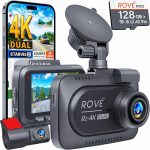
You have just purchased a new dash cam system, and you are ready to install the rear camera. But as you hold the small device against your back windshield, a wave of uncertainty hits. Should it go in the center? The top? The bottom? Will it block your view? Will it even work through the tinted glass? These are the exact questions that plague every driver, and getting the answer wrong can mean the difference between capturing a crucial license plate and recording a blurry, useless video.
In 2026, dash cams are no longer a luxury item; they are a standard tool for insurance protection and legal evidence. However, their effectiveness is entirely dependent on proper placement. This guide will walk you through the five most critical factors for mounting your rear camera, from optimal height and angle to dealing with privacy glass and vehicle-specific challenges. By the end, you will know exactly where to place your camera for maximum coverage and clarity.
The Golden Rule: Center Mount, Top of the Glass
The single most effective location for a rear dash cam is the center of the rear windshield, mounted as high as possible. This position mimics the natural sightline of a driver looking in their rearview mirror. By placing the camera at the top center, you achieve the widest possible field of view, capturing both lanes of traffic behind you and the full width of your vehicle’s rear bumper. This is critical for recording side-swipe incidents or vehicles approaching from an angle.
Mounting the camera high also reduces the amount of dashboard reflection and interior light glare that can wash out the image. When the camera is lower, it tends to pick up the bright headlights of your own vehicle reflecting off the rear deck, or the glow of your interior dome lights. A high mount keeps the lens focused on the road outside, not the inside of your car. For most sedans, SUVs, and hatchbacks, this location provides the most balanced and reliable footage.
However, there is one major caveat: the rear windshield wiper. If your vehicle has a rear wiper, you must ensure the camera is mounted either directly in the wiper’s path or just above it. A camera placed below the wiper’s reach will quickly become useless in rain or snow. Test your wiper’s arc before permanently adhering the mount. If the wiper does not reach the top center, you may need to mount the camera slightly off-center to keep the lens clean.
Key Takeaways
- ✓ Mount the rear camera at the top center of the rear windshield for the widest and most balanced field of view.
- ✓ Angle the lens so the horizon is one-third from the top, showing a sliver of sky and a hint of your rear bumper.
- ✓ For tinted windows, mount the camera close to the glass or use a CPL filter to eliminate glare and reflections.
- ✓ Adapt your mounting strategy for trucks, vans, and convertibles using license plate frames or interior roll bar mounts.
- ✓ Hide the camera cable along the headliner and C-pillar to maintain a clean, safe, and professional installation.
Frequently Asked Questions
Can I mount my rear dash cam on the rear deck (parcel shelf) instead of the glass?
Yes, you can mount it on the rear deck, but this is often a compromise. The camera will be further from the glass, increasing the chance of interior reflections. It also places the camera lower, which may reduce the field of view. If you must use the rear deck, ensure the camera lens is as close to the glass as possible and use a CPL filter to reduce glare.
Will a rear dash cam work through factory privacy glass?
It depends on the darkness of the tint and the quality of your camera’s sensor. Many modern dash cams with Sony STARVIS sensors can handle moderate tint, but very dark privacy glass will significantly reduce image quality, especially at night. If the footage is too dark, you may need to mount the camera below the glass on the rear deck or headliner.
What do I do if my rear windshield wiper does not reach the top center mount?
This is a common problem. You have two options. First, mount the camera slightly off-center, within the wiper’s arc. Second, mount it at the top center and accept that the lens will get dirty in bad weather. You can also use a hydrophobic coating on the glass to help water bead off, keeping the view clearer for longer.
How do I hide the rear camera cable in a hatchback or SUV?
Hatchbacks and SUVs are actually easier than sedans. Run the cable along the headliner to the rear, then down the rubber weather seal of the rear hatch opening. You can then cross the cable over to the camera using the flexible rubber conduit that houses the rear wiper washer fluid line. This keeps the cable completely hidden and allows the hatch to open and close freely.
Is it legal to mount a dash cam on the rear windshield in all states?
Generally, yes, as long as it does not obstruct your view. Most states have laws against objects hanging from the rearview mirror or blocking the front windshield, but rear window mounts are typically allowed. However, some states have restrictions on window tint that may affect the mounting location. Always check your local traffic laws, and ensure the camera does not block your view of the road behind you.
Conclusion
Choosing where to mount your rear dash cam is a decision that directly impacts the quality of your evidence and the safety of your installation. By following the golden rule of top-center mounting, carefully angling the lens, and addressing challenges like tinted glass and vehicle-specific designs, you can ensure your camera captures every critical detail. Remember that cable management is just as important as the mount itself for a professional and safe setup.
Now that you have the knowledge, it is time to act. Grab your trim tools, test your wiper arc, and install your rear camera with confidence. A properly mounted rear dash cam is your best defense against false claims and hit-and-run drivers. Do not settle for a quick, sloppy install. Take the extra fifteen minutes to do it right, and you will have peace of mind every time you get behind the wheel.

Tony Kilmer is an auto mechanic and the author behind CarTruckAdvisor.com. He shares practical, no-nonsense guidance on car and truck maintenance, common problems, and repair decisions—helping drivers understand what’s going on and what to do next.