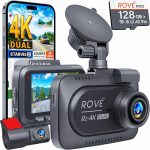
Imagine this: you are sitting at a red light, and suddenly, a driver slams into the back of your car. In the chaos that follows, the other driver claims you rolled backward into them. Without proof, it is your word against theirs, and your insurance rates could skyrocket. This scenario plays out thousands of times every day, and it is precisely why a good dash cam for cars has evolved from a niche gadget into an essential piece of automotive safety equipment for every driver.
In 2026, dash cams are smarter, more reliable, and more affordable than ever before. They are no longer just grainy cameras that record the road ahead; they are devices equipped with 4K resolution, night vision, GPS tracking, and even artificial intelligence that can alert you to potential collisions. This comprehensive guide will walk you through everything you need to know to select the perfect dash cam for your vehicle, covering the critical features to look for, the types available, installation tips, and legal considerations. By the end, you will have the knowledge to make a confident purchase that protects you on the road.
Why Absolutely Need a Dash Cam in 2026
Critical Features to Look for in a 2026 Dash Cam
The most important feature of any dash cam is video quality. In 2026, the standard has shifted decisively to 4K resolution (3840 x 2160 pixels) for the front camera. This level of detail is essential for reading license plates, road signs, and identifying faces, even from a distance. While 1080p cameras are still available and cheaper, they often fail to capture crucial details in low-light conditions or at high speeds. Look for a camera with a wide dynamic range (WDR) and a high frame rate (60fps is ideal) to ensure smooth, clear footage in both bright sunlight and dark tunnels.
Night vision capability is non-negotiable. A good dash cam for cars must perform exceptionally well in low-light conditions, as many accidents occur at night. Look for models that use a combination of a large aperture lens (f/1.6 or lower) and advanced sensor technology, such as Sony STARVIS sensors. These sensors are specifically designed to capture clear images in near-darkness without relying on harsh infrared lights that can wash out the image. Some premium 2026 models also feature "super night vision" that uses AI to enhance the video feed in real-time, making it possible to see details that would otherwise be invisible.
Storage and connectivity are the final pillars of a great dash cam. Most cameras use microSD cards, and you should aim for a card with at least 128GB of capacity and a high write speed (U3 or V30 rating) to handle 4K video. Look for a camera that supports loop recording, which automatically overwrites the oldest footage when the card is full. connectivity, built-in Wi-Fi and GPS are essential. Wi-Fi allows you to download footage directly to your smartphone without removing the memory card, while GPS embeds your speed, location, and route data into the video, which is critical for proving your exact position during an incident.
Types of Dash Cams: Single, Dual, and Multi-Channel Systems
The common and affordable type is the single-channel dash cam, which records only the view through the front windshield. This is a great entry point for budget-conscious drivers or those who primarily want protection against front-end collisions. However, its limitation is obvious: it cannot capture what happens behind or inside the vehicle. If you are only concerned with proving you did not run a red light, a single-channel camera may be sufficient, but it leaves significant blind spots.
For comprehensive coverage, a dual-channel dash cam is the gold standard in 2026. These systems include a front-facing camera and a rear camera, typically mounted on the rear window. This setup captures both the road ahead and the traffic behind you, which is invaluable for rear-end collisions, side-swipe incidents, and parking lot accidents where someone backs into you. Many dual-channel models now record in 4K on the front and 2K or 1080p on the rear, providing excellent detail from both angles. The installation is slightly more complex due to the rear camera cable, but added protection is well worth the effort.
For rideshare drivers, taxi operators, or parents of new drivers, a multi-channel or "cabin-view" system is the best choice. These dash cams add a third camera that points into the passenger compartment. This interior camera can record interactions with passengers, which is crucial for driver safety in rideshare scenarios, or monitor a teen driver's behavior, such as phone use or distracted driving. Some high-end models even offer a fourth channel for a side-view camera. While these systems are more expensive and require more complex wiring, they offer the most complete protection and situational awareness available on the market today.
Installation, Power, and Legal Considerations
Proper installation is key to getting the most out of your dash cam. The most common method is a simple suction cup mount to the windshield, which is easy to remove and adjust. However, for a cleaner, more permanent look, many drivers opt for a hardwiring kit. This connects the dash cam directly to your car's fuse box, allowing it to draw power continuously. Hardwiring is essential for using parking mode effectively, as it prevents the camera from draining your car's battery. If you are not comfortable working with car electronics, most auto shops will install a hardwiring kit for a reasonable fee, typically between $50 and $100.
Power management is a critical consideration, especially for parking mode. If you do not hardwire, you will need to rely on the camera's internal battery or a supercapacitor. Supercapacitors are superior to lithium-ion batteries in dash cams because they are more resistant to extreme heat and cold, which are common inside a parked car. They also have a longer lifespan. For parking mode, look for a camera with a voltage cutoff feature, which automatically shuts off the camera when your car's battery drops below a certain level (usually 11.8V to 12.0V) to ensure you can still start your engine.
Legally, dash cam usage is generally permitted in the United States and most of Europe, but there are important restrictions. In the U.S., audio recording laws vary by state; some states require one-party consent (you can record without telling passengers), while others require two-party consent (everyone in the car must know they are being recorded). It is your responsibility to know your local laws. Additionally, you must never mount a dash cam in a that obstructs your view of the road. In many jurisdictions, mounting a camera in the center of the windshield is legal as long as it is below the AS-1 line (the shaded area at the top of the windshield). Always check your local traffic laws to ensure compliance.
Top Dash Cam Recommendations for 2026
For the budget-conscious driver seeking a reliable single-channel option, the VIOFO A119 V3 remains a top contender in 2026. It offers excellent 2K resolution with a Sony STARVIS sensor, supercapacitor power, and a compact design. It lacks Wi-Fi and GPS in the base model, but its video quality at its price point is unmatched. This is the perfect choice for someone who wants a no-frills, highly reliable camera that gets the job done without the bank.
For the best all-around dual-channel system, the Thinkware U1000 is a standout. It records in 4K on the front and 2K on the rear, features advanced parking mode with radar detection, and includes built-in GPS and Wi-Fi. Its "Energy Saving Parking Mode" is incredibly efficient, allowing for days of recording without draining the battery. The U1000 also includes advanced driver-assistance features like lane departure and forward collision warnings. While it is a premium investment, its build quality and feature set make it the best choice for drivers who want the ultimate in protection and peace of mind.
Finally, for rideshare drivers or parents, the Vantrue N4 Pro is the leading multi-channel option. It features a front 4K camera, an interior 1080p camera, and a rear 1080p camera, all with excellent night vision. The interior camera uses infrared LEDs to capture clear footage even in complete darkness, which is critical for rideshare safety. It also includes a 24-hour parking mode and a convenient remote control for saving footage. The N4 Pro is a comprehensive solution that covers every angle, making it the definitive choice for those who need to see everything happening inside and outside their vehicle.
Key Takeaways
- ✓ A dash cam provides irrefutable evidence in accidents, helping to resolve insurance claims and legal disputes quickly and fairly.
- ✓ Prioritize 4K resolution, a Sony STARVIS sensor for night vision, a supercapacitor for heat resistance when choosing a camera.
- ✓ Dual-channel systems (front and rear) offer the best balance of coverage and value for most drivers in 2026.
- ✓ Hardwiring your dash cam is essential for reliable parking mode and prevents battery drain.
- ✓ Always check your local laws regarding windshield mounting locations and audio recording consent before installation.
Frequently Asked Questions
Is it legal to have a dash cam on my windshield?
In most places, yes, but there are restrictions. In the U.S., federal regulations and many state laws prohibit mounting anything in the "area of obstruction" on the windshield. This typically means you must mount the camera behind the rearview mirror or in a location that does not block your view of the road, usually below the AS-1 line (the shaded strip at the top of the windshield). Always check your specific state and local traffic laws.
Will a dash cam drain my car battery?
It can if not installed correctly. Most dash cams are designed to turn off when the car is off. However, if you use parking mode, the camera will draw power. To prevent a dead battery, choose a camera with a voltage cutoff feature that shuts off the camera when the battery voltage drops to a safe level (e.g., 11.8V). Hardwiring with a professional kit that includes a low-voltage protector is the safest method.
How much storage do I need for a dash cam?
For a 4K dash cam, a 128GB microSD card is the recommended minimum. This will typically hold between 6 to 10 hours of footage, depending on the bitrate. A 256GB card is better for longer trips or if you want to keep more footage before it is overwritten. Always use a high-endurance card (like the Samsung Pro Endurance or SanDisk High Endurance) designed for constant writing and rewriting.
Can a dash cam record when the car is parked and off?
Yes, if it has a parking mode feature. This mode uses a motion sensor or a G-sensor to detect impacts or movement around the car and automatically starts recording. To use parking mode effectively, the camera must be hardwired to a constant power source (like the fuse box) or have a large internal battery. Some cameras use a low-power buffered mode that records a few seconds before and an event is detected.
Do I need a dash cam with GPS?
While not strictly necessary, GPS is highly recommended. It embeds your vehicle's speed, location coordinates, and route into the video file. This data is crucial for proving you were obeying the speed limit or were in the correct lane during an accident. It allows you to view your driving route on a map when reviewing footage on your computer or phone. The small extra cost is well worth the added layer of evidence.
Conclusion
Choosing a good dash cam for cars in 2026 is an investment in your safety, your finances, and your peace mind. We have covered the critical reasons for owning one, from providing undeniable accident evidence to deterring theft and improving your driving habits. We have broken down the essential features like 4K resolution, night vision, and parking mode, and explored the different types of systems available, from simple single-channel units to comprehensive multi-channel setups. By understanding installation requirements and legal considerations, you are now equipped to make an informed decision that fits your specific needs and budget.
Your next step is simple: assess your driving environment and your budget. If you are a daily commuter in a busy city, a dual-channel system with excellent parking mode is a wise choice. If you are a rideshare driver, a multi-channel camera is non-negotiable. Do not wait for an accident to happen before you realize the value of a dash cam. Purchase a reliable model, install it correctly, and drive with the confidence that you have a silent, always-watching witness on your side. Your future self will thank you.

Tony Kilmer is an auto mechanic and the author behind CarTruckAdvisor.com. He shares practical, no-nonsense guidance on car and truck maintenance, common problems, and repair decisions—helping drivers understand what’s going on and what to do next.