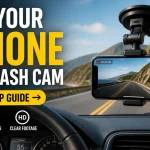
Picture this: you are driving the scenic highways of Oahu or navigating the busy streets of Honolulu when a driver suddenly cuts you off, causing a collision. In the moments that follow, your word is pitted against theirs, and without concrete evidence, insurance claims can become a nightmare. Dash cameras, or dash cams, have become an essential tool for drivers worldwide, offering an unbiased record of events on the road. But before you mount one on your windshield in the Aloha State, you need to understand the specific legal landscape of Hawaii, which has some of the strictest privacy laws in the nation.
This comprehensive guide will answer the critical question: are dash cams legal in Hawaii in 2026? We will break down the state’s unique laws regarding windshield obstructions, audio recording consent, and privacy rights. You will learn exactly where you can place your camera, whether you need to inform passengers they are being recorded, and how to use your dash cam footage legally in court or with your insurance company. By the end, you will have a clear roadmap to using a dash cam in Hawaii without breaking the law.
The Core Legality: Dash Cams Are Legal, But Placement Matters
The short answer is yes, dash cams are legal to own and operate in Hawaii. Unlike some states that have outright bans on recording devices in vehicles, Hawaii permits their use for the purpose of documenting driving conditions and potential accidents. However, legality hinges almost entirely on how and where you install the device. The primary legal hurdle is not the camera itself, but its placement on your windshield, which is governed by Hawaii Revised Statutes Section 291-21.
Hawaii law is very specific about windshield obstructions. It is illegal to drive a vehicle with any sign, poster, or other non-transparent material on the front windshield, side wings, or side windows that obstructs the driver’s clear view. For dash cams, this means you cannot mount the camera in a position that blocks your line of sight to the road, mirrors, or traffic signals. The law is designed to prevent accidents caused by distracted driving due to obstructed vision. A camera mounted in the lower center of the windshield, behind the rearview mirror, is generally considered acceptable, as it falls within the area already obscured by the mirror itself.
For practical compliance in 2026, the safest placement is a small, discreet camera mounted directly behind the rearview mirror on the passenger side. This location minimizes obstruction and keeps the camera out of your direct line of sight. Avoid mounting the camera on the driver’s side of the windshield or in the upper center where it could block your view of traffic lights. Also, be cautious with suction cup mounts that are large or bulky. If a police officer determines that your dash cam is creating a significant blind spot, you can be cited for a traffic violation, which carries a fine. The key is to ensure your installation prioritizes safety and visibility above all else.
Key Takeaways
- ✓ Dash cams are legal in Hawaii, but must be mounted so they do not obstruct the driver's view of the road, mirrors, or traffic signals.
- ✓ Hawaii is a two-party consent state for audio recording; you must inform and get permission from all passengers before recording audio inside the vehicle.
- ✓ The safest legal practice is to disable the audio recording function on your dash cam to avoid potential felony wiretapping charges.
- ✓ Dash cam footage is generally admissible in court and accepted by insurance companies, provided it was obtained legally (proper placement and no illegal audio).
- ✓ Choose a compact, capacitor-powered dash cam that can be mounted discreetly behind the rearview mirror to comply with Hawaii’s windshield obstruction laws.
Frequently Asked Questions
Can I get a ticket for having a dash cam on my windshield in Hawaii?
Yes, you can. Hawaii law prohibits any object on the windshield that obstructs the driver's clear view. If a police officer determines your dash cam is blocking vision, you can be cited for a traffic violation. To avoid this, mount the camera behind your rearview mirror in a low-profile position.
Do I need to tell my passengers that my dash cam is recording?
Yes, if your dash cam is recording audio. Hawaii is a two-party consent state, meaning all parties in a private conversation must consent to being recorded. If you are only recording video and have disabled the audio, you do not need to inform passengers, but it is still a good practice to be transparent.
Is it legal to use a dash cam as a rideshare driver for Uber or Lyft in Hawaii?
Yes, but with strict conditions. You must have a clear, conspicuous notice inside the vehicle stating that audio and video recording is in progress. You must also disable audio recording or obtain explicit consent from every passenger. Many rideshare drivers choose to disable audio to avoid legal complications.
Can my dash cam footage be used against me in court?
Yes. While dash cam footage is often used to prove innocence, it can also be used to prove guilt. If your camera captures you speeding, running a red light, or driving recklessly, that footage can be subpoenaed and used as evidence against you in a civil or criminal case.
What should I do if my dash cam records an accident?
First, ensure everyone is safe and call 911 if needed. Do not tamper with the footage. Save the raw, unedited video file immediately by copying it to your phone or a separate memory card to prevent it from being overwritten. Provide the footage to your insurance company and, if requested, to law enforcement. Do not post the footage on social media until the legal process is complete.
Conclusion
Navigating the legality of dash cams in Hawaii requires a careful balance between personal safety and respect for privacy. The good news is that you can absolutely use a dash cam to protect yourself on the road, as long as you follow two key rules: mount it where it does not block your view, and disable the audio recording. By doing so, you avoid the two most common legal pitfalls that trip up drivers in the Aloha State. The footage you capture can be a powerful tool for proving fault in an accident, deterring insurance fraud, and even providing evidence in hit-and-run cases.
As you move forward, take the time to install your dash cam correctly and review its settings. Disable the microphone, choose a discreet mounting spot behind the rearview mirror, and ensure the device is securely attached. In 2026, with traffic increasing across the islands, a dash cam is more than just a gadget—it is a form of digital insurance. Drive safely, respect the privacy of others, and let your dash cam give you the peace of mind you deserve on Hawaii’s beautiful but unpredictable roads.

Tony Kilmer is an auto mechanic and the author behind CarTruckAdvisor.com. He shares practical, no-nonsense guidance on car and truck maintenance, common problems, and repair decisions—helping drivers understand what’s going on and what to do next.