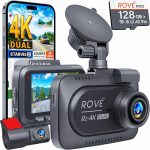
You are driving down Interstate 95 near Fredericksburg when a car suddenly swerves into your lane, forcing you to slam on the brakes. The driver behind you is not so lucky, rear-ending your vehicle. In the chaos that follows, you realize you have a perfect witness mounted on your dashboard: your dash cam. But as you hand over the footage to the police officer, a nagging question crosses your mind: is this recording even legal in Virginia?
Dash cams have become essential tools for drivers across the country, offering protection against fraudulent claims, providing evidence in accidents, and even capturing scenic road trips. However, Virginia has specific laws governing their use, particularly regarding placement on the windshield and audio recording. This comprehensive guide will walk you everything you need to know about dash cam legality in Virginia for 2026, including mounting restrictions, audio consent laws, and best practices to ensure you stay on the right side of the law.
Windshield Placement Laws in Virginia
Virginia law strictly regulates what can be attached to your vehicle's windshield. According to Virginia Code Section 46.2-1054, no person shall drive a motor vehicle with any object or material placed on the windshield that obstructs the driver's clear view. This includes stickers, decals, and yes, dash cams. The law is designed to ensure drivers have an unobstructed field of vision to prevent accidents caused by blocked sightlines.
However, there is a specific exception that allows for dash cams and other electronic devices. Virginia law permits the placement of GPS devices, dash cams, and similar equipment in a seven-inch square area in the lower corner of the windshield on the passenger side. Alternatively, you can mount the device in a five-inch square area in the lower corner the driver's side. This means you cannot mount a dash cam in the center of your windshield or anywhere that would block your view of the road, pedestrians, or traffic signals.
For practical purposes, most Virginia drivers choose to mount their dash cams behind the rearview mirror. This location is generally considered compliant because it does not obstruct the driver's view of the road. However, you should ensure the camera does not extend below the mirror's line of sight. If you are pulled over and an officer determines your dash cam placement is obstructing your view, you could face a traffic infraction and a fine. To be safe, always mount your dash cam in the lower corners as specified by law or behind the rearview mirror.
Key Takeaways
- ✓ Dash cams are legal in Virginia but must be mounted in specific locations: a seven-inch square on the lower passenger side, a five-inch square on lower driver side, or behind the rearview mirror- Virginia is a one consent state for audio recording, meaning you can record conversations inside your vehicle, but you cannot record conversations you are not a part of.
- ✓ Disabling the audio recording feature on your dash cam is the safest way to avoid potential wiretapping violations.
- ✓ Dash cam footage is generally admissible as evidence in Virginia courts, provided it is authentic, relevant, and obtained legally.
- ✓ When choosing a dash cam prioritize compact design, high resolution, wide-angle lens, capacitor-based power, and low-light performance for Virginia's driving conditions.
Frequently Asked Questions
Can I get a ticket in Virginia for having a dash cam on my windshield?
Yes, you can be ticketed if your dash cam is mounted in a location that obstructs your view of the road. Virginia law allows mounting in a seven-inch square area on the lower passenger side or a five-inch square area on lower driver side. Mounting the camera behind the rearview mirror is generally considered safe, but any placement that blocks your view could result in a traffic infraction and a fine.
Do I need to tell my passengers that I have a dash cam recording audio?
While Virginia's one-party consent law not legally require you to inform passengers, it is highly recommended. Informing passengers promotes transparency and can prevent legal disputes. If a passenger later claims they had a reasonable expectation of privacy your disclosure can serve as evidence that they consented to the recording. For maximum safety, consider disabling audio recording when carrying passengers.
Can I use dash cam footage to report other drivers to the police in Virginia?
Yes, you can submit dash cam footage to law enforcement to report dangerous driving, such as reckless driving or running a red light. However, the police are not obligated to take action based solely on your footage. In many cases, they may use it as supporting evidence if they witnessed the violation or if there is a pattern of complaints. For serious offenses, you may need to file a formal complaint and be willing to testify.
Is it legal to have a dash cam that records while my car is parked in Virginia?
Yes, parking mode is legal in Virginia as long as the camera is not recording into areas where there is a reasonable expectation of privacy, such as inside someone's home. Recording public areas like streets and parking lots is generally permissible. However, you should be aware that leaving a visible dash cam in a parked car could attract thieves, so consider a model with a stealth design or remove the camera when parking for extended periods.
What should I do if I am in an accident and have dash cam footage in Virginia?
, ensure everyone is safe and call 911 if there are injuries. Do not touch or remove the dash cam's memory card at the scene unless instructed by law enforcement. When the police arrive, inform them that you have a dash cam and ask if they would like to review the footage. Do not post the footage on social media or share it with insurance companies without first consulting an attorney, as your statements could be used against you. Make a backup copy of the footage as soon as possible.
Conclusion
Dash cams are a powerful tool for Virginia drivers, offering protection, evidence, and peace of mind on the road. By understanding the state's specific laws regarding windshield placement and audio recording, you can use your dash cam confidently and legally. Remember to mount your device in a compliant location, consider disabling audio recording to avoid privacy issues, and always use your footage responsibly. With the right setup, your dash cam can be your best witness in any driving situation.
Now is the time to review your current dash cam setup or purchase a new one that meets Virginia's requirements. Take a moment to check your camera's mounting position and ensure it does not obstruct your view. If you have audio recording enabled, decide whether to keep it on or turn it off based on your typical driving habits. By taking these simple steps, you can enjoy the benefits of dash cam technology while staying fully compliant with Virginia law in 2026 and beyond.

Tony Kilmer is an auto mechanic and the author behind CarTruckAdvisor.com. He shares practical, no-nonsense guidance on car and truck maintenance, common problems, and repair decisions—helping drivers understand what’s going on and what to do next.