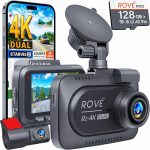
You are driving down Interstate 40 near Nashville when a car swerves into your lane, forcing you onto the shoulder. In the chaos, you realize you have no witness and no proof of what happened. This is the exact scenario where a dash camera becomes your silent witness, but before you mount one on your windshield, you need to know the legal landscape in Tennessee. With more drivers than ever installing dash cams for insurance protection and personal safety, understanding the specific laws governing their use is critical to avoid fines or legal complications.
Tennessee has unique regulations that balance a driver’s right to record with privacy protections and traffic safety. In 2026, the laws remain largely consistent with previous years, but new court rulings and updated enforcement practices make it essential to stay informed. This article will walk through every legal consideration, from where you can mount your camera to how audio recording affects consent laws, and what happens if you are pulled over with a dash cam running. Whether you are a daily commuter in Memphis or a road-tripper through the Smoky Mountains, this guide will ensure you stay on the right side of the law.
Windshield Mounting Laws: Where You Can Place Your Dash Cam
Tennessee law is specific about what can be attached to your windshield, and dash cams fall under these regulations. According to Tennessee Code Annotated 55-9-416, no object may be suspended between the driver and the windshield that obstructs the driver’s view. However, the law makes an exception for devices that are mounted in a seven-inch square in the lower corner of the windshield on the passenger side, or in a five-inch square in the lower corner on the driver’s side. This means you cannot simply stick your dash cam in the center of the windshield at eye level.
For most drivers, the safest and most legal placement is behind the rearview mirror. This location keeps the camera out of your direct line of sight while still capturing a clear view of the road. If you have a larger camera, consider mounting it on the dashboard itself rather than the windshield. Tennessee law also permits mounting devices on the dashboard as long as they do not obstruct your view of the road or traffic signals. A common mistake is placing the camera too low on the windshield, which can block your view of pedestrians or the hood of your car.
Practical advice for 2026: use a suction cup mount that allows you to easily remove the camera when parking in public areas. Some drivers have reported that police officers in Tennessee are more lenient with small, discreet cameras mounted behind the mirror, but they will cite you for a large camera blocking the windshield. If you are pulled over, the officer may ask you to remove the camera if they believe it is an obstruction. To avoid this, always test your camera placement by sitting in the driver’s seat and checking that the device does not interfere with your view of the road, side mirrors, or the rearview mirror.
Audio Recording and Tennessee’s Wiretapping Laws
One of the most complex legal areas for dash cams in Tennessee is audio recording. Tennessee is a “one-party consent” state for audio recordings, meaning that as long as one person in the conversation consents to the recording, it is legal. Since you are the driver and you are aware of the recording, you are that one party. This means you can legally record conversations inside your vehicle, including conversations with passengers, without telling them. However, this only applies to conversations where you are present.
The complication arises when your dash cam records conversations outside the vehicle, such as through an open window or when you are parked. If your camera picks up a conversation between two pedestrians or people in another car, and you are not part of that conversation, you could potentially violate Tennessee’s wiretapping laws. Tennessee Code 39-13-601 makes it illegal to intentionally intercept any wire, oral, or electronic communication without the consent of at least one party. If your dash cam is recording audio from outside your vehicle, you are technically intercepting a private conversation without consent.
To stay safe, most dash cam experts recommend disabling the audio recording feature on your camera unless you have a specific need for it. Many modern dash cams have a simple toggle switch or a setting in the menu to turn off audio. If you do keep audio recording on, be aware that any footage you submit to insurance companies or law enforcement could include audio that might be inadmissible in court if it was recorded illegally. In 2026, Tennessee courts have upheld that dash cam audio recorded inside the vehicle is generally admissible, but audio from outside the vehicle is subject to stricter scrutiny. When in doubt, turn the audio off.
Privacy Concerns and Recording Other People
Dash cams are designed to record public spaces, but they inevitably capture images of other drivers, pedestrians, and even people in their homes or businesses. In Tennessee, there is no reasonable expectation of privacy in public places, so recording someone driving on a public road or walking on a public sidewalk is generally legal. However, the line becomes blurry when your camera records into someone’s home, through a window, or captures private property in a way that could be considered harassment.
Tennessee has specific laws against video voyeurism under Tennessee Code 39-13-605, which makes it illegal to record someone in a place where they have a reasonable expectation of privacy, such as a bathroom, bedroom, or locker room. While your dash cam is unlikely to capture such scenes, you should be careful if you park near residential areas and your camera is pointed directly at someone’s living room window. If you are using a dash cam with a parking mode that records continuously, you inadvertently violate privacy laws if the camera is positioned to record private areas.
Practical advice for 2026: adjust your camera’s angle so it points primarily at the road ahead and not at adjacent buildings or homes. Many dash cams have wide-angle lenses that capture a 140-degree or 170-degree field of view, which can easily include private property. Use the camera’s settings to reduce the field of view if possible, or physically tilt the camera downward slightly. If you live in an apartment complex or park in a shared lot, consider turning off parking mode or covering the camera when you are not driving. Remember, the purpose of a dash cam is to record traffic incidents, not to surveil your neighbors.
Using Dash Cam Footage as Evidence in Tennessee
One of the primary reasons drivers install dash cams is to have irrefutable evidence in case of an accident. Tennessee, dash cam footage is generally admissible in court as long as it is authentic and relevant. Tennessee courts have accepted dash cam video as evidence in civil cases, such as insurance disputes and personal injury claims, as well as in criminal cases involving hit-and-run or reckless driving. The key requirement is that the footage must not have been tampered with, and the chain of custody must be clear.
To ensure your footage is usable, you should never edit or alter the original video file. Most dash cams save footage in short clips, typically one to three minutes long. If you are involved in an accident, immediately save the clip that contains the incident and make a backup copy. Do not delete any footage, even if you think it is irrelevant, because the other party’s lawyer might argue that you deleted incriminating evidence. In Tennessee, spoliation of evidence (destroying or altering evidence) can result in a negative inference against you in court.
Another important consideration is that dash cam footage can also be used against you. If you are at fault in an accident, your own camera will show your mistake. Insurance companies in Tennessee routinely request dash cam footage from parties, and they are legally allowed to use it to deny claims or reduce payouts. In 2026, some Tennessee insurance companies offer discounts for drivers who use dash cams, but they also require you to submit footage upon request. Before you install a dash cam, be prepared for the possibility that your own video could be used to prove you were speeding, distracted, or otherwise negligent.
Commercial Drivers and Special Considerations for 2026
Commercial drivers in Tennessee, including truck drivers, rideshare drivers, and delivery personnel, face additional regulations when using dash cams. The Tennessee Department of Safety and Homeland Security has specific guidelines for commercial vehicles, and the Federal Motor Carrier Safety Administration (FMCSA) also imposes rules. For example, commercial trucks are required to have electronic logging devices (ELDs), and some companies combine ELDs with dash c. However, any camera that records the driver’s behavior, such as inward-facing cameras, must comply with employee privacy laws.
Rideshare drivers for and Lyft in Tennessee are increasingly using dash cams for safety, but they must be careful about recording passengers. While Tennessee’s one-party consent allows you to record audio in your vehicle, rideshare companies have their own policies. Uber’s policy, for example, requires drivers to disclose if they are recording passengers, and failure to do so can result in deactivation. In 2026, both Uber and Lyft have updated their terms to explicitly state that drivers must notify passengers of any recording devices, including dashams with audio.
For all commercial drivers, the placement of the dash cam is even more critical. Tennessee law enforcement officers are trained to inspect commercial vehicles for any obstruction of the windshield, and a poorly placed dash cam can result in a citation during a roadside inspection. Additionally, if you are a commercial driver and you are involved in an accident, your dash cam footage will be subject to discovery by both the other party and any regulatory agencies. In 2026, Tennessee has seen an increase in lawsuits where dash cam footage from commercial vehicles was used to prove liability, so it is essential to have a clear policy for storing and sharing footage.
Key Takeaways
- ✓ Dash cams are legal in Tennessee, but they must be mounted in a way that does not obstruct the driver’s view, typically in the lower corners of the windshield or behind the rearview mirror.
- ✓ Tennessee is a one-party consent state for audio recording, meaning you can record conversations inside your vehicle, but recording audio from outside the vehicle may violate wiretapping laws.
- ✓ Dash cam footage is admissible as evidence in Tennessee courts, but it must be unedited and properly preserved to avoid claims of tampering.
- ✓ Privacy laws prohibit recording in areas where people have a reasonable expectation of privacy so adjust your camera to avoid capturing private property or homes.
- ✓ Commercial drivers and rideshare operators face additional regulations, including disclosure requirements and stricter mounting rules, and should review company policies before installing a dash cam.
Frequently Asked Questions
Can I get a ticket in Tennessee for having a dash cam on my windshield?
Yes, you can be cited if the dash cam obstructs your view. Tennessee law allows mounting devices only in specific areas: a seven-inch square in the lower passenger corner or a five-inch square in the lower driver corner. If the camera is placed in the center of the windshield or at eye level, a police officer can issue a citation for obstructed vision. The fine varies by jurisdiction but typically ranges from $10 to $50. To avoid this, mount the camera behind your rearview mirror or on the dashboard.
Do I need to tell my passengers that I have a dash cam recording audio?
Legally, no, because Tennessee is a-party consent state. Since you are the driver and you consent to the recording, do not need to inform passengers. However, if you are a rideshare driver for Uber or Lyft, those companies require you to disclose recording devices to passengers. Failure to do so can result in deactivation from the platform. For personal driving, it is still good practice to inform passengers out of courtesy, especially if you are recording audio.
Can my dash cam footage be used against me in a Tennessee traffic court?
Absolutely. Dash cam footage is a double-edged sword. It can prove you were not at fault, but it can also prove you were speeding, ran a red light, or were distracted. Insurance companies and prosecutors can subpoena your footage, and if you refuse to provide it, a court may order you to do so. In Tennessee, the footage is treated like any other evidence, so if it shows you breaking the law, it can be used to support a citation or a civil claim against you.
Is it legal to use a dash cam with parking mode in Tennessee?
Yes, parking mode is legal, but you must be careful about where the camera is pointed. If your camera records continuously while parked and captures private areas, such as a neighbor’s bedroom window or a backyard, you could be accused of video voyeurism. stay safe, position the camera so it only records the area immediately around your vehicle, such as the lot or street. Many dash cams allow you to set a motion detection zone to avoid recording unnecessary areas.
What should I do if a police officer asks me to turn off my dash cam during a traffic stop?
In Tennessee, you are generally allowed to record police officers performing their duties in public, as long as you do not interfere with the stop. However, an officer may ask you to turn off the camera if they believe it is obstructing their view or creating a safety hazard. You are not legally required to comply with a request to turn off the camera, but refusing could escalate the situation. The safest approach is to politely state that you are recording for your safety and ask if there is a specific law you are violating. If the officer insists, it is often better to comply and address the issue later in court or through a complaint.
Conclusion
Dash cams are a powerful tool for protecting yourself on Tennessee roads, but they come with legal responsibilities that every driver should understand. From proper mounting locations to audio recording laws and privacy considerations, the key is to use your camera in a way that respects both the law and the rights of others. By following the guidelines in this article, you can enjoy the benefits of having a silent witness without risking fines, legal trouble, or privacy violations.
As you shop for a dash cam in 2026, look for models with adjustable settings for audio and field of view, and take the time to install it correctly. Test your placement before you drive, and review your footage periodically to ensure it is capturing only what you need. Remember, a dash cam is not just a gadget; it is a legal document that can make or break your case in an accident. Drive safely, stay informed, and let your dash cam be your ally, not your liability.

Tony Kilmer is an auto mechanic and the author behind CarTruckAdvisor.com. He shares practical, no-nonsense guidance on car and truck maintenance, common problems, and repair decisions—helping drivers understand what’s going on and what to do next.