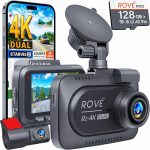
You have likely seen the viral videos: a sudden collision, a bizarre road rage incident, or a fraudulent "crash for cash" scheme, all captured in crystal-clear clarity by a tiny camera mounted on a dashboard. The question that stops many drivers from buying one is simple: are dash cams expensive? short answer is no, but the longer, more important answer involves understanding the vast range of prices, the hidden costs of installation and storage, and the potential savings that make a dash cam one of the most cost-effective investments you can make for your vehicle.
In 2026, the dash cam market has matured into a tiered ecosystem, offering options for every budget from under $30 to over $500. This article will break down the true cost of ownership, explain what you get at each price point, and help you determine the best value for your specific needs. Whether you are a budget-conscious commuter or a tech enthusiast wanting 4K resolution and cloud connectivity, understanding the price landscape is the first step to making a smart purchase.
The Price Spectrum: From Budget to Premium
The most direct answer to the question "are dashams expensive" is a definitive "it depends." In 2026, you can purchase a functional, entry-level dash cam for as little as $25 to $50. These budget models typically record in 1080p resolution, feature a small screen, and rely on a simple loop-recording system. They are perfectly adequate for providing basic evidence in the event of an accident, but they often lack advanced features like GPS, parking mode, or high-quality night vision. For a driver who just wants a safety net, this price point is incredibly affordable.
Moving into the mid-range, which spans from $80 to $200, you enter the sweet spot for most consumers. Cameras in this bracket offer significant upgrades: 2K or 4K resolution, wider field-of-view lenses (140 to 160 degrees), built-in GPS for speed and location logging, and reliable parking mode that activates when your car is turned off. Brands like VIOFO, Garmin, and Thinkware dominate this space. The extra cost here buys you peace of mind through better image quality, which is critical for reading license plates, and more durable components designed to withstand extreme heat and cold inside a parked car.
At the premium end, prices range from $250 to $600 or more. These are flagship models from brands like BlackVue, Nextbase, and high-end Thinkware units. They boast features like 4K front and rear recording, cloud connectivity for remote viewing, advanced driver-assistance systems (ADAS) like lane departure warnings, and supercapacitors instead of batteries for extreme temperature resilience. While these are undeniably expensive for a car accessory, they are often purchased by owners of luxury vehicles, rideshare drivers, or anyone who wants the absolute best in security and image fidelity. The key takeaway is that a dash cam is not inherently expensive; the cost scales directly with the features and reliability you demand.
The Hidden Costs: Memory Cards, Hardwiring, and Subscriptions
The Cost of Not Having a Dash Cam: The Financial Risk
Navigating the feature list can be overwhelming, but understanding which features justify a higher price is key to getting good value. The most critical feature is image quality, specifically the ability to read license plates at night. $30 camera might record a blurry mess in low light, while a $150 camera with a larger sensor and better aperture (like an f/1.8 lens) will capture clear, usable footage. Do not pay extra for 4K if your primary use is daytime commuting; a good 2K camera often provides better low-light performance than a budget 4K model.
Parking mode is another feature that significantly impacts price but offers immense value. If you park on the street or in a shared lot, a camera with buffered parking mode (which records a few seconds before an impact is detected) is worth the extra cost. This feature requires a hardwire kit and a camera with a voltage cutoff to prevent draining your car battery. Similarly, a wide field of view (140 degrees or more) is important to cover the sides of your car, but be wary of ultra-wide lenses (170+ degrees) that create a "fisheye" effect and can distort distances, making license plates harder to read.
Finally, consider the build quality and thermal management. A cheap dash cam might use a lithium-ion battery that swells and fails after a single summer in a hot car. A more expensive camera uses a supercapacitor, which is far more durable in extreme temperatures. In 2026, this is a non-negotiable feature for living in a climate with hot summers. Paying a bit more for a camera with a supercapacitor, a high-quality Sony STARVIS sensor, and reliable GPS module is a better investment than buying a cheap camera that will need to be replaced in a year.
The 2026 Market Trends: What You Get for Your Money
Key Takeaways
- ✓ Dash cams are not inherently expensive, with functional models starting under $50 and premium systems costing up to $600.
- ✓ The true cost includes hidden expenses like high-endurance memory cards ($20-$50) and professional hardwire installation ($50-$150).
- ✓ A single disputed accident or insurance fraud claim can cost thousands of dollars, making a dash cam a cost-effective insurance policy.
- ✓ Prioritize features that matter most: reliable night vision, a supercapacitor for heat resistance, and a wide field of view (140-160 degrees).
- ✓ In 2026 a high-quality front-and-rear system with 2K or 4K resolution is available for $120-$200, offering excellent value for comprehensive protection.
Frequently Asked Questions
Is a $30 dash cam worth buying?
A $30 dash cam can be worth it as a basic safety net, but you must manage your expectations. It will likely have poor night vision, a low bitrate, and a battery that may fail in hot weather. It is better than nothing, but for reliable evidence, especially at night, spending $80-$120 is strongly recommended. The cheap camera may fail to capture a license plate when you need it most.
Do I need to pay for a subscription for my dash cam?
No, a subscription is entirely optional and only available on premium models. The vast majority of dash cams work perfectly with a local memory card. Subscriptions provide cloud storage and cellular connectivity, which are useful for remote viewing and automatic backup, but they are not required for the core function of recording and storing video evidence on the SD card.
How much does it cost to install a dash cam professionally?
Professional hardwire installation typically costs between $50 and $150. The price varies based on your vehicle's complexity and the shop's labor rates. This installation hides the wires and enables parking mode. You can save this cost by using the included cigarette lighter adapter or by watching online tutorials and installing a hardwire kit yourself.
Will a dash cam lower my car insurance premium?
Some insurance companies offer small discounts (typically 5% to 10%) for having a dash cam, but this is not universal. You should ask your specific provider. The primary financial benefit is not the discount, but the protection against being wrongly found at fault in an accident, which prevents a much larger premium increase.
What is the most expensive part of owning a dash cam?
The most expensive part is often not the camera itself, but the ongoing cost of replacing high-endurance memory cards. These cards have a limited lifespan due to constant writing and should be replaced every 1-2 years. A 256GB high-endurance card costs around $30-$40, making it a recurring expense that can add up over the life of the camera.
Conclusion
The question "are dash cams expensive" is best answered by reframing the question entirely. While the upfront cost can range from the price of a fast-food meal to a nice dinner out, the true value lies in the financial and legal protection they provide. A dash cam is not an expensive gadget; it is a low-cost insurance policy against the unpredictability of the road. By understanding the price spectrum, accounting for hidden costs, and focusing on features that matter, you can find a dash cam that fits your budget and provides immense peace of mind.
In 2026, there is no excuse for driving unprotected. The technology is more affordable and reliable than ever. Start by defining your budget and your primary needs—do you park on the street? Do you drive at night? Do you want a simple setup or a cloud-connected system? With this guide, you are now equipped to make an informed decision. Do not let the fear of a high price tag stop you from investing in a device that could save you thousands of dollars and countless hours of stress. Your future self will thank you.

Tony Kilmer is an auto mechanic and the author behind CarTruckAdvisor.com. He shares practical, no-nonsense guidance on car and truck maintenance, common problems, and repair decisions—helping drivers understand what’s going on and what to do next.