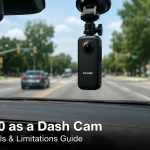
You’ve invested in a dash cam for its promise of security and evidence, but the dangling power cord snaking from your windshield to the 12V socket is a constant nuisance. It clutters your cabin, limits socket use, and worst of all, prevents your camera from utilizing its most powerful feature: parking mode. There’s a cleaner, more professional solution that unlocks your dash cam’s full potential, and it involves moving beyond the cigarette lighter.
Hardwiring your dash cam directly into your vehicle’s electrical system is the definitive upgrade for any serious user. This comprehensive guide will demystify the entire process, transforming it from a daunting electrical project into a manageable weekend task. You will learn not just the step-by-step "how," but also the crucial "why" behind each connection, ensuring a safe, reliable, and professional-looking installation that protects both your vehicle and your valuable footage.
Why Hardwire? Beyond a Clean Look
The primary motivation for many is aesthetics—eliminating the unsightly cord. However, the true benefits of hardwiring are functional and significant. A hardwired installation provides a permanent, secure power source that is hidden within your vehicle’s headliner and A-pillar trim, presenting a clean, OEM-like finish. This eliminates the cord from your field of vision and frees up your 12V outlet for charging phones or other devices, making your cabin more organized and functional.
The most critical advantage is enabling continuous parking mode. When properly connected via a hardwiring kit, your dash cam can monitor your vehicle while it’s parked and turned off. Using motion detection, impact sensors, or time-lapse recording, it can capture incidents like hit-and-runs, vandalism, or break-ins. This 24/7 vigilance offers peace of mind that a simple plug-in power cord, which dies with the ignition, can never provide. It effectively turns your dash cam into a silent sentinel.
Furthermore, a hardwired connection is often more reliable. Loose connections in 12V sockets can cause the dash cam to power cycle or shut off unexpectedly. A hardwired connection, when done correctly, is secure and less prone to failure. It also allows you to use features like automatic engine start/stop recording seamlessly, as the hardwiring kit manages the power transition without interruption, ensuring you never miss a crucial moment due to a power glitch.
Essential Tools and Components You'll Need
Before you begin, gathering the right tools and components is essential for a smooth and safe installation. The core item is a dedicated dash cam hardwiring kit. Do not attempt to splice wires directly. A quality kit includes a low-voltage cut-off device (often called a "power magic" or "parking mode" box) and fuse taps. The cut-off device is non-negotiable; it prevents your car battery from being drained completely by monitoring voltage and shutting off the dash cam before it’s too low to start your engine.
You will need a set of basic tools: a trim removal tool or a set of plastic pry tools to safely remove interior panels without scratching, a fuse tap set (often included in the hardwire kit, but ensure you have the correct size—mini, micro2, or low-profile mini are common), a multimeter to test fuses for constant and switched power, wire strippers/crimpers, and electrical tape or heat shrink tubing. A flashlight and a USB power bank are also helpful for testing the dash cam before finalizing the installation.
For a professional finish, consider a few extra items. Cable clips or adhesive-backed zip tie mounts help secure the wire along its route. A fuse diagram for your specific vehicle, usually found in the owner’s manual or online, is invaluable. Finally, patience is your most important tool. Rushing can lead to broken clips, incorrect connections, or frustration. Plan for a couple of hours to complete the job methodically, especially if it’s your first time.
Locating and Tapping into the Right Fuses
The heart of the hardwiring process is connecting to your vehicle’s fuse box. You’ll typically use two fuse taps: one for a constant (always-on) power source to enable parking mode, and one for an accessory (switched) power source that tells the dash cam when the ignition is on. First, locate your fuse panels. Common locations are inside the cabin, near the driver’s side footwell (knee panel), or in the engine bay. The interior panel is usually preferred for a cleaner, shorter wire run.
Using your multimeter, identify suitable fuses. With the car off, test fuses to find one that still shows 12V—this is your constant power source (good options are often for the radio memory, central locking, or sunroof). Next, turn the ignition to the "on" position (or start the engine) and find a fuse that now shows 12V but showed 0V when the car was off—this is your accessory/switched source (common choices are wipers, power windows, or the 12V socket itself). Always choose fuses for non-critical systems, not for airbags, engine control, or brakes.
Once identified, insert the fuse taps. Remove the original fuse from the slot you’ve chosen and place it into the top slot of the fuse tap. Then, plug the fuse tap into the now-empty slot in the fuse box. The hardwiring kit’s red wire (usually for accessory/ignition) and yellow wire (usually for constant/battery) will connect to these taps. The black ground wire does not use a fuse tap; it will be secured to an unpainted metal bolt or screw in the vehicle’s chassis near the fuse box. Ensure this ground connection is solid and metal-to-metal.
The Art of Concealing Wires: A Step-by-Step Route
A professional installation is defined by invisible wiring. The goal is to tuck the power cable from the dash cam, across the headliner, down the A-pillar, and into the fuse panel area without any visible wires. Start by gently pulling down the edge of the headliner above the windshield. You can usually tuck the thin cable into the gap between the headliner and the windshield without fully removing it. Use your plastic pry tool to avoid damaging the fabric or the cable’s insulation.
Routing down the A-pillar requires caution. In modern vehicles, the A-pillar often houses side-curtain airbags. You must never run a loose wire in front of an airbag deployment path. Carefully pry off the A-pillar cover by starting at the top and working down. Once removed, you will see the airbag module. Securely zip-tie the dash cam wire to existing factory wiring harnesses that are behind the airbag, ensuring it is snug and out of the way. Never let the wire cross in front of the airbag. Then, reattach the pillar cover securely.
From the bottom of the A-pillar, route the wire behind the dashboard’s side trim and weather stripping along the door frame, leading it toward the fuse panel area. Use adhesive clips to secure any loose sections. Leave enough slack near the fuse box to allow for comfortable connection to the hardwiring kit, but not so much that it becomes a tangled mess. The final step is to connect the hardwire kit’s output to your dash cam’s power cable, often near the fuse box, and neatly bundle any excess wire with zip ties.
Testing, Configuration, and Final Safety Checks
With all connections made, do not reassemble everything immediately. First, perform a comprehensive test. Plug the hardwiring kit into your dash cam. Start your vehicle. The dash cam should power on automatically and announce it is "starting recording" or display a similar message. This confirms your accessory (red) wire is correctly connected. Next, turn the vehicle off and exit, locking the doors. The dash cam should remain on, often switching to a parking mode (indicated by a specific LED pattern or voice prompt). This confirms your constant (yellow) wire is working.
Now, test the low-voltage protection. With the car off, let the dash cam run in parking mode. Monitor your vehicle’s battery voltage through the hardwiring kit’s cut-off device if it has a display, or use your multimeter on the battery terminals. Ensure the dash cam shuts off before the battery voltage drops to a critical level (usually around 11.8V or 12.0V, depending on your setting). This test is crucial to guarantee you won’t return to a dead battery. Configure any settings on the dash cam itself, like parking mode sensitivity and recording loop length.
Finally, conduct safety checks. Ensure all wires are secure and not pinched by any trim pieces you reinstalled. Double-check that the A-pillar cover is snapped completely into place and that no wires interfere with pedals, steering, or airbags. Tidy up the fuse box area, using zip ties to bundle the hardwiring kit and its wires neatly away from any moving parts or hot surfaces. Only after all tests pass and safety is confirmed should you consider the job complete. Your dash cam is now a seamlessly integrated part of your vehicle’s security system.
Key Takeaways
- ✓ Hardwiring eliminates clutter and, more importantly, enables 24/7 parking mode protection, which is the feature's greatest benefit.
- ✓ A dedicated hardwiring kit with a voltage cut-off device is mandatory to prevent a dead car battery and ensure safe operation.
- ✓ Correctly identifying constant (battery) and switched (accessory) fuses using a multimeter is the most critical step for functional parking mode and automatic recording.
- ✓ Wire routing must always respect airbag deployment paths; secure wires behind existing harnesses in the A-pillar to avoid creating a safety hazard.
- ✓ Comprehensive testing of both ignition-on and parking mode functions, along with the low-voltage cut-off, is essential before finalizing the installation.
Frequently Asked Questions
Is hardwiring a dash cam difficult for a beginner?
While it requires careful attention, it is very manageable for a DIYer with patience and the right tools. The process is more about methodical disassembly and following steps than complex electrical work. Using a pre-made hardwire kit simplifies the connections significantly. If you can use a multimeter and are comfortable gently prying off interior trim, you can likely complete the job.
Will hardwiring void my car's warranty?
Generally, no, if done correctly. Modifications that cause damage can void warranty coverage for affected parts, but simply tapping into fuse slots with add-a-fuse taps is a non-invasive procedure. To be safe, you can remove the hardwire kit before taking your car in for service. It’s always best to consult your vehicle's warranty terms or check with the dealer for their specific policy.
What's the difference between a 2-wire and a 3-wire hardwire kit?
A 2-wire kit connects to constant and ground, providing simple always-on power, but it lacks a way to automatically switch between driving and parking modes. A 3-wire kit (the standard for this guide) connects to constant, accessory/ignition, and ground. The accessory wire allows the dash cam to detect when the engine is off and automatically engage parking mode, making it the superior and recommended choice.
How do I choose the correct low-voltage cut-off setting on my hardwire kit?
The setting depends on your vehicle's battery type and your climate. A common safe setting is 12.0V for standard lead-acid batteries, as it preserves enough charge to start the engine. For newer cars with sensitive electronics or AGM batteries, 12.2V or 12.4V might be safer. In very cold climates, a higher setting is advisable as cold cranking requires more battery reserve. When in doubt, consult your vehicle's manual for recommended battery voltage thresholds.
My dash cam won't enter parking mode after hardwiring. What did I do wrong?
The most common issue is reversed constant and accessory wires. Double-check your fuse tap connections: the wire designated for constant/battery (often yellow) must be on an always-on fuse, and the wire for accessory/ignition (often red) must be on a switched fuse. Use your multimeter to verify. Also, ensure parking mode is enabled in your dash cam's own settings menu, as it may be disabled by default.
Conclusion
Hardwiring your dash cam transforms it from a simple recording device into a fully integrated vehicle security system. By following the steps outlined—understanding the benefits, gathering the proper tools, safely tapping into fuse circuits, meticulously concealing wires, and rigorously testing the setup—you achieve a professional-grade installation. The result is not just a cleaner dashboard but the invaluable assurance that your vehicle is protected around the clock, whether you're driving across town or it's parked for the night.
Take the leap and dedicate a weekend to this project. The initial investment of time and focus pays continuous dividends in security, convenience, and peace of mind. Start by researching the ideal hardwire kit for your specific dash cam model, familiarize yourself with your car's fuse box layout, and approach each step with care. Once you experience the seamless operation and hidden power of a properly hardwired dash cam, you'll wonder why you ever settled for a dangling cord.

Tony Kilmer is an auto mechanic and the author behind CarTruckAdvisor.com. He shares practical, no-nonsense guidance on car and truck maintenance, common problems, and repair decisions—helping drivers understand what’s going on and what to do next.