
Choosing the correct car battery is more than just picking one that fits under the hood. The wrong battery size can cause starting problems, electrical issues, and even long-term damage to your vehicle.
This car battery size chart guide explains everything you need to know — from battery group sizes and dimensions to compatibility by vehicle type — so you can confidently choose the right battery for your car.
Why Car Battery Size Matters
Car batteries are not one-size-fits-all. Each vehicle is designed to work with a specific battery group size, which determines:
- Physical dimensions (length, width, height)
- Terminal placement
- Electrical capacity
- Secure mounting fit
Using the wrong size can result in:
- Loose or unstable battery placement
- Incorrect terminal alignment
- Poor starting performance
- Shortened battery life
What Is a Car Battery Group Size?
A battery group size is a standardized classification created by the Battery Council International (BCI). It defines the exact physical dimensions and terminal layout of a battery.
🔧 Important: Group size does not measure battery power — it measures fit and compatibility.
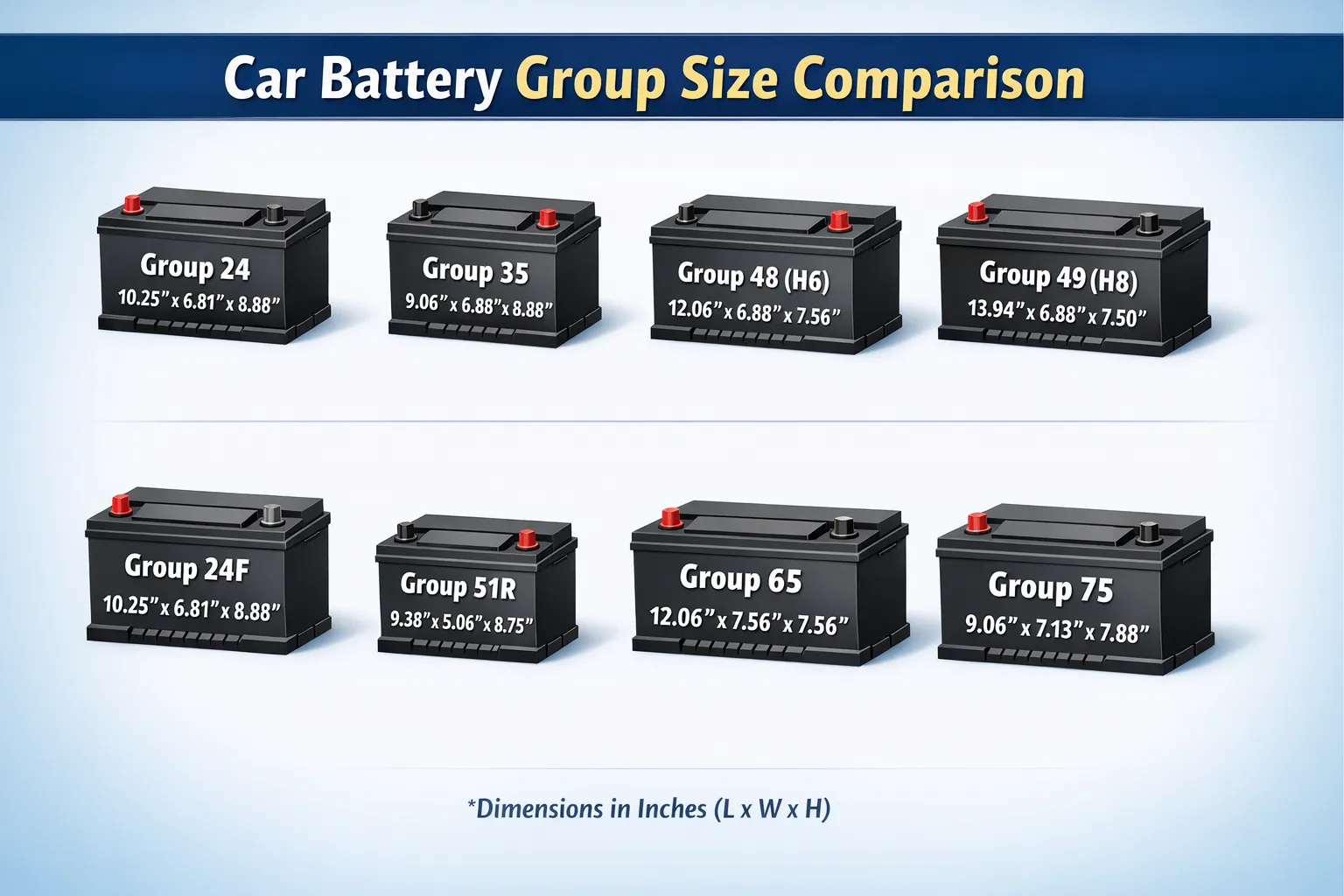
Car Battery Size Chart (Most Common Group Sizes)
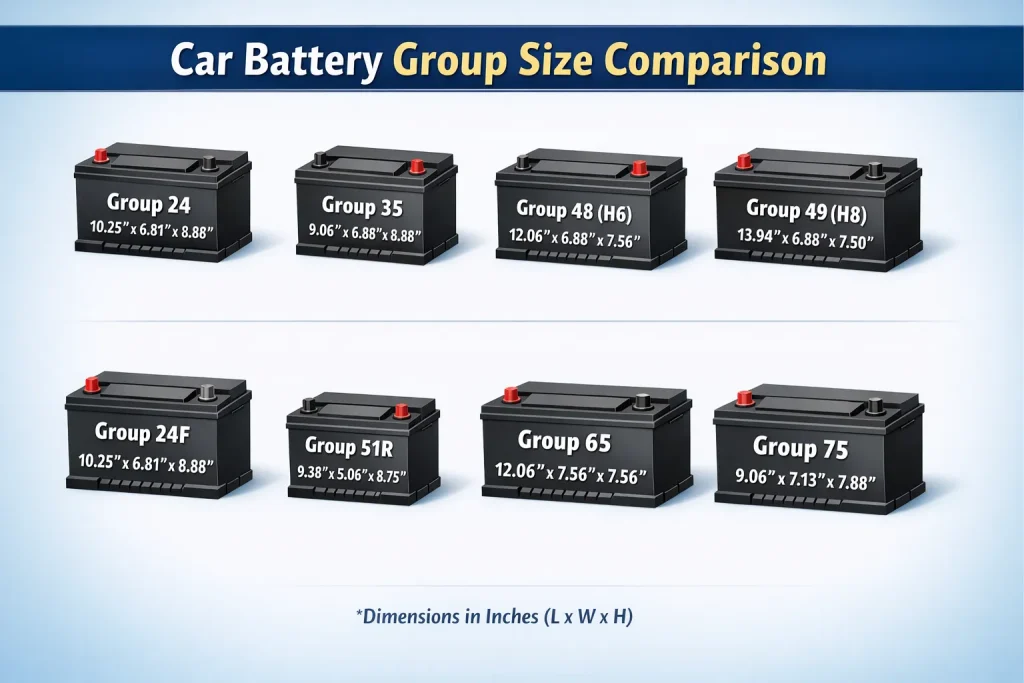
📊 Standard Car Battery Size Chart
| Battery Group | Length (in) | Width (in) | Height (in) | Common Vehicles |
|---|---|---|---|---|
| Group 24 | 10.25 | 6.81 | 8.88 | Sedans, SUVs |
| Group 24F | 10.25 | 6.81 | 8.88 | Honda, Toyota |
| Group 35 | 9.06 | 6.88 | 8.88 | Compact cars |
| Group 48 (H6) | 12.06 | 6.88 | 7.56 | BMW, Audi |
| Group 49 (H8) | 13.94 | 6.88 | 7.50 | Luxury cars |
| Group 51R | 9.38 | 5.06 | 8.75 | Honda models |
| Group 65 | 12.06 | 7.56 | 7.56 | Trucks, SUVs |
| Group 75 | 9.06 | 7.13 | 7.88 | GM vehicles |
Car Battery Size Chart by Vehicle Type
🚗 Compact & Sedan Cars
Common battery sizes:
- Group 35
- Group 24F
- Group 51R
Best for fuel-efficient cars with moderate electrical demands.
🚙 SUVs & Crossovers
Common battery sizes:
- Group 24
- Group 48 (H6)
- Group 65
Designed to support larger engines and more electronics.
🚚 Trucks & Large Vehicles
Common battery sizes:
- Group 65
- Group 49 (H8)
Higher cold cranking amps (CCA) for heavy-duty use.
How to Find the Correct Battery Size for Your Car
✔️ Check the Owner’s Manual
Your vehicle manual lists the recommended battery group size.
✔️ Look at Your Current Battery
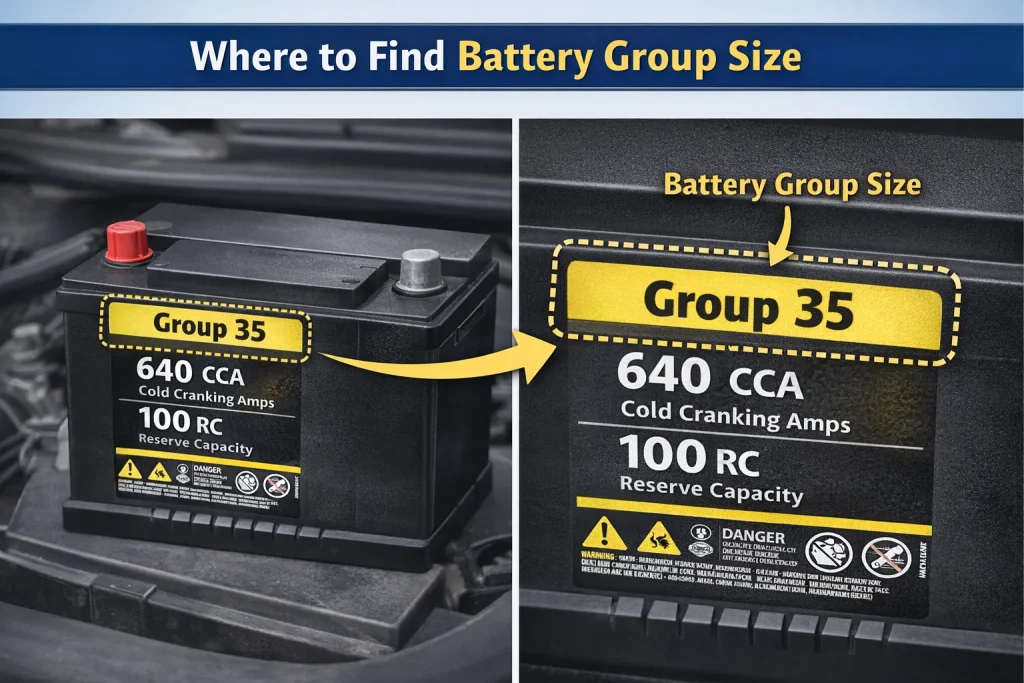
The group number is printed on the battery label.
✔️ Use Online Battery Fit Tools
Most auto parts stores allow you to enter:
- Year
- Make
- Model
- Engine size
Battery Size vs Battery Power (CCA Explained)
While group size ensures proper fit, Cold Cranking Amps (CCA) measure starting power.
- Cold climates need higher CCA
- Larger engines require more cranking power
- Always meet or exceed manufacturer CCA recommendations
⚠️ Never downgrade CCA even if the battery fits physically.
AGM vs Lead-Acid Battery Sizes
| Feature | AGM Battery | Lead-Acid Battery |
|---|---|---|
| Size consistency | Same group size | Same group size |
| Vibration resistance | High | Moderate |
| Cost | Higher | Lower |
| Best for | Start-stop systems | Standard vehicles |
AGM batteries follow the same size chart, but offer better durability.
Common Car Battery Size Mistakes to Avoid
- ❌ Choosing based only on price
- ❌ Ignoring terminal orientation
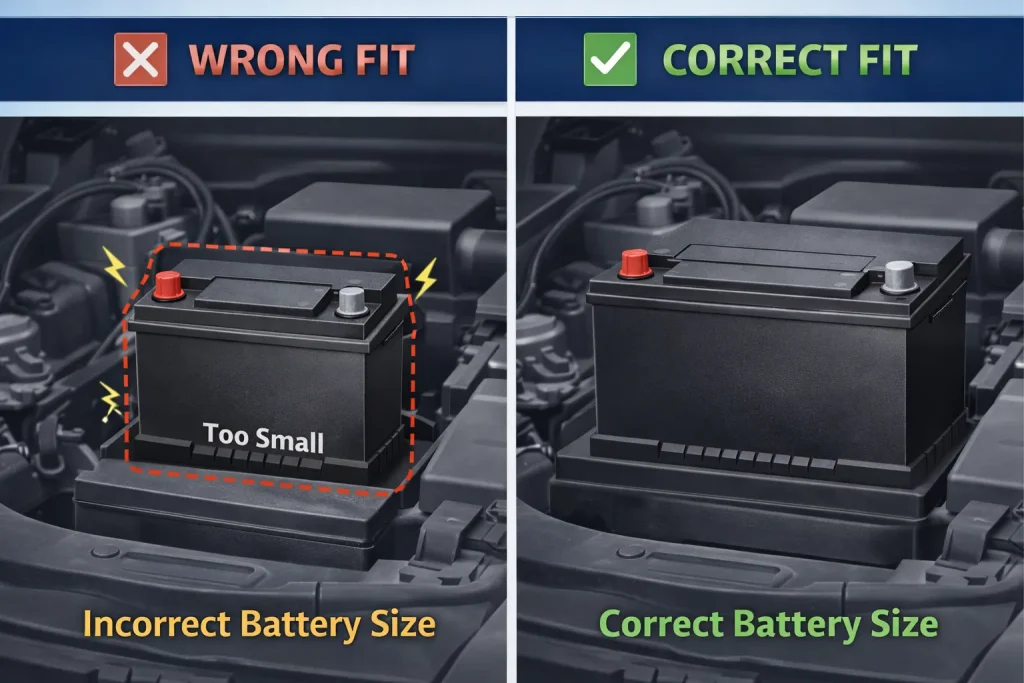
- ❌ Installing a battery too small for the tray
- ❌ Using incorrect group size with adapters
Frequently Asked Questions (FAQ)
What happens if I use the wrong battery size?
It may not secure properly, cause electrical problems, or fail prematurely.
Can I use a bigger battery?
Only if it fits the tray, terminals align, and meets electrical specs.
Are battery sizes universal worldwide?
Yes, BCI group sizes are standardized globally.
Does battery size affect performance?
Indirectly. Size affects fit; CCA and reserve capacity affect performance.
For garage use or quick reference, save or print this chart to avoid buying the wrong battery again.
Using the correct car battery size chart ensures:
- Reliable starts
- Proper fitment
- Longer battery life
- Safer electrical performance
Always match the group size, verify CCA, and follow manufacturer guidelines before purchasing.

Tony Kilmer is an auto mechanic and the author behind CarTruckAdvisor.com. He shares practical, no-nonsense guidance on car and truck maintenance, common problems, and repair decisions—helping drivers understand what’s going on and what to do next.


