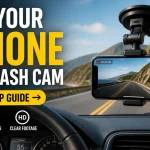
You have just purchased a dash cam to protect yourself from insurance fraud, record scenic road trips, or provide evidence in an accident. You open the box, and suddenly the excitement is replaced by a tangle of wires, suction cups, and adhesive pads. The thought of running cables across your windshield and dashboard can feel intimidating, but the reality is that fitting a dash cam is a straightforward DIY project that anyone can complete in under an hour with the right approach.
This guide is designed to walk you through every step of the process, from choosing the optimal mounting location to hiding wires for a factory-installed look. By the end of this article, you will understand the tools required, the common pitfalls to avoid, and the techniques used by professional installers. Whether you own a compact sedan or a large SUV, learning how to fit a dash cam correctly will ensure clear footage, a safe installation, and a clean aesthetic that does not obstruct your view or clutter your cabin.
Choosing the Perfect Mounting Location
The single most important decision you will make during installation is where to place the dash cam on your windshield. The ideal location is behind the rearview mirror, on the passenger side of the vehicle. This position keeps the camera out of your direct line of sight while still providing a clear, unobstructed view of the road ahead. Placing the camera here also minimizes the risk of it becoming a projectile in the event of a sudden stop or collision.
You must also consider local laws regarding windshield obstructions. In many jurisdictions, it is illegal to mount any device in the area swept by the windshield wipers or within a certain distance from the top or bottom of the glass. Typically, a strip of 4 to 6 inches from the top of the windshield is considered a legal mounting zone. Always check your local regulations before sticking anything to your glass, as fines for obstructed views can be significant.
Before you commit to a location, perform a dry fit. Hold the dash cam in your chosen spot and sit in the driver’s seat. Adjust your driving position and check that the camera does not block your view of traffic lights, pedestrians, or the road. Also, ensure that the lens has a clear view between the dots or frit band at the top of the windshield. If the camera is mounted behind the frit band, it may interfere with the adhesive or degrade video quality. Once you are satisfied, clean the glass thoroughly with an alcohol wipe to remove any oils or residue.
Gathering the Essential Tools and Hardware
Before you begin the physical installation, assemble all the necessary tools and components. Most dash cams come with a power cable, a mounting bracket, and either a suction cup or adhesive pad. You will also need a plastic trim removal tool, which is inexpensive and prevents damage to your vehicle’s interior panels. A set of small zip ties, a microfiber cloth, and isopropyl alcohol wipes are also essential for a clean and secure fit.
If your dash cam does not include a hardwiring kit, you will need to decide how to power the device. The simplest method is to plug the included USB cable into your vehicle’s 12V cigarette lighter or USB port. However, for a permanent, hidden installation, you should purchase a hardwiring kit that connects directly to your vehicle’s fuse box. This kit typically includes a fuse tap, a voltage regulator, and a ground wire. Hardwiring keeps your 12V port free and allows the dash cam to operate in parking mode.
Do not overlook the importance of cable management accessories. Adhesive cable clips, wire looms, and fabric tape can help you secure the power cable along the headliner and A-pillar. If you are installing a rear-facing camera, you will also need a longer cable and possibly a cable extension kit. Having all these items on hand before you start will prevent frustrating interruptions and ensure a smooth, professional-grade installation.
Running the Power Cable Like a Professional
The most challenging part of fitting a dash cam is hiding the power cable so it does not dangle across your dashboard or windshield. The standard technique involves tucking the cable into the gap between the headliner and the windshield. Starting at the dash cam, gently push the cable into this gap using your fingers or a trim removal tool Work your way along the top edge of the windshield toward the driver’s side or passenger side A-pillar, depending on where your fuse box is located.
When you reach the A-pillar, you must decide whether to go over or under the airbag. This is a critical safety decision. Never route the cable directly in front of a side curtain airbag, as the cable could become a projectile or prevent the airbag from deploying correctly. Instead, route the cable behind the airbag by carefully prying off the A-pillar trim panel. Most panels are held on by clips and can be removed with gentle pressure. Run the cable behind the airbag mechanism, then reattach the trim panel.
From the A-pillar, continue routing the cable down the side of the dashboard toward the fuse box or 12V port. Use adhesive cable clips to secure the cable along the edge of the dashboard or under the glove box. If you are using the 12V port, leave enough slack to plug in the adapter. For hardwiring, connect the fuse tap to a circuit that is only powered when the ignition is on, such as the accessory or windshield wiper circuit. Connect the ground wire to a bare metal bolt on the chassis, and you are done.
Installing a Rear-Facing Dash Cam
Many modern dash cam systems include a rear camera that records traffic behind your vehicle. Installing the rear camera follows a similar process but requires running a longer cable from the front unit to the back of the car. The most common route is along the headliner, across the top of the rear windshield, and down to the rear glass. For hatchbacks and SUVs, you can often route the cable through the rubber gmet that connects the body to the tailgate.
Before you permanently mount the rear camera, test the cable connection by temporarily plugging it into the front unit. This ensures the cable is not defective and that the camera receives power and signal. Once confirmed, mount the rear camera on the inside of the rear windshield, ideally in the center and near the top. Clean the glass thoroughly before applying the adhesive pad. For vehicles with rear wiper, ensure the camera is placed above the wiper’s arc to keep the lens clear.
If your vehicle has a rear window defroster, be careful not to damage the thin heating elements on the glass. Use a plastic trim tool to tuck the cable along the edge of the glass, avoiding the defroster grid. For a truly hidden installation, you can route the cable through the headliner and down the rear pillar, then exit through the trim near the rear window. This method takes more time but results in a completely invisible cable run that looks like a factory option.
Testing, Adjusting, and Finalizing Your Setup
With all cables routed and the cameras mounted, it is time to power on the system and perform a final alignment. Start your vehicle and verify that the dash cam powers on automatically. Check the live view on the screen or through the companion app to ensure the front camera captures a wide, level view of the road. The horizon should be straight, and the hood of your car should be visible at the bottom of the frame. Adjust the angle of the camera by tilting the mount if necessary.
For the rear camera, check that the image is clear and that the lens is not obstructed by the rear wiper, spoiler, or dirt. If the image is upside down, most dash cams have a setting to flip the video orientation. Also, test the parking mode if your camera supports it. Turn off the ignition and wait a few seconds to confirm the camera enters parking mode. Some systems require a hardwiring kit for this feature to function correctly.
Finally, perform a road test. Drive for a few minutes and review a short clip of the footage. Look for excessive vibration, glare, or reflections from the dashboard. If you notice glare, consider using a polarizing filter (CPL) that attaches to the lens. Also, check that the cable connections are secure and that no wires are pinched or pulling on the camera mount. Once everything is working perfectly, use zip ties to bundle any excess cable and hide it under the dashboard or in the glove box.
Key Takeaways
- ✓ Mount the dash cam behind the rearview mirror on the passenger side to avoid obstructing your view and to comply with local laws.
- ✓ Always use a plastic trim removal tool to avoid damaging your vehicle’s interior panels when hiding cables.
- ✓ Route power cables behind the A-pillar airbag, not in front of it, to maintain safety in a collision.
- ✓ Test the rear camera connection before permanently mounting it to avoid wasted effort.
- ✓ Perform a road test and review footage to ensure the camera angle is correct and the image is free of glare or vibration.
Frequently Asked Questions
Can I install a dash cam myself without any experience?
Yes, absolutely. The installation process is designed to be user-friendly and requires no special mechanical skills. Most people can complete a basic installation in 30 to 60 minutes using only a trim removal tool and the included hardware. If you are uncomfortable hardwiring to the fuse box, you can simply plug the camera into your 12V port for a plug-and-play setup.
Will a dash cam drain my car battery when parked?
It depends on how you wire it. If you use the 12V port, the camera will typically turn off when the ignition is off. If you hardwire the camera for parking mode, you must use a hardwiring kit with a voltage cutoff feature. This feature automatically shuts off the camera when the battery voltage drops below a safe level, preventing a dead battery.
How do I remove the adhesive mount without damaging my windshield?
To remove an adhesive mount, use a piece of dental floss or a thin plastic scraper to gently saw through the adhesive pad. Never pull the mount directly, as this can crack the glass. After removal, use isopropyl alcohol or a dedicated adhesive remover to clean off any residue. For suction cup mounts, simply lift the tab to release the suction.
Is it legal to have a dash cam on my windshield?
Laws vary by country and state, but most jurisdictions allow dash cams as long as they do not obstruct the driver’s view. Generally, you must mount the camera in the top 4 to 6 inches of the windshield or behind the rearview mirror. Some countries, like Germany and Switzerland, have strict regulations about recording audio and public spaces, so always check local laws.
What should I do if my dash cam keeps falling off the windshield?
This is usually caused by a dirty windshield or extreme temperature changes. Clean the glass thoroughly with an alcohol wipe and ensure the surface is completely dry before applying the adhesive. If the problem persists, consider using a high-temperature adhesive pad designed for automotive use. For suction cup mounts, moisten the rubber cup slightly before pressing it onto the glass.
Conclusion
Fitting a dash cam is one of the most valuable and satisfying upgrades you can make to your vehicle. By following the steps outlined in this guide, you can achieve a professional-looking installation that provides reliable protection and peace of mind. From selecting the perfect mounting location to safely routing cables and testing your setup, each step is straightforward when you have the right knowledge and tools.
Now that you know how to fit a dash cam, take the next step and install yours today. Start by gathering your tools and performing a dry fit in your vehicle. Remember that a clean, hidden installation not only looks better but also ensures your camera functions correctly in an emergency. With your new dash cam properly installed, you can drive with confidence knowing that every mile is recorded and your safety is prioritized.

Tony Kilmer is an auto mechanic and the author behind CarTruckAdvisor.com. He shares practical, no-nonsense guidance on car and truck maintenance, common problems, and repair decisions—helping drivers understand what’s going on and what to do next.