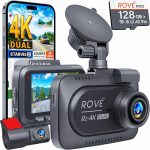
You are driving down I-94 near Ann Arbor when a car suddenly swerves into your lane, forcing you to slam on the brakes. The driver behind you is not so lucky and rear-ends your vehicle. In the chaos that follows, the other driver claims you stopped suddenly for no reason. Without a dash cam, it is your word against theirs. This scenario plays out thousands of times each year in Michigan, and it highlights why more drivers than ever are asking a critical question: are dash cams legal in Michigan?
The short answer is yes, dash cams are legal in Michigan, but there are specific rules you must follow to avoid breaking the law. Michigan is a two-party consent state for audio recordings, which means you cannot record conversations inside your vehicle without everyone’s permission. However, video recording on public roads is generally permitted. This article will explain everything you need to know about dash cam legality in Michigan for 2026, including placement rules, audio restrictions, privacy concerns, and practical tips for choosing and using a dash cam legally and effectively.
Understanding Michigan’s Two-Party Consent Law for Audio
Dash Cam Placement and Windshield Obstruction Laws
Even if your dash cam does not record audio, you must still comply with Michigan’s laws regarding windshield obstructions. Michigan Vehicle Code Section 257.709 prohibits placing any object on the windshield that obstructs the driver’s view. This law is designed to ensure safety by preventing distractions and maintaining clear visibility. A dash cam mounted in the center of the windshield, directly in the driver’s line of sight, could be considered an obstruction and result in a traffic citation.
The safest and most legal placement for a dash cam in Michigan is behind the rearview mirror. This location keeps the camera out of your direct line of sight while still providing an excellent forward-facing view of the road. Many drivers also mount their dash cams on the dashboard itself, but you must ensure the device does not block your view of the road, mirrors, or instrument panel. If a police officer determines that your dash cam is obstructing your vision, you could face a fine, typically around $100 to $200, depending on the jurisdiction.
Another consideration is the use of suction cup mounts. While these are convenient, they can become a projectile in a sudden stop or collision. Hardwiring your dash cam or using a static cling mount can provide a more secure and permanent installation. Additionally, if you park on public streets, be aware that some municipalities have ordinances about devices attached to windshields when the vehicle is unattended. While rare, it is worth checking your local city or township regulations. The general rule is simple: mount your dash cam in a location that does not impair your vision, and you will likely have no legal issues.
Privacy Concerns and Recording Other People
While recording video on public roads is generally legal, Michigan drivers must be mindful of privacy laws when their dash cams capture more than just traffic. For example, if you park your car and your dash cam records people on private property, such as a neighbor’s backyard or inside a store through a window, you could be violating privacy expectations. Michigan law protects individuals from being recorded in places where they have a reasonable expectation of privacy, such as inside a home, a locker room, or a restroom.
The key distinction is between public and private spaces. A public road, a parking lot, or a sidewalk is generally considered a public space where there is no expectation of privacy. However, if your dash cam is pointed directly into someone’s home or captures intimate activities, you could face civil liability for invasion of privacy. This is especially relevant for dash cams with parking mode that record continuously while your car is parked. To avoid issues, aim your dash cam to capture the road and your immediate surroundings, not neighboring properties.
There is also the question of sharing dash cam footage online. While many drivers post videos of accidents or reckless driving to social media or YouTube, you should be cautious. If the footage includes identifiable faces, license plates, or personal information, you could be subject to defamation or harassment claims if the video is used in a misleading way. Michigan courts have upheld the right to record in public, but they have also recognized the right to privacy. A good rule of thumb is to blur faces and license plates before sharing footage publicly, and never use dash cam footage to harass or intimidate others.
Key Takeaways
- ✓ Dash cams are legal in Michigan, but audio recording requires consent from all parties in the vehicle due to the state’s two-party consent law.
- ✓ Mount your dash cam behind the rearview mirror to avoid violating Michigan’s windshield obstruction laws.
- ✓ Disable audio recording or inform passengers they are being recorded to avoid potential criminal charges.
- ✓ Dash cam footage is generally admissible as evidence in Michigan courts and can help with insurance claims and fault determination.
- ✓ Choose a dash cam with a capacitor battery, good low-light performance, and an easy audio toggle for optimal use in Michigan’s climate.
Frequently Asked Questions
Can I get a ticket for having a dash cam on my windshield in Michigan?
Yes, you can be ticketed if the dash cam obstructs your view. Michigan law prohibits any object on the windshield that impairs the driver’s vision. Mounting the camera behind the rearview mirror is the safest way to avoid a citation. If an officer determines the camera blocks your line of sight, you could face a fine, typically around $100 to $200.
Do I need to tell my passengers that I have a dash cam recording audio?
Yes, if your dash cam records audio, you must inform your passengers. Michigan is a two-party consent state, meaning all parties must agree to be recorded. A simple verbal notice at the start of the trip is usually sufficient. For added legal protection, consider placing a visible sticker in the car stating that audio and video recording is in progress.
Is it legal to record a police officer during a traffic stop with my dash cam?
Yes, it is generally legal to record a police officer during a traffic stop in Michigan, as long as you do not interfere with their duties. The officer has no reasonable expectation of privacy in a public setting. However, you should not obstruct the officer or act in a way that could be considered resisting or hindering. Keep your hands visible and inform the officer that you have a dash cam recording.
Can my dash cam footage be used against me in court?
Yes, dash cam footage can be used against you if it shows you violating traffic laws or acting negligently. This is why it is important to never tamper with or delete footage after an accident. If the footage shows you at fault, it is still better to be honest with your insurance company and attorney than to face charges for evidence tampering.
What happens if my dash cam records a crime being committed?
If your dash cam records a crime, you should contact local law enforcement and provide them with the footage. Do not share the footage on social media first, as this could compromise the investigation. The police may request the original memory card or a copy of the file. You are generally protected from liability for reporting a crime, but be cautious about sharing footage that could identify victims or witnesses without their consent.
Conclusion
Dash cams are a powerful tool for Michigan drivers, offering protection against false claims, insurance fraud, and reckless drivers. As we have covered, they are legal to use as long as you respect the state’s two-party consent law for audio recordings and follow windshield obstruction regulations. By disabling audio recording or obtaining consent from passengers, and by mounting your camera behind the rearview mirror, you can enjoy the benefits of a dash cam without running afoul of the law.
As you shop for a dash cam in 6, prioritize models with an audio toggle, capacitor batteries, and excellent low-light performance. Remember that your footage can be a valuable piece of evidence, but it can also be used against you, so drive responsibly. Installing a dash cam is a small investment that can save you thousands of dollars and countless headaches. Take the time to set it up correctly, understand your rights and responsibilities, and you will have peace of mind every time you hit the road in Michigan.

Tony Kilmer is an auto mechanic and the author behind CarTruckAdvisor.com. He shares practical, no-nonsense guidance on car and truck maintenance, common problems, and repair decisions—helping drivers understand what’s going on and what to do next.