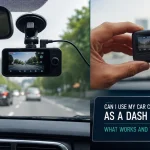
You have likely seen the viral videos: a driver captures a reckless lane change, a hit-and-run, or a bizarre road event, all thanks to a small camera mounted on their windshield. As dash cams become as common as smartphones in our vehicles, a critical question arises for new buyers: are dash cams wireless? The short answer is both yes and no, and understanding the distinction is crucial to making the right purchase for your safety and convenience.
In 2026, the dash cam market has evolved, offering everything from fully wired systems to battery-powered units that sync to the cloud. This article will cut through the marketing jargon to explain exactly what "wireless" means in the context of dash cams. You will learn the difference between wireless data transfer and wireless power, the pros and cons of each system, and how to choose the best setup for your driving habits. By the end, you will have a clear roadmap to selecting a dash cam that fits your lifestyle without getting tangled in confusion.
Defining Wireless: Data vs. Power in Dash Cams
The first and most important distinction to understand is that "wireless" in the dash cam world typically refers to data transfer, not power. When a manufacturer advertises a "wireless dash cam they almost always mean the camera can transfer video files to your smartphone or the cloud via Wi-Fi or Bluetooth, without needing a physical USB cable to pull footage. This is a massive convenience upgrade from older models where you had to remove the memory card and plug it into a computerHowever, nearly every dash cam on the market in 2026 still requires a physical power source. The camera needs electricity to record, and while some models have internal batteries, these are usually small and designed only to save a final recording after a crash or to allow for a brief parking mode session. True wireless power, like inductive charging, is not yet practical for dash cams due to the constant vibration and heat inside a vehicle. Therefore, even the most advanced "wireless" dash cam will have a power cable that plugs into your car's 12V outlet (cigarette lighter) or is hardwired into your fuse box.
This distinction is critical for your installation. If you want a completely cable-free windshield, you are looking for a battery-powered camera that you must remember to charge, much like a GoPro. These exist, but they are the norm for continuous, 24/7 recording. Most drivers prefer the reliability of a constant power connection, accepting the single cable that runs along the headliner and down the A-pillar. Understanding this trade-off is the first step in deciding which type of dash cam is right for you.
The True Wireless Experience: Battery-Powered and Cloud-Connected Cams
A small but growing segment of the market in 2026 offers a truly wireless experience in terms of power. These are battery-powered dash cams, often designed for rideshare drivers or those who frequently switch between vehicles. Models like the Nextbase iQ or certain Ring car cameras use a rechargeable lithium-ion battery that can last anywhere from 4 to 12 hours on a single charge, depending on recording resolution and features. These cameras are completely free of power cables, allowing for discreet, temporary placement.
The trade-off for this freedom is significant. You must remember to charge the camera, usually by bringing it inside your home or office. If you forget, you will have a dead camera during a critical moment. Furthermore, battery-powered cams often have limited parking mode capabilities. Since they are not connected to your car's electrical system, they cannot run for days in parking mode. They typically rely on a G-sensor to wake up from a low-power state when a bump is detected, which can drain the battery quickly.
These cameras excel in their wireless data capabilities. They use built-in Wi-Fi or cellular LTE/5G connectivity to automatically upload clips to the cloud. This means you can access footage from anywhere, receive real-time alerts for impacts, and never worry about a stolen memory card. For example, if someone breaks into your car, the camera can instantly upload the video of the event before the thief can take the camera itself. This cloud integration is the true killer feature of modern wireless dash cams, but it often requires a monthly subscription fee for data storage.
The Wired Standard: Why Most Dash Cams Still Use a Cable
Despite the allure of a completely wireless setup, the vast majority of dash cams sold in 2026 are still wired for power. This is not a failure of technology but a deliberate design choice based on reliability. A wired connection provides unlimited, uninterrupted power. Your camera will record every second you drive, and if you hardwire it to your fuse box, it can run in parking mode for days without draining your car's starter battery (thanks to voltage cutoff features).
Installation of a wired dash cam is more involved, but it is a one-time effort. Most users either run the cable along the headliner and door trim (a 15-minute DIY job) or pay a professional $50 to $100 for a clean, hidden hardwire installation. The result is a camera that is always on, always recording, and never needs to be charged. For the majority of drivers who want a "set it and forget it" security device, this is the gold standard.
These wired cameras are not "dumb" devices. In 2026, even budget wired dash cams come with Wi-Fi for wireless file transfer. You can connect your phone to the camera's Wi-Fi network to download clips, change settings, and view a live feed without removing the memory card. So, while the power is wired, the data transfer is wireless. This hybrid approach gives you the best of both worlds: the reliability of constant power and the convenience of wireless access to your footage. This is the configuration that most experts recommend for the average driver.
Key Features to Compare: Resolution, Parking Mode, and Storage
When choosing between a wireless or wired dash cam, you must look beyond the power source and evaluate core performance features. Resolution is paramount. In 2026, 4K is the standard for front-facing cameras, with many premium models offering 4K front and 2K rear. Do not settle for 1080p unless you are on a strict budget, as reading license plates at night requires higher detail. Wireless data transfer is much slower for 4K files, so ensure your camera has fast 5GHz Wi-Fi a cellular connection if you plan to download large clips frequently.
Parking mode is another critical differentiator. Wired dash cams excel here because they can draw power from your car's battery for days. They use motion detection or impact sensors to record only when something happens, saving storage space and power. Wireless battery-powered cams have a much harder time with parking mode. They can only record for a few hours before their internal battery dies. If you park on the street or in a parking lot for long periods, a wired hardwired setup is vastly superior for capturing hit-and-runs or vandalismStorage is the final piece of the puzzle. Most dash cams use microSD cards, but wireless cloud cameras offer a new paradigm. With a cloud subscription, your footage is stored off-device, meaning it cannot be destroyed or stolen. However, this comes with a monthly cost. Wired cameras with local storage are a one-time purchase with no ongoing fees, but you risk losing the camera or the card in a theft. A hybrid approach is becoming popular: a wired camera that records locally but also has the option to upload critical events to the cloud via a built-in cellular modem.
Installation, Maintenance, and the Future of Dash Cam Technology
Installation is where the rubber meets the road. For a wired dash cam, you will need a trim removal tool to tuck the cable under the headliner. It is a straightforward process for most sedans and SUVs, but it can be tricky for convertibles or vehicles with complex trim. Battery-powered wireless cams are the easiest to install: you simply stick the mount to the windshield and press the camera on. However, you must remember to take it down and charge it, which can become a chore.
Maintenance differs significantly between the two types. Wired cams require periodic formatting of the memory card (every 1-2 months) prevent file corruption. You also need to clean the lens occasionally. Battery-powered cams require you to manage the battery health. Lithium-ion batteries degrade over time, especially in hot cars. After two or three years, you may find your wireless cam only holds a charge for an hour. This is a hidden cost of the wireless convenience.
Looking ahead to 2027 and beyond, the industry is moving toward a unified standard. We are seeing the first generation of dash cams with built-in eSIMs for permanent cellular connectivity, eliminating the need for Wi-Fi tethering to your phone. These cameras are always connected, always uploading, and can be powered either by a cable or a high-capacity battery pack. The ultimate goal is a camera that is completely wireless in both power and data, using inductive charging pads built into the windshield or dashboard. While that future is not yet here, the technology is advancing rapidly, making 2026 an exciting time to invest in a dash cam.
Key Takeaways
- ✓ Wireless dash cams typically mean wireless data transfer (Wi-Fi/Cloud), not wireless power; most still require a power cable.
- ✓ Battery-powered wireless cams offer true cable-free installation but require frequent charging and have limited parking mode.
- ✓ Wired dash cams provide unlimited, reliable power and superior parking mode, making them the best choice for continuous security.
- ✓ Cloud storage is a game-changer for security, but it usually requires a monthly subscription fee.
- ✓ For most drivers in 2026, a wired camera with Wi-Fi data transfer offers the best balance of reliability, features, and value.
Frequently Asked Questions
Can I install a dash cam without any wires showing?
Yes, but only if you choose a battery-powered dash cam. These have no power cable, but you must charge them manually. For a hidden wire installation with a wired cam, you can tuck the cable under the headliner and door trim, which hides almost all of the wire.
Do wireless dash cams need a memory card?
It depends on the model. Many wireless cloud-based cams still use a microSD card as a local backup, while others rely entirely on cloud storage. Always check the specifications. If you want to avoid monthly fees, choose a model with a large memory card slot.
How long does the battery last on a wireless dash cam?
Battery life varies widely by model and recording settings. A typical battery-powered dash cam can last between 4 and 12 hours of continuous recording. In parking mode with motion detection, it may last 24 to 48 hours. High-resolution 4K recording drains the battery much faster than 1080p.
Is a wired dash cam better than a wireless one?
For most drivers, yes. A wired dash cam offers unlimited recording time, superior parking mode, and no need to remember to charge it. Wireless battery-powered cams are better for renters, rideshare drivers, or people who frequently switch vehicles.
Will a wireless dash cam drain my car battery?
A true wireless (battery-powered) cam will not drain your car battery because it is not connected to it. A wired dash cam that is hardwired can drain your battery if not installed correctly, but modern hardwire kits include a voltage cutoff feature that automatically shuts off the camera to protect your car's starter battery.
Conclusion
Choosing between a wireless and wired dash cam in 2026 comes down to your specific needs. If you value absolute convenience and are willing to manage battery charging and subscriptions, a truly wireless, cloud-connected camera offers incredible flexibility and security. However, if you want a reliable, always-on guardian for your vehicle that requires minimal maintenance, a wired dash cam with Wi-Fi data transfer remains the superior choice for the vast majority of drivers.
Before you buy, assess your daily driving habits, how long you park your car, and your budget for subscriptions. Remember that the best dash cam is the one you will actually use consistently. Whether you choose a sleek wireless model or a robust wired system, you are making a smart investment in your safety and peace of mind. Take the next step today: read reviews, watch installation videos, and pick the dash cam that fits your life. Your future self will thank you when the unexpected happens.

Tony Kilmer is an auto mechanic and the author behind CarTruckAdvisor.com. He shares practical, no-nonsense guidance on car and truck maintenance, common problems, and repair decisions—helping drivers understand what’s going on and what to do next.