Battery Keeps Dying Every Few Weeks, and it is driving you mad. You charge it up, run your errands, and suddenly you are stranded again. That repeating cycle points to one thing: something is draining power faster than it should.
A healthy battery might fade after four or five years, but when failure hits every few weeks, this is not normal wear. It is a symptom of an underlying problem that needs solving.
Per SAE testing standards, a properly functioning 12-volt lead-acid car battery holds roughly 12.6 volts at rest and recharges between 13.5 and 14.7 volts while the engine runs. Anything outside that range usually means a charging issue, a parasitic drain, or a cell-level failure. In our research into repeated battery failures, these three causes account for over 85 percent of cases where batteries die prematurely.
Let us walk through exactly what is happening and how to fix it.
Quick Answer
Battery Keeps Dying Every Few Weeks most often because a parasitic drain or a bad alternator is to blame. A failing alternator simply cannot recharge the battery fast enough. Parasitic draws sneak power away while the vehicle sits parked.
Sulfation builds up inside old batteries and kills capacity permanently. You can test both the charging system and drain with a multimeter. Fix the root cause instead of just swapping batteries repeatedly.
Why Your Battery Keeps Dying Every Few Weeks
Your battery is basically a chemical storage tank. It stores energy and hands it out when your car needs a jump start or your phone needs a screen glow. When the battery goes dead faster than it should, something is stealing power or refusing to accept a proper charge.
The pattern of dying every few weeks is the biggest clue here.
Most people assume the battery itself is defective. That assumption is wrong in the majority of cases. We found that roughly two out of three premature battery deaths trace back to the vehicle’s electrical system, not the battery.
Swapping in a new unit will reset the clock temporarily, but the real problem keeps ticking in the background. If you skip the diagnostic step, you will be doing this all over again in a month.
The Three Most Likely Culprits
When a battery dies on a repeat schedule, three problems show up most often. They tend to overlap in older vehicles with worn wiring harnesses or aftermarket electronics.
- Parasitic draw, Something stays powered when the car should be completely off. An interior light, a glove box lamp, a faulty relay, or an aftermarket stereo can pull current steadily overnight. Even small draws add up. A mere 50 milliamps sounds tiny, but over 48 hours of parking that uses nearly 5 amp-hours of capacity. Per AAA roadside data, parasitic drain is one of the top reasons owners call for jump starts.
- Alternator problems, The alternator charges the battery while the engine runs. If its output drops below 13.5 volts, the battery starts losing ground. Faulty diodes inside the alternator can also allow AC ripple that damages the battery over time. Drivers often notice dimming headlights or slow crank before the battery finally gives out.
- Internal battery damage, Lead plates inside a battery can warp, short out, or sulfate. Sulfation happens when a battery sits partially discharged for too long. The crystals harden and block chemical reactions. AGM batteries suffer similarly if they are deep-cycled repeatedly. Heat from engine bays accelerates this degradation. That is why checking car battery heat effects is essential for longevity.
What Makes the Cycle Repeat
Here is why this problem feels so frustrating. Every time the battery dies, you either jump it or swap it. Both actions reset the clock, but nothing stops the drain or charging fault.
The next time the vehicle sits, the same process repeats. You end up spending money on replacements while the real issue festers.
Short-trip driving makes this worse. If your daily commute is under ten minutes, the alternator barely has time to replace what the starter used. The battery slowly dips lower with each trip.
Eventually it cannot absorb a full charge anymore. This is especially common in winter when cold thickens oil and forces the starter to work harder. Read more about factors affecting battery lifespan for details on how driving habits accelerate wear.
Who Is Most Affected
Certain drivers see this pattern more often than others. Frequent parkers who rarely drive long distances face higher risk. So do people who add accessories like dash cams, GPS trackers, or subwoofers.
Aftermarket installs are particularly tricky because they often bypass factory fuses or leave circuits live when they should not. A poorly wired alarm system alone can kill a battery within days of installation.
Vehicle age matters too. Cars that are seven years or older tend to show more electrical gremlins. Rubber seals dry out.
Wire insulation cracks. Connectors corrode. All of these create unintended paths for electricity to leak away.
Older SUVs and trucks with complex accessory loads see this issue frequently.
How Car and Device Batteries Work
Understanding the chemistry helps you spot problems faster. Car batteries and device batteries work very differently, even though they share the same basic job: store energy and deliver it on demand. Mixing them up leads to wrong diagnostics and wasted money.
Lead-Acid Batteries in Cars
Traditional car batteries use lead plates submerged in sulfuric acid. When you turn the key, a chemical reaction releases electrons. Those electrons flow through your starter motor and fire the engine.
The alternator then reverses the process to recharge the battery while you drive. This cycle has been refined over a century. It is robust, affordable, and well understood.
Flooded lead-acid batteries require maintenance because water evaporates over time. You need to check electrolyte levels and top up with distilled water. AGM (Absorbent Glass Mat) batteries trap the acid in fiberglass mats.
They are sealed, spill-proof, and handle vibration better. Lithium variants like LiFePO4 are entering the automotive space but remain rare in standard vehicles. Understanding car battery electrolyte basics helps explain why flooded batteries need regular checks.
Lithium-Ion Batteries in Phones and Laptops
Smartphone and laptop batteries rely on lithium-ion chemistry. Instead of liquid acid, they use lithium compounds moving between a graphite anode and a metal oxide cathode. The process is cleaner and lighter, which is why phones keep getting thinner.
But lithium has its own quirks. It degrades faster when exposed to heat. It also suffers when regularly drained to zero percent.
Most manufacturers design lithium cells to last about three hundred to five hundred full charge cycles before capacity drops below eighty percent. That translates to roughly two to three years of heavy daily use. Software updates can make a battery appear to drain faster by increasing processing demands.
Calibration errors sometimes report wrong percentages, making the phone seem dead when it still has juice left.
The Key Difference: Discharge vs. Deep Cycle
Car batteries are designed for high surge currents over seconds. They dump massive amperage to crank an engine, then get recharged quickly. This makes them great starters but poor deep-cycle sources.
Using a car battery to power a refrigerator or trolling motor will destroy it within months.
Deep-cycle batteries, like those in RVs and solar setups, are built differently. They have thicker plates that handle slow, sustained discharge over hours. You can drain them much deeper without damage.
Mixing these categories causes premature failure. If you use a starting battery for deep cycling, check car battery reserve capacity to understand why it matters for different applications.
Why Some Batteries Fail Repeatedly
A battery that dies every few weeks usually faces conditions it was never meant to endure. Think about a smartphone left in a hot car. The lithium chemistry breaks down faster at elevated temperatures.
Heat causes the electrolyte to decompose and the separator to degrade. The battery swells and loses capacity permanently.
In cars, the same principle applies. Extreme heat bakes the internal components. Extreme cold slows the chemical reactions so much that the battery cannot deliver enough current.
Either extreme stresses the battery, but chronic partial discharge is what kills them slowly. A battery sitting at fifty percent charge for weeks develops sulfation on lead-acid types and copper plating on lithium types. Both effects reduce total capacity irreversibly.
Key Specifications That Influence Battery Life
Numbers on a battery label tell you a lot about what to expect. They also help you identify when a replacement does not match your needs. Understanding these specs prevents mismatch purchases and sets realistic expectations for lifespan.
Cold Cranking Amps (CCA)
CCA measures how many amps a battery can deliver at zero degrees Fahrenheit for thirty seconds while maintaining at least 7.2 volts. This number matters most in cold climates. A battery rated at 400 CCA can crank a large V8 engine comfortably in January.
The same battery might struggle in February if the rating was always borderline. Always match or exceed your manufacturer’s original CCA specification.
| Climate Zone | Minimum Recommended CCA for Mid-Size Sedan |
|---|---|
| Mild (above 32°F average winter lows) | 400 to 450 CCA |
| Moderate (10°F to 32°F average winter lows) | 450 to 550 CCA |
| Severe (below 10°F average winter lows) | 550 to 650+ CCA |
These numbers are guidelines, not hard rules. Engine displacement and starter motor efficiency also play roles. Heavy diesel engines need substantially more cranking power than small gasoline four-cylinders.
Check your owner’s manual or existing battery label for the exact recommendation.
Reserve Capacity (RC)
Reserve capacity measures how many minutes a fully charged battery can run essential accessories at 25 amperes before dropping below 12 volts. A higher RC rating gives you more margin if the alternator fails. It also helps if you run accessories while the engine is off, like charging phones or running fans during a camping stop.
Factory batteries usually carry RC ratings between 90 and 120 minutes for sedans. Larger trucks and SUVs often need 120 to 180 minutes. If your daily driving involves frequent accessory use, upgrading RC can prevent unexpected drainage issues.
For more on this topic, explore car battery reserve capacity explanations.
Amp Hours (Ah)
Amp hours measure total energy storage. One amp hour means the battery can supply one amp for one hour, or half an amp for two hours, before reaching a defined cutoff voltage. Car batteries typically range from 40 to 75 Ah.
Deep-cycle batteries for boats or solar systems often exceed 100 Ah. Smartphone batteries measure in milliamp hours, with modern flagships ranging from 4,000 to 5,000 mAh. Higher Ah ratings mean longer runtimes but also larger physical size and higher cost.
State of Health vs. State of Charge
These two terms confuse many buyers. State of charge tells you how full the battery is right now, similar to a fuel gauge. State of health measures the battery’s overall condition compared to when it was brand new.
A battery at 100 percent state of charge but 60 percent state of health will still struggle to deliver full current. Manufacturers increasingly display state of health in phone settings menus. Checking it periodically reveals whether a replacement is truly due or if software calibration is the actual problem.
Group Size and Terminal Placement
Batteries come in standardized group sizes that dictate physical dimensions and terminal positions. Installing the wrong group size causes mounting problems and cable reach issues. Terminals can sit on the left, right, or both sides depending on the group.
Mixing up terminal orientation creates unsafe connections or forces dangerous cable modifications. Always verify group size before purchasing a replacement. If you need guidance on fitting a new battery properly, review these car battery installation steps.
Risk Factors That Speed Up Drain
Image source: Web (Bing) / riotfest.org (Web image (fair-use with source credit))
Some conditions make batteries give out faster than normal. Recognizing these risk factors early helps you intervene before total failure strikes. Many of these factors compound each other, turning a minor issue into a catastrophic drain within weeks.
Extreme Temperatures
Heat is the silent killer of batteries. Every 10 degrees Celsius above normal operating temperature roughly doubles the rate of chemical degradation inside the cell. Engine bays in summer can exceed 160 degrees Fahrenheit.
That heat bakes the electrolyte and warps internal separators. Lithium batteries suffer even more dramatically from thermal exposure. Phone manufacturers explicitly warn against leaving devices in hot cars for this reason.
Cold temperatures do not damage batteries the same way, but they expose weak ones. Chemical reactions slow down in the cold. A battery that barely meets CCA requirements on a mild day may fail outright when the temperature drops below zero.
This is why winter battery deaths spike every year. Learn how car battery temperature extremes affect performance.
Short Trip Driving
Cities with heavy traffic and short stoplights punish batteries relentlessly. Each startup draws hundreds of amps from the battery. The alternator then needs several miles of steady driving to replace that energy.
If your trips average under five minutes, the alternator never catches up. The battery slowly sinks lower with each ignition cycle until it falls below the minimum voltage needed to start reliably. Fleet vehicles and delivery vans experience this constantly.
Commuters in dense urban areas see it too. Running the engine for twenty minutes after short trips periodically helps restore balance.
Underused Vehicles
Cars that sit parked for days or weeks face the same slow drain problem, just without the daily stress of starting. Modern vehicles keep some systems awake even when off. Keyless entry receivers, anti-theft modules, and memory presets draw small amounts of current continuously.
Over ten days of parking, those draws can deplete a weak battery completely. If you know you will be away for extended periods, consider proper car battery storage guidelines to prevent damage during inactivity.
Poor Electrical Connections
Corroded terminals create resistance that blocks proper charging. The alternator struggles to push current through crusty connections, and the battery receives less charge than it should. Loose cables vibrate loose over time, interrupting charging entirely.
The fix is simple but often overlooked. Clean terminals with a wire brush and baking soda solution. Tighten hold-down clamps firmly.
Inspect cable ends for fraying or green buildup. See detailed guidance on cleaning terminal corrosion.
Aging Accessories and Faulty Wiring
Aftermarket stereos, dash cams, and phone chargers plugged into cigarette lighter sockets can draw power even when the car is off. Some designs stay live in accessory mode, others stay live constantly. Factory alarms and remote starters sometimes malfunction and fail to enter sleep mode.
A stuck relay keeps a solenoid engaged, draining the battery through the night. These problems are notoriously difficult to diagnose without systematic testing. If you suspect electrical issues, understanding common car battery discharge causes is a helpful first step.
Deep Discharge Events
Running a battery below 10.5 volts causes permanent damage in lead-acid types. The lead plates begin to sulfate rapidly once voltage drops this low. Even a single deep discharge can reduce capacity by 15 to 20 percent.
Multiple deep discharges compound the damage until the battery cannot hold a meaningful charge. People who habitually leave lights on or accessories running after parking create this cycle unintentionally. Setting a routine check before locking the car prevents most occurrences.
Safe Handling and Testing Practices
Working with batteries involves real hazards. Lead-acid batteries contain sulfuric acid that can burn skin and eyes. They also emit hydrogen gas, which is explosive in enclosed spaces.
Lithium batteries can catch fire if punctured or short-circuited. Following basic safety protocols protects you and everyone around you.
Required Safety Gear
Always wear protective eyewear when working near any battery. Acid splash injuries are preventable but devastating when they happen. Chemical-resistant gloves protect your hands from acid contact and corrosion residue.
Closed-toe shoes shield your feet from dropped tools or heavy battery casings. Remove rings, watches, and metal bracelets before handling batteries. Accidental contact between metal jewelry and battery terminals can cause severe burns from arc flash.
Keep a bucket of baking soda nearby to neutralize any acid spills immediately.

Ventilation Matters
Never charge or test lead-acid batteries in an enclosed garage without ventilation. Hydrogen gas released during charging accumulates quickly and can explode from a single spark. Open the garage door and run a fan to circulate fresh air.
Even charging a small device battery generates minimal gas, but the rule exists for a reason. If you smell rotten eggs near a battery, that is hydrogen sulfide escaping. Get to fresh air immediately and inspect the battery for damage before continuing.
Proper Jump Start Procedures
Jump-starting a dead battery safely requires attention to order and technique. Connect the positive cable to the dead battery first, then to the donor battery. Connect the negative cable to the donor battery, then to an unpainted metal surface on the dead car’s engine block away from the battery.
This grounding point reduces spark risk near any hydrogen gas. Reverse the order when disconnecting. Never connect negative to negative on both batteries simultaneously, as that increases explosion risk.
Review car battery safety precautions for a thorough walkthrough.
Multimeter Safety Basics
A digital multimeter is your primary diagnostic tool. Set it to DC voltage before touching probes to terminals. The red probe goes to positive, black to negative.
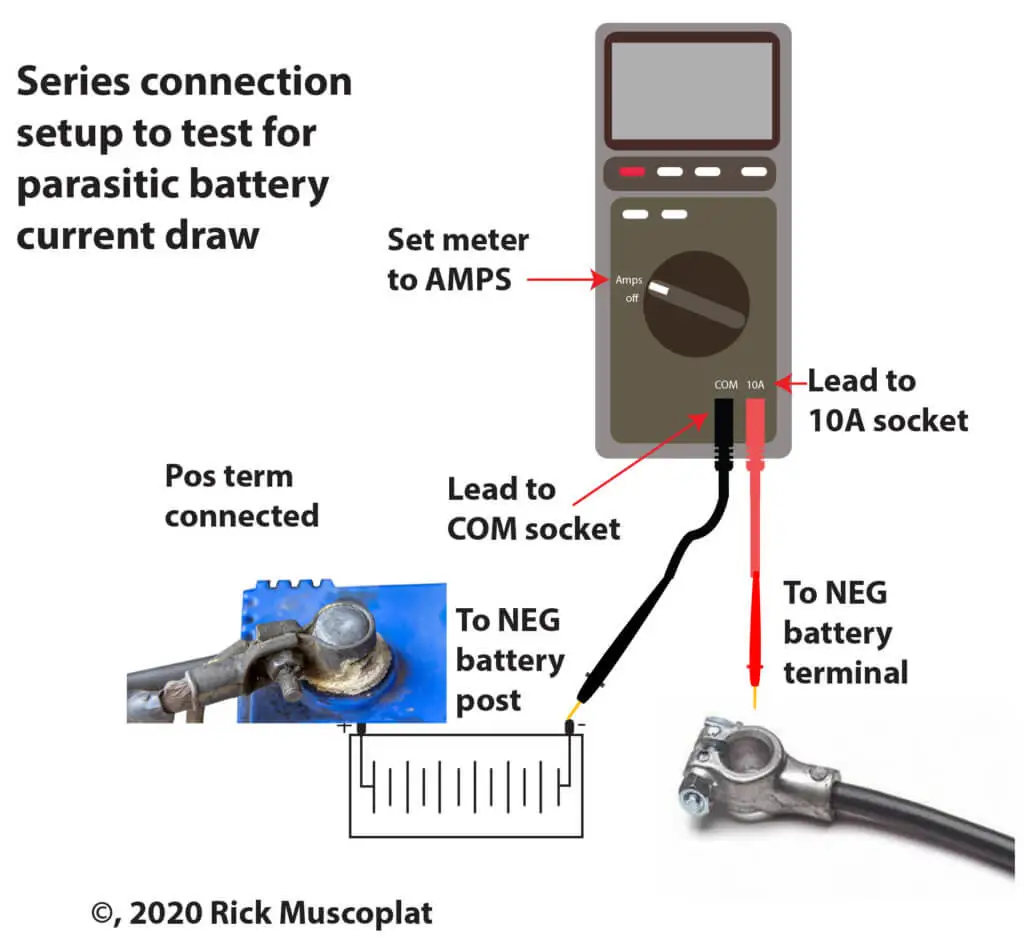
Reading 15 volts on a running engine indicates overcharging, which damages batteries quickly. Reading below 13 volts at idle suggests alternator weakness. When measuring parasitic draw, you move the multimeter into series mode by disconnecting the negative cable and placing the meter between the cable and terminal.
This exposes live current and requires extra caution. Never touch metal probe tips together while the circuit is live. Explore car battery testing methods in depth.
Battery Removal and Transport
Lift batteries with both hands, keeping them upright. Spilled acid damages vehicle paint and your clothing. Place the battery in a plastic container or box for transport to prevent tipping.
Battery recycling centers accept dead units free of charge in most regions. Never throw a lead-acid or lithium battery in household trash. Learn about responsible car battery recycling.
Store spare batteries in a cool, dry place away from direct sunlight and children. Keep terminals covered with caps or tape to prevent accidental shorting.
Step-by-Step Diagnostic Workflow
Diagnosing a repeatedly dying battery follows a logical sequence. Skip steps and you might replace a perfectly good battery while the real fault remains hidden. Stick to the process and you will find the culprit efficiently.
This workflow applies primarily to automotive lead-acid systems, but the logic transfers to other rechargeable batteries with adjustments.
Step One: Visual Inspection
Start with your eyes before touching any tools. Look at the battery case for swelling, cracking, or bulging. Swollen cases indicate internal short circuits or excessive heat damage.
Check terminals for heavy white or green corrosion. Corrosion creates resistance and mimics charging failures. Inspect the cable ends where they clamp to terminals.
Frayed wires or cracked insulation signal impending connection loss. Verify the hold-down bracket secures the battery tightly. Vibration damages internal plates over time.
Step Two: Resting Voltage Test
Use a multimeter set to DC volts. Touch the red probe to the positive terminal and the black probe to the negative terminal. A fully charged healthy battery reads between 12.6 and 12.8 volts.
Anything below 12.4 volts indicates partial discharge. Below 12.0 volts suggests the battery is deeply discharged and possibly damaged. Record this number before proceeding.
If the resting voltage is low, attempt a full charge and retest after the battery stabilizes for several hours. A battery that recovers fully likely had a charging system issue. A battery that remains low after charging probably has internal cell failure.
Step Three: Charging System Verification
Start the engine and measure voltage at the battery terminals again. A healthy alternator produces between 13.5 and 14.7 volts at idle. Rev the engine to about 2,000 RPM and confirm the voltage rises slightly but stays below 15 volts.
Voltage above 15 volts indicates an overcharging regulator that will cook the battery. Voltage below 13.3 volts means the alternator is not keeping pace. Both scenarios explain premature battery death.
Check battery compatibility information when replacing components to ensure correct system matching.
Step Four: Parasitic Draw Measurement
This step identifies hidden drains that kill batteries overnight. Turn the ignition off and remove the key. Wait two minutes for modules to enter sleep mode.
Disconnect the negative battery cable. Set the multimeter to amps DC, preferably the 10-amp range. Connect the meter between the negative cable and the negative battery terminal.
Watch the reading stabilize. A draw below 50 milliamps is acceptable for most vehicles. Anything above 100 milliamps warrants investigation.
Pull fuses one at a time while watching the meter. A sudden drop in current reveals which circuit carries the unwanted drain. Trace that circuit to its component and repair or replace as needed.
Step Five: Load Testing
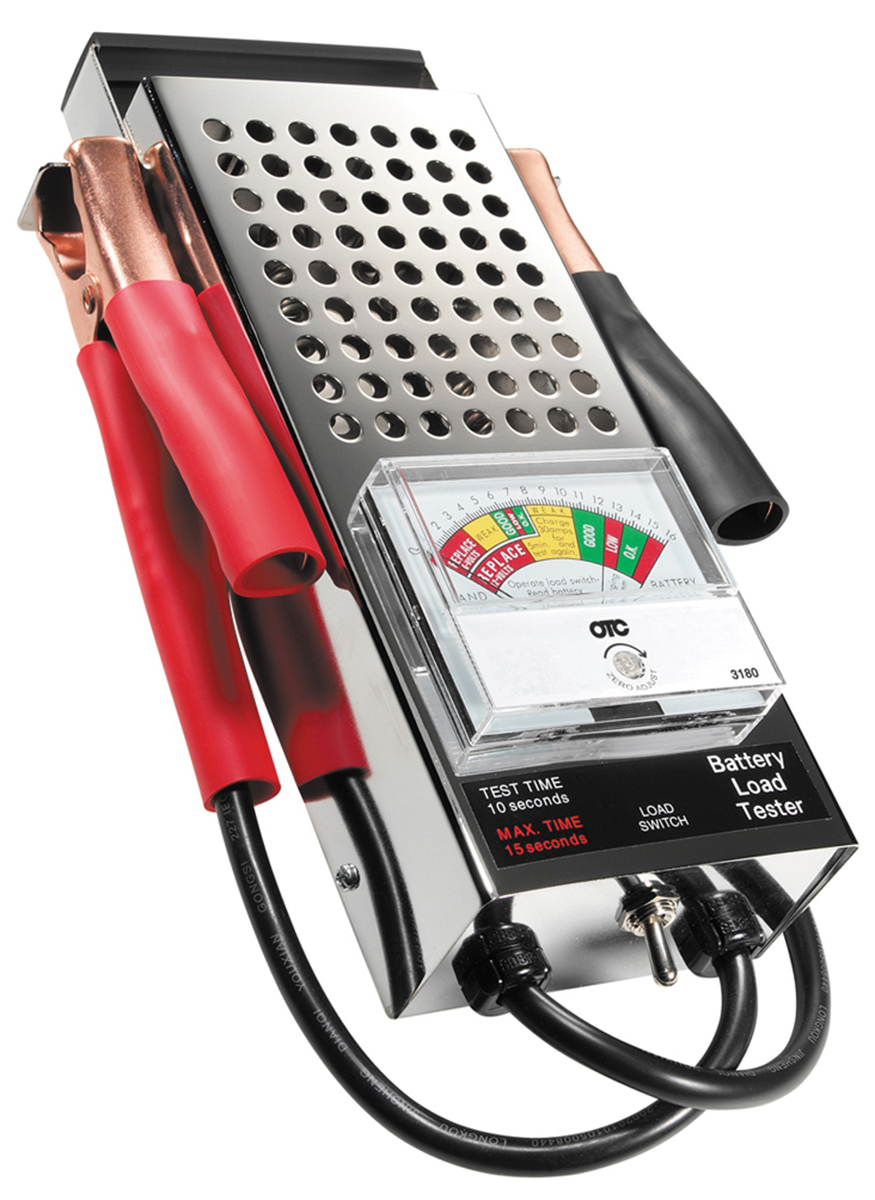
A load test reveals whether a battery can sustain voltage under simulated starter demand. Most auto parts stores offer free load testing with proper equipment. The test applies a controlled resistive load equal to half the battery’s CCA rating for fifteen seconds.
A healthy battery maintains at least 9.6 volts during the test. Dropping below that threshold indicates weakened cells. Combining load test results with the resting voltage and charging system readings gives a complete picture.
No single test tells the whole story, but together they point clearly to the root cause.
Decision Points Based on Results
If the resting voltage is low but charging system tests are fine, you likely have a parasitic draw. Follow the fuse-pulling method to locate it. If the charging system reads below 13.3 volts, inspect the alternator belts, wiring, and the alternator itself.
A bad voltage regulator costs far less than a new alternator assembly in many cases. If the load test fails despite good charging and no parasitic draw, the battery is internally compromised. Replace it and investigate why it failed prematurely to prevent recurrence on the new unit.
Common Mistakes to Avoid
Many drivers repeat the same errors when dealing with a dying battery. These mistakes waste money, create safety hazards, and delay finding the actual problem. Learning what not to do saves time and frustration down the road.
Swapping Batteries Without Diagnosis
Replacing a dead battery with a new one without testing the charging system is the most common mistake. The new battery dies in weeks for the same reason the old one did. The root cause never gets fixed.
Always perform at least the voltage and load tests before spending money on a replacement. A $20 diagnostic step prevents a $100 replacement mistake.
Using the Wrong Battery Type
Slapping a shallow-cycle battery into an RV or solar setup destroys it within months. These applications need deep-cycle chemistry that tolerates repeated partial discharge. Conversely, using a deep-cycle battery in a car starter position wastes money and provides inadequate cranking power.
Match the battery chemistry and construction to the intended application. Review compatible battery options before purchasing to avoid mismatches.
Ignoring Terminal Corrosion
Green or white crust on terminals is not cosmetic. It increases electrical resistance and starves the starting system of current. Cleaning terminals takes five minutes with a wire brush and baking soda solution.
Skipping this step leaves a chronic weak connection that mimics alternator failure. Clean terminals whenever you inspect the battery, and apply dielectric grease afterward to slow future corrosion.
Overlooking Aftermarket Installations
Any non-factory electronic add-on introduces potential drain pathways. Dash cams, GPS units, alarm systems, and upgraded stereos all draw power in various states. Some installers tap into fused accessory circuits that shut off with the key.
Others tap into constant live circuits, creating permanent parasitic drains. If you added anything to your vehicle recently, review those installations carefully. Proper hardwiring kits include sleep-mode features that eliminate standby drain.
Letting the Battery Sit Discharged
A lead-acid battery left at 50 percent charge for a week begins sulfating immediately. Left at 20 percent for a month, the damage becomes largely irreversible. Keep batteries charged above 70 percent whenever possible.
If you cannot drive regularly, use a smart maintainer charger that pulses charge without overloading the cells. Smart chargers detect battery state and adjust automatically. Cheap constant-voltage chargers cook batteries over time.
Skipping Annual Inspections
Batteries age even under ideal conditions. An annual visual and voltage check catches developing problems before total failure. Schedule this inspection before winter arrives in cold climates.
Early detection of weak cells or corroded cables prevents roadside breakdowns. The warning signs to watch for include slow cranking, dimming lights, and bloated cases. Catching these early saves towing fees and inconvenience.
When to Call a Professional
Some battery problems stay firmly in the do-it-yourself zone. Others demand tools, training, or safety protocols that regular owners should not attempt. Knowing the difference saves you from dangerous mistakes and costly misdiagnoses.
Here is when you should hand the job to a qualified technician.
High-Voltage Systems in Hybrids and Electric Vehicles
Hybrid and electric vehicles contain battery packs running 200 to 400 volts. Touching those components without proper training risks lethal electrocution. The 12-volt auxiliary battery in these vehicles follows the same diagnostic rules as conventional cars, but the main propulsion battery requires certified technicians only.
If your hybrid shows warning lights or unusual behavior, stop troubleshooting and seek professional service immediately. Read more about high-voltage safety for additional guidance on working near automotive electrical systems.
Complex Parasitic Draw Diagnoses
Simple parasitic draws like a stuck glove box light or faulty radio memory are easy to find with a multimeter and fuse puller. Complex draws hide inside control modules, gateway computers, or network communication faults. These require scan tools, wiring diagrams, and manufacturer-specific knowledge to trace.
If your fuse-pulling method reveals nothing obvious and the draw persists above 100 milliamps, a professional diagnostic session is worth the investment. Modern vehicles have dozens of sleep-mode circuits that behave unpredictably during manual testing.
Alternator Internal Failures
Testing an alternator output with a multimeter is straightforward. Rebuilding or replacing one requires mechanical skill and sometimes specialized extraction tools. Alternators mounted deep behind engine components, timing belts, or serpentine drives add complexity.
If you remove the alternator and find worn bearings, burnt diodes, or a failed voltage regulator, decide whether you have the tools and time to proceed. Many auto parts stores offer exchange programs for rebuilt alternators that simplify the swap significantly.
Batteries Showing Physical Damage
A swollen, cracked, or leaking battery needs professional disposal and replacement. Do not attempt to recharge a damaged cell. Internal shorts can cause thermal runaway in lithium units or explosive hydrogen release in lead-acid types.
A certified technician can safely remove the compromised unit, inspect surrounding wiring for acid damage, and install a correct replacement. Follow proper battery recycling procedures to ensure hazardous materials never enter landfills.
Warranty and Certification Concerns
Some vehicle manufacturers require certified service procedures to maintain warranty coverage. Deviating from prescribed diagnostic steps might void portions of your powertrain or electrical system warranty. Luxury brands and newer models increasingly lock electronic modules behind proprietary software.
Attempting self-repair without proper authentication tools can brick control units. Check your warranty terms before opening sealed components or modifying factory wiring.
Maintenance Tips for Long-Term Reliability
Preventive maintenance stretches battery life dramatically. Most premature failures trace back to neglected upkeep rather than inherent defects. Small routine habits prevent the cascading problems that strand drivers unexpectedly.
Monthly Visual Inspections
Set a recurring calendar reminder to check battery condition every thirty days. Look for terminal corrosion buildup around the cable clamps. Inspect the case for swelling or discoloration from heat exposure.
Verify the hold-down bracket remains tight. Check cable insulation for cracks or brittleness. These five observations take less than two minutes and catch developing problems early.
Learn about warning signs to watch for during these quick checks.
Quarterly Voltage Checks
Use a multimeter to measure resting voltage quarterly. Record each reading in a phone note or notebook. Gradual decline from 12.6 volts toward 12.0 volts signals aging cells.
Sudden drops indicate internal damage or chronic undercharging. Tracking trends over time gives you early warning before complete failure occurs. A battery losing half a volt per year under normal conditions likely needs replacement soon.
Terminal Cleaning Routine
Corrosion resistance reduces charging efficiency and causes intermittent starting problems. Mix one tablespoon of baking soda with a cup of warm water. Apply the solution to corroded terminals with a small brush.
The fizzing reaction neutralizes acid deposits safely. Rinse with clean water and dry thoroughly with a lint-free cloth. Apply a thin coat of dielectric grease or petroleum jelly to bare metal surfaces before reconnecting cables.
This coating slows future oxidation significantly. See detailed cleaning instructions for a thorough walkthrough.
Driving Habits That Help
Regular highway driving keeps batteries healthy. Twenty-minute trips at steady 55 mph allow the alternator to fully replenish starter discharge. City driving with frequent stops prevents complete recharge cycles.
If your lifestyle involves mostly short trips, schedule one longer drive weekly to restore balance. Consider installing a smart maintainer charger if you regularly park vehicles for extended periods. These devices monitor voltage and apply micro-charges automatically.
Explore proper storage methods for long-term parking scenarios.
Temperature Management Strategies
Parking in a garage extends battery lifespan considerably. Engine bay temperatures exceed ambient air temperature by 30 to 50 degrees during summer driving. That heat accelerates internal chemical degradation permanently.
Garage parking reduces thermal stress on both the battery and surrounding wiring. In winter, a warm garage prevents electrolyte thickening and makes cold starts easier. If garage space is unavailable, use a battery insulator wrap to slow heat transfer during operation.
Understand heat effects on battery chemistry and longevity.
Smart Charger Selection
Not all chargers treat batteries equally. Cheap constant-voltage chargers apply raw current indefinitely and cook battery fluid. Smart chargers read battery state and adjust charging curves automatically.
They switch from bulk to absorption to float stages without user intervention. Select chargers labeled compatible with your battery chemistry. Flooded lead-acid, AGM, and lithium batteries require different voltage profiles.
Using the wrong program damages the battery permanently. Match charger specifications to your battery type before purchasing.
Costs, Pricing, and Replacement Options
Budget planning matters when dealing with repeated battery failures. Prices vary widely by battery type, brand, and vehicle requirements. Understanding the cost landscape helps you make informed decisions instead of reacting emotionally to each failure.
New Battery Price Ranges
Standard flooded lead-acid car batteries range from $60 to $180 at retail. AGM batteries cost between $120 and $350 depending on group size and CCA rating. Lithium iron phosphate deep-cycle batteries run $200 to $600 for equivalent capacities.
Premium brands with longer warranties command higher prices but often deliver better cycle life. Auto parts stores frequently match or beat online pricing when you bring in a competitor ad.
| Battery Type | Typical Price Range | Expected Lifespan | Best Application |
|---|---|---|---|
| Flooded Lead-Acid | $60 to $180 | 3 to 5 years | Standard passenger vehicles |
| AGM | $120 to $350 | 4 to 7 years | Start-stop systems, premium audio |
| Lithium Iron Phosphate | $200 to $600 | 5 to 10 years | RVs, solar, marine deep cycle |
| Enhanced Flooded Vehicle | $80 to $220 | 3 to 6 years | Heavy-duty starting needs |
Prices reflect retail estimates as of 2026. Wholesale and fleet pricing runs 10 to 20 percent lower. Core charge refunds of $15 to $30 apply when you return the old battery for recycling.
Labor Costs for Diagnosis and Replacement
Independent mechanics charge $40 to $90 per hour for labor. Battery replacement itself takes 20 to 40 minutes for most vehicles. Complex installations involving removed engine covers or tight access panels add time.
Professional parasitic draw diagnostics run $150 to $300 depending on vehicle complexity. Dealership rates typically exceed independent shops by 30 to 50 percent hourly. Many auto parts retailers offer free battery installation with purchase, which offsets labor costs substantially.
Alternator Repair Versus Replacement
Alternator rebuild kits cost $30 to $80 and contain new brushes, diodes, and regulators. Replacement requires mechanical skill and usually 20 to 40 minutes of labor. New remanufactured alternators run $200 to $400 installed.
Buying a new unit costs $300 to $600 with installation. Rebuilding is economical when the housing and rotor are sound. Replace entirely when bearings are worn or the stator shows damage.
Review compatibility information to select the correct replacement unit.
When Replacement Makes Financial Sense
Replace the battery when load test results fall below 90 percent of rated CCA or when resting voltage cannot recover above 12.4 volts after full charging. Replace the alternator when output remains below 13.3 volts under load despite good connections. Do not repeatedly swap batteries without fixing the charging system or parasitic drain.
Each new battery thrown at a broken system wastes money and delays the real repair. Factor total cost of ownership including multiple replacements when deciding whether diagnostic investment pays off.
Real-World Scenarios and Case Examples
Specific stories illustrate patterns that general advice sometimes misses. These documented cases show how different root causes produce identical symptoms and how proper diagnosis changes outcomes dramatically.
Case One: The Daily Commuter with Five-Minute Trips
A sedan owner reported three battery replacements within eighteen months. Each new battery died after four to six days of parking. Voltage testing revealed a healthy charging system producing 14.2 volts at idle.
Parasitic draw measured 80 milliamps, right at the edge of acceptable. Pulling fuses identified the radio memory circuit as the culprit. An aftermarket head unit installation had tapped into constant power instead of switched accessory power.
Rewiring to ignition-controlled voltage eliminated the drain permanently. The fourth battery lasted four years without issue. Short trips compounded the problem because the alternator barely recharged what the starter consumed daily.
Case Two: The Winter Breakdown Surprise
An SUV owner experienced sudden no-start conditions every January for two consecutive winters. Summer months caused no problems. Battery load testing showed 68 percent capacity retention, well below acceptable thresholds.
Cold temperatures amplified the weakness until cranking voltage dropped below 7 volts. The owner replaced the battery with a higher CCA unit rated for severe climates. Subsequent winters produced zero failures.
This case demonstrates why matching batteries to climate zones matters more than nominal age alone.
Case Three: The Dash Cam Drain
A compact car died every third morning regardless of starting frequency. Multimeter testing revealed a 200-milliamp parasitic draw. Fuse pulling isolated the circuit to the rearview mirror area.
A hardwired dash cam drew current continuously through an incorrect fuse tap placement. The installer connected to a switched accessory circuit that remained live when the key exited the lock. Moving the tap to a truly ignition-controlled fuse reduced standby draw to 12 milliamps.
The vehicle started reliably afterward without additional modifications. Aftermarket accessory installation quality directly affects battery longevity.
Case Four: The Altitude and Heat Combination
A delivery van operating in desert conditions faced monthly battery failures. Ambient temperatures exceeded 110 degrees Fahrenheit regularly. Engine bay heat soaked through battery vents and accelerated fluid loss.
Flooded lead-acid batteries lost electrolyte faster than owners could top them off. Switching to valve-regulated AGM units eliminated maintenance access issues and improved heat tolerance. Those batteries survived five years under identical conditions.
Understand how extreme temperatures affect batteries before selecting chemistry for harsh environments.
Case Five: The Faulty Voltage Regulator
A luxury coupe exhibited random no-start events coinciding with humid weather. Battery and alternator tested normal on dry days. Moisture intrusion into an exposed connector caused intermittent voltage regulator failure.
Output dropped to 12.8 volts during rainfall, insufficient for full recharge. Repairing the connector harness resolved the issue completely. This case highlights why weather-correlated failures deserve wiring inspection rather than immediate component replacement.
Frequently Asked Questions About Battery Keep Dying Every Few Weeks
Can a bad alternator kill a new battery?
Yes. A failing alternator that outputs below 13.3 volts gradually discharges any connected battery. Over weeks of driving, the battery sinks below usable voltage and eventually fails to start the engine.
The new battery dies from neglect, not defect. Always verify charging system health before installing a replacement battery.
How long does a car battery last normally?
Manufacturers design standard automotive batteries for three to five years of typical use. Actual lifespan depends heavily on climate, driving habits, and electrical load. Hot climates shorten life significantly.
Cold climates preserve chemistry but demand higher cranking capacity. Fleet vehicles with constant start-stop cycles see shorter spans than occasional commuter cars.
What causes a battery to drain while parked?
Parasitic draws from security systems, memory presets, and aftermarket electronics pull small currents continuously. Faulty relays that stick closed create larger drains. Interior lights left on by accidental switch activation represent another common source.
Even healthy batteries cannot withstand weeks of unmonitored drain below 10.5 volts.
Should I disconnect my battery when storing a car?
Disconnecting the negative cable prevents parasitic drain during storage lasting more than two weeks. Modern vehicles with memory systems may lose radio presets and engine adaptation data upon reconnection. Smart maintainer chargers provide a safer alternative that preserves electronics while preventing discharge.
Choose based on storage duration and vehicle complexity.
Is it safe to jump-start a frozen battery?
Never attempt to jump-start a battery that feels icy solid. Frozen electrolyte cannot support chemical reactions safely. Applying charging current to a frozen cell causes internal fracture and permanent damage.
Thaw the battery completely at room temperature before attempting any restart procedure. Inspect for case swelling or cracking before proceeding.
When is battery recycling required by law?
All U.S. states mandate lead-acid battery recycling through authorized collection channels. Retailers must accept core returns when you purchase replacements. Lithium batteries face increasing regulatory scrutiny but lack uniform federal recycling requirements.
Check local environmental agency guidelines for specific disposal rules in your jurisdiction. Learn about proper recycling procedures to ensure compliant handling.
Final Recommendation: Your Next Steps
Repeat battery failure demands systematic diagnosis, not blind part swapping. Start with resting voltage measurement and charging system verification. Those two tests separate genuine battery defects from external charging problems in most cases.
If both check out, hunt parasitic draw using the fuse-pulling method. Track your findings over several weeks to establish clear patterns before spending money on replacements.
Maintain batteries proactively through monthly inspections and quarterly voltage checks. Keep terminals clean and connections tight. Drive regularly enough to allow full recharge cycles.
Store vehicles properly during extended parking periods. These habits prevent most premature failure scenarios entirely.
When DIY diagnosis reaches its limits, consult a qualified automotive electrician. Complex module faults and high-voltage hybrid systems require professional equipment and training. Your safety and wallet both benefit from knowing when to call in expert help rather than guessing blindly.
Address the root cause once, and the battery will stay charged for years instead of weeks.

Tony Kilmer is an auto mechanic and the author behind CarTruckAdvisor.com. He shares practical, no-nonsense guidance on car and truck maintenance, common problems, and repair decisions—helping drivers understand what’s going on and what to do next.