You pull up to your car after a long trip and turn the key. Nothing happens. Or maybe it cranks weakly and dies.
This is the classic “car won’t start after being parked for a month” scenario, and it is incredibly common. Most of the time the problem is fixable without calling a tow truck.
Modern vehicles draw power even when they are off. A healthy battery self-discharges roughly 5 percent of its charge each month. Add in parasitic drains from your radio memory, alarm system, and onboard computers and you can easily lose enough charge to prevent a start.
Understanding exactly what went wrong lets you fix it fast. Here is how to diagnose the problem step by step.
Quick Answer
A car battery loses about 5 percent of its charge each month while sitting. Small electrical drains add to that loss every day. After thirty days, most batteries drop below the voltage needed to crank the engine.
Clean corroded terminals first, then test with a multimeter. Anything below 12 volts means recharge or replace.
When Your Car Won’t Start After a Month of Sitting: Where to Begin
Before you pop the hood, you need to know what the car is telling you. This section maps the four real-world outcomes you will encounter and which branch to follow. Each outcome points to a completely different root cause.
Getting the diagnosis right saves you hours of guesswork.
No sound at all when you turn the key means the battery, a connection, or the security system is blocking power. Follow Branch One.
A single loud click with nothing else happening points to the starter relay or a weak battery. Follow Branch Two.
Normal cranking but no firing means the engine is turning over but combustion is not happening. This usually points to fuel or ignition problems. Follow Branch Three.
Runs briefly then dies almost always means stale fuel or an air issue in the system. Follow Branch Four.
Don’t panic. Don’t guess. Follow the branch that matches what you hear.
Branch One: No Response When You Turn the Key
If everything is completely dead, no dash lights, no click, no nothing, the issue falls into one of three buckets. Work through them in order. Each check takes under two minutes.
Are the Battery Terminals Corroded or Loose?
Yes, corroded or loose terminals are the most common cause of a total no-response condition. Battery terminals sit exposed to moisture and temperature swings. A month of sitting is plenty of time for white or green crust to build up.
That crust breaks the electrical connection between the terminal and the cable clamp.
Check visually first. Look at both the positive and negative posts. If you see any buildup, that is likely your problem.
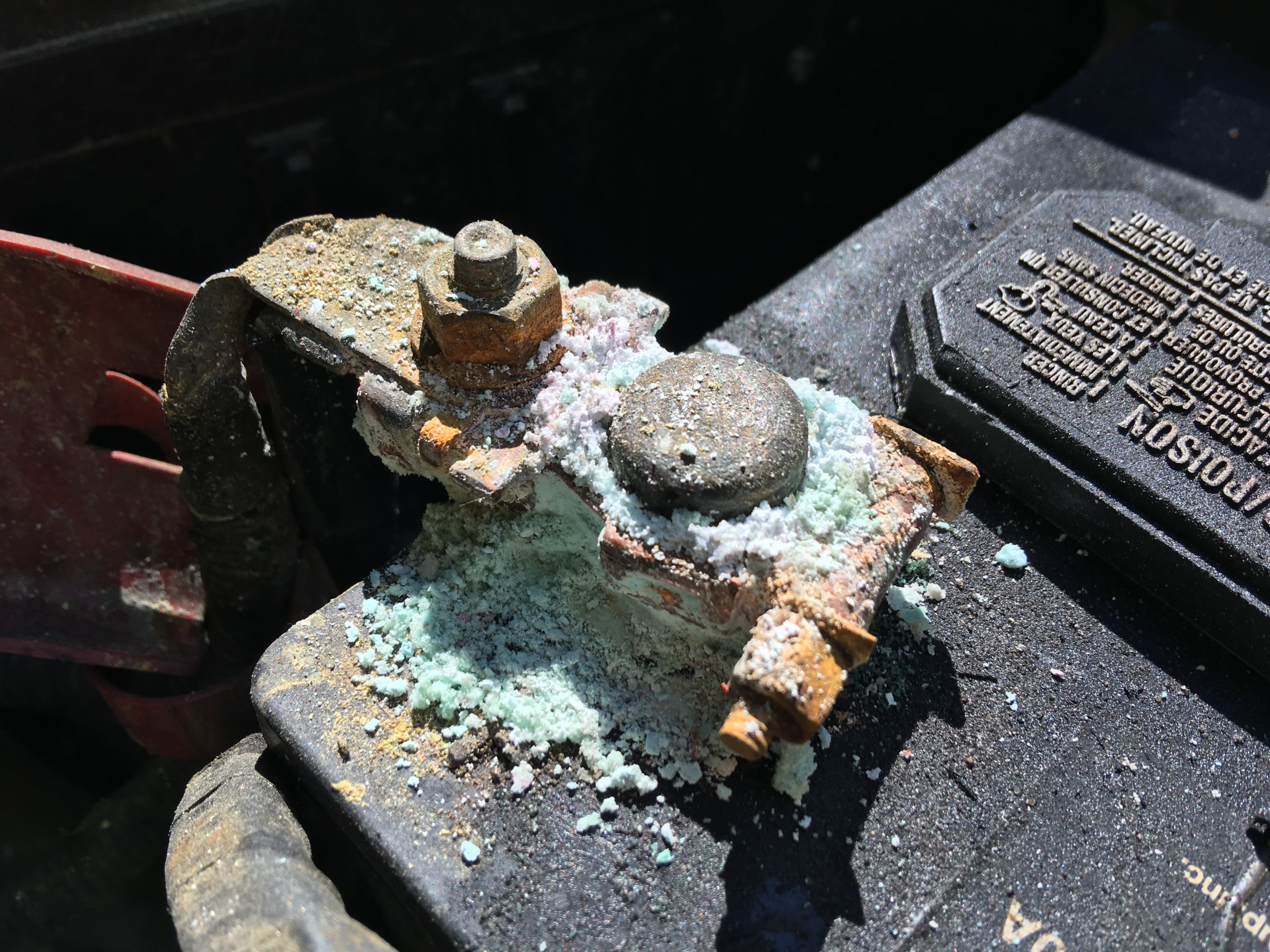
Clean the terminals with a wire brush and a baking soda and water solution. The baking soda neutralizes the acid corrosion. Scrub both posts and the inside of the cable clamps until they look bright again.
Reconnect everything tightly. Connect the positive cable first, then the negative. Tighten both clamps until they feel solid.
If the terminals look clean but the car still will not respond, move to the next check. Corrosion is the most common cause of a dead car on first inspection, but it is not the only one. A loose cable clamp can produce the same symptom even without visible crust.
Is the Battery Actually Dead or Just Low?
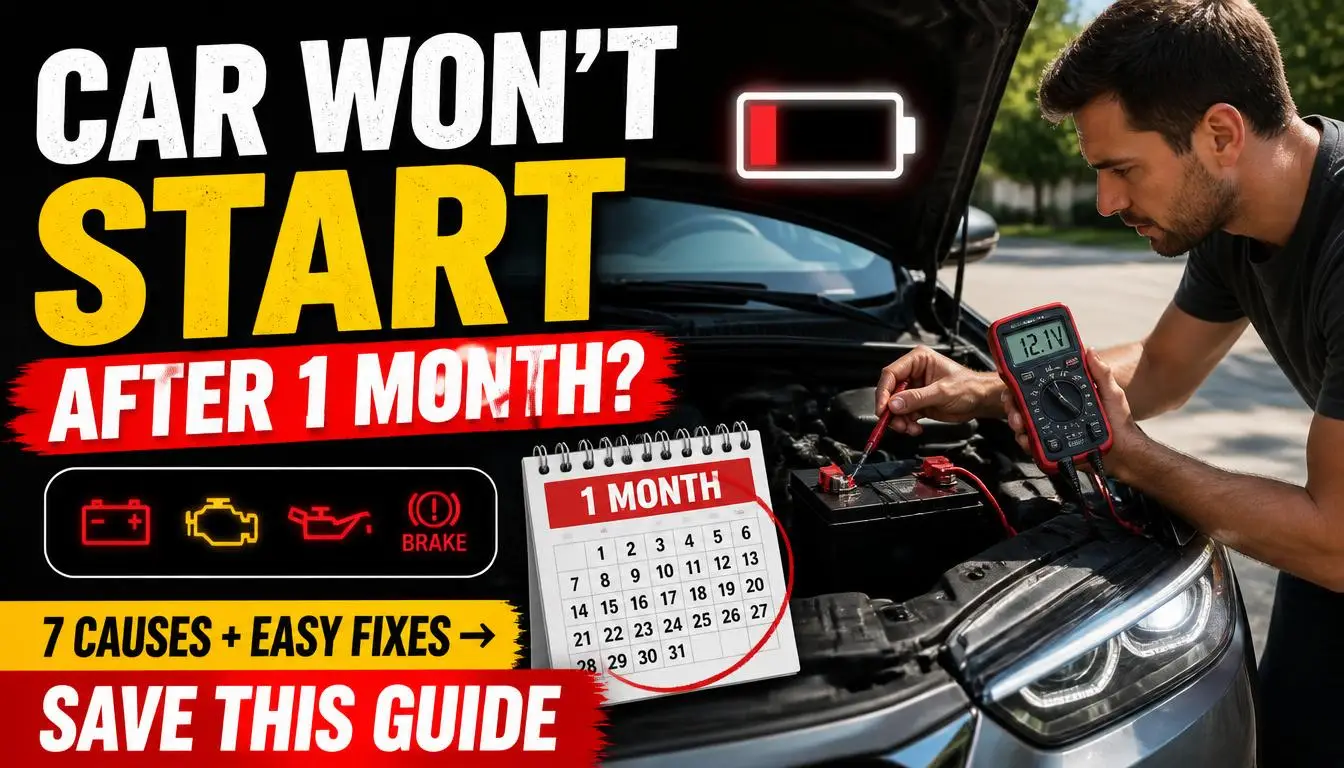
A multimeter reading tells you exactly where the battery stands. Voltage can look fine at rest and then collapse the moment you try to crank. Touch the red probe to the positive terminal and the black probe to the negative terminal.
Read the voltage with the car completely off.
| Voltage Reading | Battery Condition | Action Needed |
|---|---|---|
| 12.6V or above | Fully charged | Proceed to next diagnostic |
| 12.2 to 12.5V | Partially discharged | Charge before testing further |
| Below 12.0V | Deeply discharged | Recharge or replace |
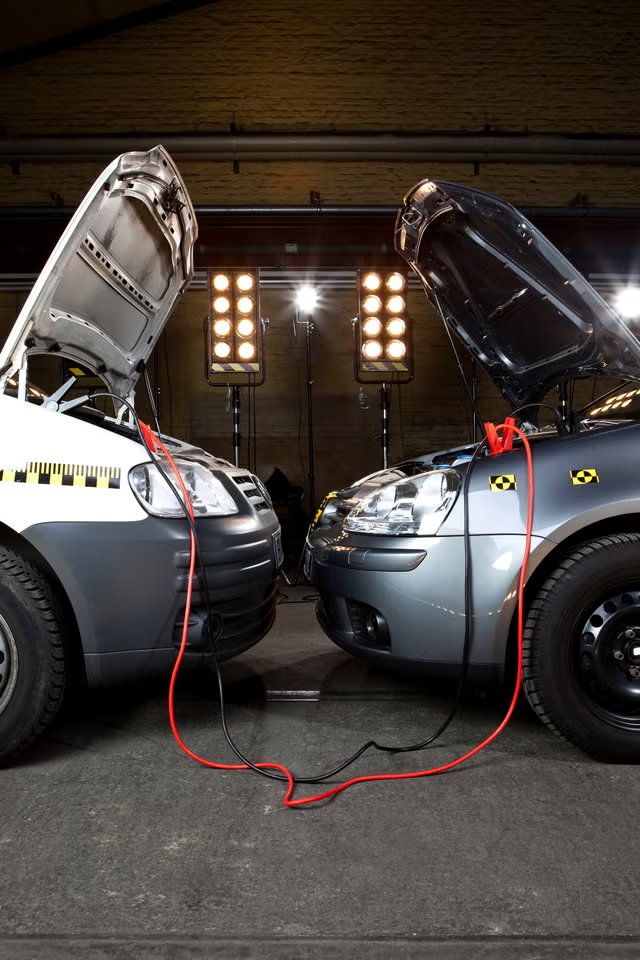
If you do not have a multimeter, try a portable jump starter or jumper cables from another vehicle. If the car fires up immediately, your battery was the culprit. If it still does nothing, the problem lies downstream.
It is likely the starter motor, a blown fuse, or a security lockout.
Reading accurate testing methods gives you a deeper look at how to properly evaluate your battery condition.
Could a Parasitic Drain Have Killed the Battery?
Yes, parasitic drain is a frequent culprit after extended parking. Modern cars draw power even when they are off. Things like the radio memory, alarm system, and interior lights can slowly drain a battery over thirty days.
This is why common discharge patterns explore the various mechanisms behind overnight power loss.
Common parasitic drains after extended parking include:
- A trunk or glovebox light left on by a misaligned switch
- An aftermarket stereo wired incorrectly
- A faulty alarm system drawing excess current
- A door latch switch stuck in the open position
If your battery tested good but the car still will not respond, you may be dealing with a parasitic draw. Disconnect the negative terminal and plug an ammeter between the terminal and the cable clamp. Anything above 50 milliamps suggests a parasitic draw worth investigating.
Safe storage protocols cover the best practices for preventing overnight drain during long parking periods.
Branch Two: One Loud Click, Then Silence
That single click is the starter solenoid engaging. It means battery power is reaching the starter circuit. But either the battery cannot deliver enough current or the starter motor itself is faulty.
Can You Test the Battery Under Load?
Yes, a simple multimeter test reveals weaknesses that resting voltage hides. Voltage can look fine at rest and then collapse the moment you try to crank. If you have a multimeter, watch the voltage while someone turns the key to the start position.
A healthy battery should stay above 9.6 volts during cranking. Below that number and the battery is weak or failing.
Most home DIYers do not have a load test setup. Here is the practical version. Try jumping the car.
If it starts with a jump and runs fine afterward, your alternator is charging properly. The battery simply could not handle the initial load. It may be old or sulfated from sitting.
Read temperature effects on batteries to understand how extreme heat accelerates degradation during storage.
Check the Starter Connection
A loose or corroded cable between the battery and starter can produce the same single-click symptom. Trace the thick cable from the positive battery terminal down to the starter motor. Tighten any loose connections.
Clean away any corrosion you find.
If the battery is healthy, connections are clean, and you still get only a click, the starter motor itself is likely the problem. Replacement varies by vehicle. Parts alone run from $200 to $600 depending on the make and model.
Labor adds another $100 to $300 at a shop.
If you want to dive deeper into rapid failure, quick drain reasons explains how certain conditions kill a battery in days.
Engine Cranks Normally But Won’t Fire
This is the most common scenario after a month of parking. The battery is fine. The starter spins the engine.
But combustion never happens. Two systems are responsible here: fuel and spark.
What Happens to Fuel After It Sits
Fuel degrades through evaporation and moisture absorption. Modern ethanol-blended gasoline starts breaking down within thirty days. Volatile compounds evaporate and leave behind a thicker residue.
Ethanol attracts moisture from the air and causes phase separation. Varnish deposits form inside the fuel injectors or carburetor jets.
Symptoms include:
- Cranking for an unusually long time before catching
- Starting only after several attempts
- A rough idle that slowly improves once the engine warms up
Remove the fuel filler cap and smell the gas. If it smells sour, rotten, or distinctly different from fresh gasoline, degradation has occurred. Add a quality fuel stabilizer before attempting to start.
It can sometimes revive a mildly degraded system. Severely degraded fuel requires draining the tank and refilling with fresh gas.
The EPA Fuel Quality Guidelines provide official standards on gasoline stability and ethanol blend requirements.
Do Spark Plugs Cause No-Start Problems After Parking?
Yes, worn spark plugs combined with degraded fuel frequently cause no-start conditions. Old fuel will not cause a no-start on its own if the ignition system is strong. But aged plugs paired with marginal fuel can prevent combustion entirely.
Signs your ignition system might be the problem include a check engine light that was already on before you parked, consistent misfires upon starting, or noticeable roughness at idle. A basic visual inspection of spark plug wires and coils can reveal cracked boots or corroded connectors.
Early warning indicators outlines the early indicators that your electrical system is failing, which often precedes no-start conditions.
How Do You Know If the Fuel Pump Is Working?
Listen for a brief hum near the rear seat when you turn the key to the on position. Most modern cars prime the fuel pump automatically. That sound should last about two seconds.
If you hear nothing, the pump may not be receiving power or may have failed during storage.
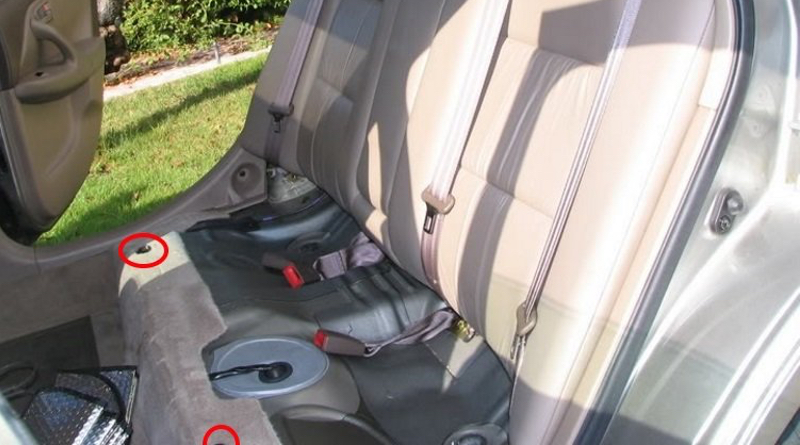
You can also check fuel pressure with a gauge if you have one. Spec varies by vehicle. Typical range for port-injected engines is 30 to 60 PSI.
If you are uncomfortable working with fuel lines, have a professional check pressure before proceeding.
Choosing the correct replacement ensures you pick the right battery type if one becomes necessary after diagnosis.
Car Starts But Won’t Idle, Then Dies
Your car fires up but stalls out within seconds. This is almost always a fuel system problem. It is one of the most frustrating no-start variations because it feels like progress before it fails again.
Why Does a Car Stall Moments After Starting?
Fuel starvation is the most common reason a car dies shortly after firing. When fuel has sat for a month, the pump pulls sludge or varnish into the filter. The engine gets just enough fuel to start.
Then the clogged filter restricts flow and the engine starves. A partially blocked fuel injector can deliver an uneven mixture that cannot sustain idle speed.
Try starting again with a small amount of throttle held steady. Fresh fuel flowing through the system may carry enough volume to keep it running. Listen for the fuel pump priming sound.
If it is absent or weak, the pump may be drawing sludge.
Replace the fuel filter if it has not been changed recently. Filters trap the worst of the degradation debris. If the problem persists, professional fuel system cleaning or tank drainage is the real fix.
Running electrical system chemistry helps you understand how battery chemistry interacts with the vehicle’s electrical system during prolonged shutdown periods.
Branch Five: Anti-Theft System Lockout
Many vehicles built after 2005 have immobilizer systems that disable the starter or fuel pump if the correct key signal is not detected. When a battery dies and reconnects, or when the car’s computer loses memory, the anti-theft system can enter a locked state.
What Signs Point to an Immobilizer Issue?
Look for a flashing key or security light on the dashboard. The car may crank normally but never fire because the system is cutting fuel or spark intentionally. A dead key fob battery can also trigger this condition since many modern keys require a strong signal to authenticate.
Try your spare key if you have one. Replace the key fob battery and retry the start sequence. Some vehicles require a specific reset procedure outlined in the owner’s manual.
Consult your manual or contact a dealer if the problem persists.
Common Mistakes People Make
People often make things worse by applying quick fixes without proper diagnosis. Here are the most frequent errors and how to avoid them.
Jump-Starting in the Wrong Order
Connect the cables in the wrong sequence and you risk sparks near battery gases. Battery gases are flammable. Always connect positive first, then negative to a grounded metal surface.
Never attach the negative cable directly to the negative battery terminal.
Pouring Gasoline Into the Intake
This is an old trick that belongs in a comedy sketch. You risk fuel splashback, fire, and damage to catalytic converters. Never pour gasoline into the throttle body or intake manifold.
It will not solve the problem and creates serious safety hazards.
Cranking for Extended Periods Without Pause
Every 15-second cranking attempt floods the engine and drains the battery further. Crank for 10 to 15 seconds maximum. Wait at least 30 seconds between attempts to let the starter cool and the battery recover.
Ignoring the Check Engine Light After It Resolves
If your car started after sitting and the check engine light comes on afterward, do not ignore it. Clear the code with an OBD-II scanner. Drive the vehicle and watch for recurrence.
Persistent codes point to real problems that need attention before they cause expensive damage.
Assuming the Battery Is Fine Because Lights Work
Dash lights and headlights draw far less current than the starter motor. A battery that runs dome lights may still be too weak to crank the engine. Always test under load or use a jump starter to confirm actual cranking capability.
How to Prevent This From Happening Next Time
Prevention is cheaper than repair. A few simple steps before long parking periods eliminate most no-start problems.
If You Know the Car Will Sit for More Than Two Weeks
Connect a smart battery maintainer. These devices monitor voltage and pulse-charge as needed without overcharging. They cost between $30 and $80 and prevent the most common cause of no-start issues.
Read maintenance best practices to understand routine care that extends battery life significantly.
Fill the fuel tank completely to minimize condensation inside the tank. Empty tanks hold more air. Warm air holds more moisture.
That moisture condenses on cold tank walls and mixes with fuel. Add fuel stabilizer if the car will sit more than thirty days.
Inflate tires to the maximum sidewall pressure listed on the tire placard. Park on level ground and use wheel chocks rather than relying solely on the parking brake. Brake rotors rust and seize when exposed to humidity.
If the Car Has Not Been Stored Properly and You Need to Start From Scratch
Perform a full inspection before reconnecting a maintainer or attempting another start. Check all fluid levels. Inspect tires for dry rot or flat spots.
Look under the car for evidence of rodent nesting. Rodents love warm engine compartments and chew wiring harnesses.
Verify all lights and warnings illuminate on the dash when you turn the key. Change the oil and filter if it has been a year or more since the last service. Old oil absorbs moisture and becomes acidic over time.
Acid damages engine components.
Frequently Asked Questions About Why Won’t My Car Start After Sitting for a Month
Can a battery die just from a car sitting for one month?
Yes. Even a healthy battery self-discharges roughly 5 percent per month. Normal parasitic draws from computers and security systems add to that loss.
A month of sitting can easily drop a battery below the threshold needed to crank the engine.
Will adding fuel stabilizer fix a car that already won’t start due to bad gas?
It depends on how severe the degradation is. If the fuel has only begun breaking down, stabilizer can slow further deterioration and help the engine run. Severely degraded fuel requires more than additive.
You will likely need professional cleaning or fuel system service.
How long can a car sit before the battery dies?
Typically two to four weeks for an older battery. Four to six weeks for a newer one in good condition. Cold weather shortens this timeline significantly.
Heat accelerates self-discharge too. A battery maintainer eliminates the problem entirely.
Is it safe to drive a car that has been sitting for a month if it starts?
Not immediately without inspection. Check tire pressure and condition first. Flat-spotted tires can fail at speed.
Inspect under the car for leaks or damage. Listen for unusual noises during the first few minutes. If everything seems normal, take it for a gentle drive to recharge the battery and warm up the brakes.
Why does my car only start after I pump the gas pedal several times?
This often indicates a fuel delivery problem. The pump cannot build adequate pressure on its first attempt. Pumping the pedal primes the system mechanically in some older vehicles.
In fuel-injected cars it may suggest a failing fuel pump or clogged filter that needs replacement.
What should you do if your car won’t start after being parked for a month?
Start with the simplest checks. Clean corroded terminals, test battery voltage, and try a jump start. If those do not work, move to fuel and ignition diagnostics.
Follow the decision tree in this article based on what your car tells you. Most no-start situations resolve with methodical troubleshooting.
When to Call a Professional Instead of DIY-ing It
Some problems are straightforward. Others eat your Saturday and leave you no closer to a working car. Here is where to draw the line.
Call a mechanic if you have confirmed the battery is healthy and the starter works but the car still will not start. Contact a professional if you suspect fuel system contamination and lack the tools or confidence to flush it properly. Seek expert help if the anti-theft system will not disengage after trying spare keys and battery replacements.
You should also call a professional if you find evidence of rodent damage to wiring under the hood or in the engine bay. Persistent diagnostic codes that resist basic OBD-II clearing warrant expert attention. Fluid leaks appearing after storage indicate seal or gasket failure that needs proper diagnosis.
You can handle it yourself if the battery is dead and you have jumper cables or a portable jump starter. Terminal corrosion cleanup is within reach for most DIYers. Simple fuse checks requiring basic hand tools are safe and straightforward.
Battery replacement following manufacturer specifications is generally manageable without specialized equipment.

Tony Kilmer is an auto mechanic and the author behind CarTruckAdvisor.com. He shares practical, no-nonsense guidance on car and truck maintenance, common problems, and repair decisions—helping drivers understand what’s going on and what to do next.