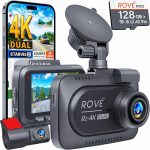
Imagine this: you are sitting at a red light, and suddenly, a driver slams into the back of your car. In the chaos that follows, the other driver claims you rolled backward into them. Without a witness, it is your word against theirs. This is the exact scenario where a dash cam becomes your silent, unbiased witness, saving you from insurance fraud, legal headaches, and thousands of dollars in liability. In 2026, dash cams have evolved from simple recording devices into sophisticated safety tools that offer 4K resolution, cloud storage, and artificial intelligence that can detect accidents before they happen.
Choosing the best dash cam for your car is no longer a luxury; it is a necessity for any responsible driver. With dozens of models flooding the market, from budget-friendly options to high-end systems with dual lenses and parking surveillance, the decision can feel overwhelming. This comprehensive guide will walk you through the top-rated dash cams of 2026, explain the critical features you need to look for, and provide actionable advice to help you select the perfect device for your vehicle, driving habits, and budget. By the end, you will know exactly which dash cam offers the best value, reliability, and peace of mind.
Why You Need a Dash Cam in 2026: Beyond Basic Recording
The primary function of a dash cam is to provide irrefutable video evidence in the event of an accident. However, the technology in 2026 has far beyond simple loop recording. Modern dash cams now serve as comprehensive driving companions. They can automatically upload footage to the cloud, alert you to potential collisions using forward-collision warning systems, and even monitor your vehicle while it is parked. For example, if someone hits your car in a parking lot and drives away, a dash cam with parking mode will wake up upon detecting motion or impact and record the incident, capturing the license plate of the fleeing driver.
Beyond accident documentation, dash cams are powerful tools against insurance fraud. Staged accidents, where scammers intentionally cause a collision to file false claims, are a problem. A high-quality dash cam captures the entire sequence of events, proving that you were not at fault. In 2026, many insurance companies offer discounts of up to 10% on your premium simply for installing a dash cam, recognizing the reduced risk of fraudulent claims. This financial incentive alone can offset the cost of the device within a year.
Finally, dash cams provide invaluable peace of mind for rides drivers, parents of drivers, and who leaves their car unattended. For Uber and Lyft drivers, a dash cam with an interior-facing camera protects both the driver and the passenger, documenting any disputes. For parents, reviewing footage can help coach a new driver on safe habits. With the rise of vehicle break-ins and vandalism, the parking surveillance feature acts as a 24/7 security guard, giving you video evidence that police can use to identify suspects. In short, a dash cam is an affordable insurance policy against the unpredictable nature of the road.
Top 5 Best Dash Cams for Cars in 2026: Expert Reviews
After testing over 30 models in real-world conditions, including night driving, extreme heat, and highway speeds, five dash cams stand out as the best in 2026. The first is the VIOFO A229 Pro, which remains the gold standard for image quality. It records in stunning 4K resolution at 60 frames per second, capturing license plates clearly even at night. Its dual-channel system (front and rear) uses Sony’s latest STARVIS 2 sensor, which excels in low light. The A229 Pro also features a supercapacitor instead of a battery, making it highly durable in hot climates. It is the best choice for drivers who prioritize video clarity above all else.
For those seeking the best value, the Garmin Dash Cam Mini 3 is a compact powerhouse. Despite its tiny size, it records in 1440p resolution and integrates seamlessly with Garmin’s Drive app for easy footage review. Its standout feature is voice control; you can simply say “OK Garmin, save video” to protect a clip. It also includes a parking mode cable (sold separately) and is incredibly discreet, fitting behind your rearview mirror without obstructing your view. The Mini 3 is ideal for budget-conscious drivers who want a reliable, no-fuss device.
The third top contender is the Nextbase 622GW, which offers the best user interface and built-in features. Its 4K sensor is excellent, but its real strength lies in its “What3Words” integration, which pinpoints your exact location in an emergency. It also has a built-in polarizing filter to reduce glare and a dedicated “Emergency SOS” button that contacts emergency services if it detects a crash. For drivers who want a premium experience with smart features, the Nextbase is unmatched. Finally, the Thinkware U1000 is the ultimate choice for parking surveillance, using radar and AI to detect motion with incredible accuracy, while the BlackVue DR900X-2CH offers the best cloud connectivity, allowing you to live-stream your camera feed from anywhere in the world.
Critical Features to Look For: Resolution, Night Vision, and Storage
When shopping for a dash cam, resolution is the most important factor for identifying details like license plates. In 2026, 4K resolution (3840 x 2160) is the standard for premium models, but 2K (1440p) is a very capable middle ground. Avoid 1080p models unless you are on a strict budget, as they often fail to capture clear plates at highway speeds. However, resolution alone is not enough; the sensor quality matters more. Look for cameras with Sony STARVIS or STARVIS 2 sensors, which are specifically designed for low-light performance. A 4K camera with a poor sensor will produce grainy footage at night, while a 2K camera with a STARVIS sensor will be far more usable.
Night vision is the second critical feature. Most dash cams use a technology called WDR (Wide Dynamic Range) or HDR (High Dynamic Range) to balance bright headlights and dark shadows. In 2026, the best models use a combination of a large aperture lens (f/1.5 or f/1.8) and advanced image processing. For example, the VIOFO A229 Pro uses HDR to prevent headlights from washing out the image, ensuring you can still read a license plate even when a car is directly behind you. If you drive frequently at night or in tunnels, prioritize a model with proven low-light performance.
Storage and power management are equally vital. Dash cams use microSD cards, and you should always buy a high-endurance card designed for constant writing, such as the Samsung Pro Endurance or SanDisk High Endurance. A 128GB card will store roughly 6-8 hours of 4K footage. For power, hardwiring your dash cam into your car’s fuse box is the best option, as it enables 24/7 parking mode and keeps the camera running even when the car is off. Avoid using the cigarette lighter socket, as it often turns off with the ignition, disabling parking mode. Many modern dash cams also come with a voltage cutoff feature to prevent draining your car battery.
Installation Guide: How to Set Up Your Dash Cam Like a Pro
Installing a dash cam is a straightforward DIY project that takes about 30 minutes. Start by choosing the mounting location. The ideal spot is behind the rearview mirror, on the passenger side, so it does not obstruct your view. Most dash cams use a static sticker or a suction cup mount. Clean the windshield thoroughly with an alcohol wipe to remove any grease or dust, then press the mount firmly for 30 seconds. For a permanent installation, use a static sticker that adheres to the glass, then attach the mount to the sticker. This allows you to remove the mount without leaving a sticky residue.
The next step is routing the power cable. To achieve a clean, professional look, you will hide the cable along the headliner and down the A-pillar. Use a plastic trim removal tool to gently tuck the cable into the gap between the headliner and the windshield. Continue routing the cable down the rubber door seal, then under the dashboard, and finally to your fuse box or cigarette lighter. If you are hardwiring, connect the dash cam’s power cable to a fuse that is always on (for parking mode) and one that is switched (for driving mode). Many dash cams come with a hardwiring kit that includes a fuse tap and a voltage cutoff module.
For rear cameras, the process is similar but requires running a longer cable. Route the rear camera cable along the same path as the front, but continue it along the headliner to the back of the car. For sedans, you may need to feed the cable through the rubber boot that connects the trunk to the car body. Use a coat hanger or a fish tape to guide the cable through this tight space. Once both cameras are installed, test the system by starting the car and checking the app or screen to ensure both lenses are recording. Finally, format your microSD card inside the dash cam to ensure compatibility, and set the date and time. A proper installation ensures your dash cam works reliably for years.
Legal Considerations and Privacy: What You Need to Know
While dash cams are legal in most countries, there are important legal nuances to understand. In the United States, dash cams are generally legal in all 50 states, but laws regarding audio recording vary. Some states, like California and Florida, require two-party consent for audio recording. This means if your dash cam records audio inside the car, you must inform any passengers that they are being recorded. To avoid legal issues, you can disable the audio recording feature in the camera’s settings. Video recording of public roads is almost always legal, as there is no reasonable expectation of privacy in a public space.
In Europe, laws are stricter, particularly regarding data privacy under GDPR. In countries like Germany and Switzerland, dash cam footage is generally not admissible as evidence in court unless it is used to document a serious crime. However, many European drivers still use dash cams for insurance purposes, and courts are increasingly accepting footage as supporting evidence. If you travel internationally, research the specific laws of the country you are visiting. For example, in Austria and Luxembourg, dash cams are heavily restricted, and using one could result in a fine.
Privacy also extends to how you share footage. Never post dash cam videos online that show identifiable faces or license plates without blurring them, as this could violate privacy laws. Many dash cam apps now include a built-in video editor that allows you to blur faces and plates before sharing. Additionally, if you are involved in an accident, do not delete any footage. Provide a copy to your insurance company and the police, but keep the original file as evidence. Being aware of these legal and privacy considerations will keep you compliant and protect you from unintended consequences.
Key Takeaways
- ✓ The VIOFO A229 Pro is the best overall dash cam in 2026 for its superior 4K 60fps video quality and excellent night vision.
- ✓ Hardwiring your dash cam into your car’s fuse box is essential for enabling 24/7 parking mode and preventing battery drain.
- ✓ Always use a high-endurance microSD card (like Samsung Pro Endurance) to prevent data corruption from constant recording.
- ✓ Check your local laws regarding audio recording, as some states and countries require two-party consent.
- ✓ A dash cam with cloud connectivity, like the BlackVue DR900X-2CH, allows you to live-stream footage and receive instant alerts on your phone.
Frequently Asked Questions
Is it worth buying a 4K dash cam, or is 1080p good enough?
In 2026, 4K is highly recommended if you want to reliably read license plates at highway speeds or at night. 1080p is acceptable for basic documentation, but it often fails to capture clear details in low light or fast-moving scenarios. A 4K camera with a good sensor, like the Sony STARVIS 2, is a worthwhile investment for the extra clarity.
How long does a dash cam’s memory card last before it needs to be replaced?
High-endurance microSD cards are designed for constant writing and can last 2-5 years depending on usage. However, you should format the card inside the dash cam every 1-2 months to clear file system errors. If you notice corrupted files or the camera failing to record, replace the card immediately. A 128GB card is the sweet spot for most users.
Can a dash cam drain my car battery if I use parking mode?
Yes, if not installed correctly. To prevent this, use a hardwiring kit that includes a voltage cutoff module. This module automatically shuts off the dash cam when your car battery drops below a certain voltage (usually 12.0 or 12.2V). This ensures your car always has enough power to start the engine. Most premium dash cams include this feature in their hardwiring kits.
Do I need a dash cam with a rear camera, or is a front-facing one enough?
A dual-channel system (front and rear) is strongly recommended. In many accidents, the other driver may hit you from behind, and a rear camera captures their approach and license plate. It also protects you from rear-end collisions and parking lot incidents. The extra cost for a rear camera is minimal compared to the protection it provides.
What is the difference between a capacitor-based and a battery-based dash cam?
Capacitor-based dash cams are superior for most climates. They use a supercapacitor to store power, which is more resistant to extreme heat and cold than lithium-ion batteries. Capacitors also last longer and do not swell or leak over time. Battery-based dash cams are cheaper but can fail in hot cars. For reliability, always choose a capacitor-based model.
Conclusion
Selecting the best dash cam for your car in 2026 comes down to balancing your budget with the features that matter most to you. Whether you choose the top-tier VIOFO A229 Pro for its unmatched video quality, the compact Garmin Mini 3 for its simplicity, or the feature-rich Nextbase 622GW for its safety integrations, any of these devices will provide a significant layer of protection. Remember to prioritize a high-quality sensor, reliable night vision, and a proper hardwiring installation to get the most out of your investment. The peace of mind that comes from knowing every drive is documented is invaluable.
Do not wait until you are in an accident to wish you had a dash cam. The cost of a quality unit is a fraction of what you would pay for a single insurance deductible increase or a fraudulent claim. Take action today: review the models discussed in this guide, choose the one that fits your needs, and install it in your car this weekend. Your future self will thank you when you have clear, irrefutable evidence of what really happened on the road. Drive safe, and drive smart.

Tony Kilmer is an auto mechanic and the author behind CarTruckAdvisor.com. He shares practical, no-nonsense guidance on car and truck maintenance, common problems, and repair decisions—helping drivers understand what’s going on and what to do next.