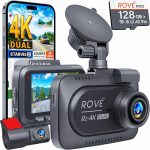
You have just unboxed your new dash cam, and the excitement is palpable. But as you hold the device up to your windshield, a wave of uncertainty hits: where exactly should you put this thing? It is a question that plagues countless drivers, and the answer is far more nuanced than simply sticking it in the middle of the glass. A poorly placed dash cam can obstruct your view, fail to capture critical evidence, or even become a dangerous projectile in a collision.
In 2026, dash cams are more sophisticated than ever, featuring 4K resolution, wide-angle lenses, and advanced parking modes. However, their effectiveness hinges entirely on proper placement. This guide will walk you through the optimal positions for front, rear, and interior cameras, covering legal requirements, field-of-view considerations, and installation best practices. By the end, you will know exactly how to mount your device for maximum protection and minimal distraction.
Key Takeaways
- ✓ Mount the front dash cam behind the rearview mirror on the passenger side for the best field of view and minimal obstruction.
- ✓ For rear cameras, the top center of the rear windshield is ideal; consider an external mount for heavily tinted windows.
- ✓ Interior cameras should be placed high on the windshield behind the steering wheel, with clear privacy notices for passengers.
- ✓ Always check local laws regarding windshield obstructions and avoid mounting near ADAS sensors or airbag deployment zones.
- ✓ Use adhesive mounts over suction cups for safety, route cables professionally, and format your memory card monthly to prevent data loss.
Frequently Asked Questions
Can I mount my dash cam on the dashboard instead of the windshield?
Yes, but it is not recommended for most vehicles. Dashboard mounting often results in a lower angle that captures more hood and less road, and the camera may overheat in direct sunlight. It also increases the risk of the camera becoming a projectile in a crash. If you must use the dashboard, choose a model with a sticky gel pad and ensure it does not block your view of the road or any airbag vents.
Will a dash cam interfere with my car’s rain sensor or automatic wipers?
It can if placed directly over the sensor. Rain sensors are typically located in a small black housing near the rearview mirror. If you mount the dash cam directly on top of this housing, it may block the sensor’s view of the windshield, causing erratic wiper behavior. Mount the camera slightly to the side of the sensor housing, or check your owner’s manual for the exact sensor location.
How do I hide the power cable for a clean installation?
The most common method is to tuck the cable along the headliner using a plastic trim tool. From there, route it down the A-pillar (avoiding airbags), under the rubber door seal, and under the dashboard to your power source. For a completely invisible install, use a hardwire kit that connects to your fuse box. Many auto parts stores sell cable clips that stick to the trim for a tidy look.
Is it legal to record audio inside my car with a dash cam?
It depends on your location. In many U.S. states, you need only one-party consent (your own) to record audio. However, in “all-party consent” states like California Florida, and Pennsylvania, you must inform all passengers that audio is being recorded. In Europe, GDPR regulations often require explicit consent. Always check local laws and consider disabling audio recording if you are unsure.
What is the best placement for a dash cam in a large SUV or truck?
In larger vehicles, the windshield is farther from the driver, so the standard behind-the-mirror placement still works well. However, you may need to use a longer power cable. For trucks with a vertical windshield, mount the camera as high as possible to capture the most road. For SUVs with a large rear window, a rear camera mounted on the top edge works perfectly. Consider a camera with a remote lens for the rear if the window is heavily tinted.
Conclusion
Choosing where to put a dash cam is a decision that directly impacts the quality of your footage, your safety, and your legal compliance. By mounting the front camera behind the rearview mirror, the rear camera at the top of the back window, and interior cameras with privacy in mind, you set yourself up for success. Remember to avoid common pitfalls like blocking ADAS sensors, using weak suction cups, or neglecting cable management.
In 2026, dash cams are more affordable and capable than ever, but their value is only realized when they are installed correctly. Take the time to test your placement, secure your cables, and understand your local laws. Your dash cam is your silent witness on the road; give it the best seat in the house. Now, go mount that camera with confidence and drive knowing you are protected from every angle.

Tony Kilmer is an auto mechanic and the author behind CarTruckAdvisor.com. He shares practical, no-nonsense guidance on car and truck maintenance, common problems, and repair decisions—helping drivers understand what’s going on and what to do next.