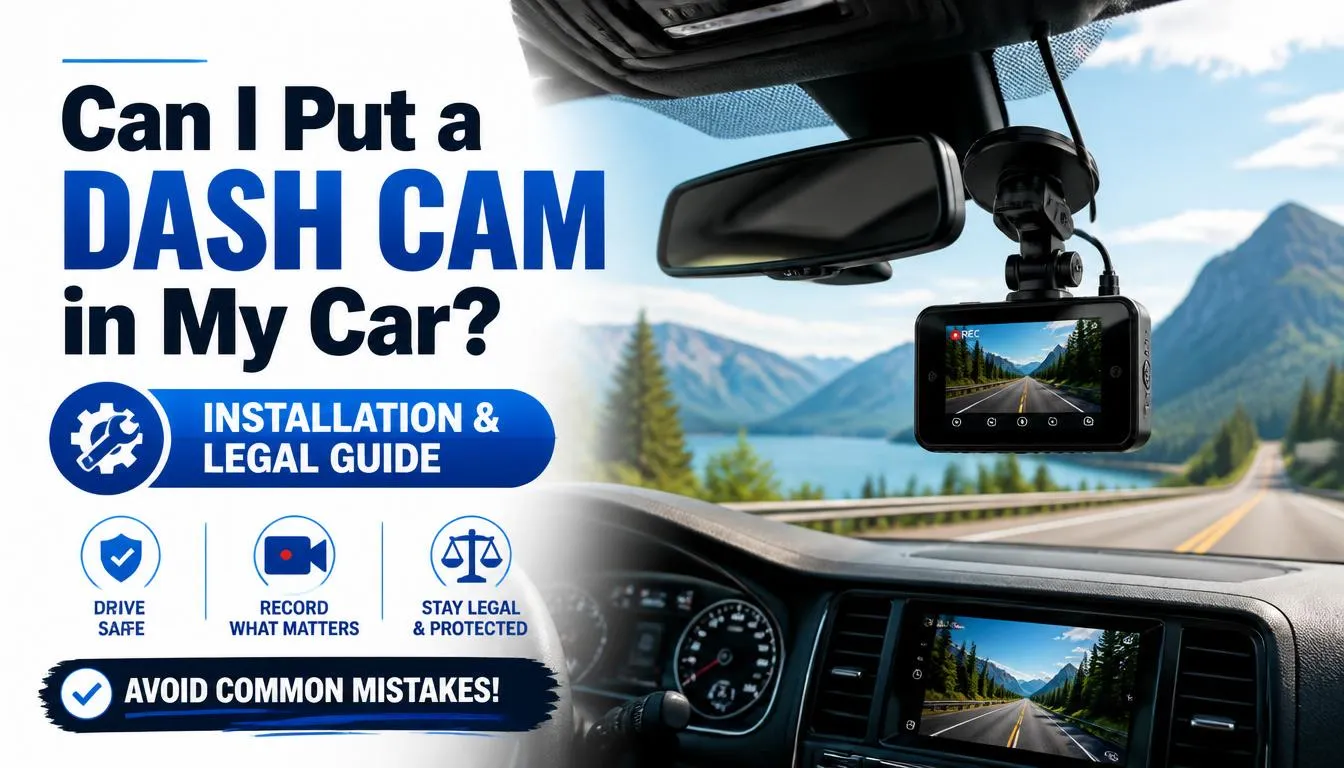
Installing a dash cam in your car is one of the easiest ways to protect yourself on the road, record unexpected incidents, and provide valuable evidence after an accident. But before buying or installing one, many drivers ask, “Can I put a dash cam in my car?” The answer is yes, in most cases. Dash cams are legal and widely used in countries like the USA, UK, Canada, and Australia. However, the rules about where you place the camera, what you record, and how you use the footage can vary depending on your location.
A properly installed dash camera can help you document accidents, protect against false claims, monitor your vehicle while parked, and provide peace of mind during daily driving. The key is making sure your dash cam installation follows local laws, does not block your view, and is set up correctly for reliable recording.
In this guide, we will explain everything you need to know before installing a dash cam in your car, including legal requirements, installation locations, power options, insurance benefits, privacy rules, and common mistakes to avoid.
Can I Legally Put a Dash Cam in My Car?
Yes, you can usually install a dash cam in your car. Dash cameras are legal in many countries because they are considered personal recording devices that help drivers capture road events. However, legality depends on factors such as camera placement, audio recording, privacy regulations, and local transportation laws.
The most important rule is that your dash cam should not create a dangerous obstruction. If the camera blocks your view of the road or affects safe driving, you may receive a fine or be required to remove it.
Before installing a dash camera, check your local regulations and make sure the placement follows your area’s vehicle safety rules.
Dash Cam Laws in the USA
In the United States, dash cams are legal in most states. Millions of drivers use them for accident documentation, insurance claims, and protection against fraudulent claims.
However, dash cam laws can vary from state to state. Some important factors include:
- Windshield obstruction laws: Some states have restrictions about placing objects on the windshield that may reduce visibility.
- Audio recording laws: Certain states require consent before recording conversations because audio privacy laws can be stricter than video recording rules.
- Mounting location requirements: Some states allow windshield mounting while others may require alternative placements.
The safest option is to install your dash cam behind the rearview mirror or in another location where it does not interfere with your driving view.
Dash Cam Rules in the UK
Dash cams are legal and very common in the United Kingdom. Many UK drivers use dash camera footage as evidence for insurance claims and road incidents.
However, drivers should follow a few important rules:
- The camera must not obstruct your view of the road.
- You should avoid placing the device where it creates a blind spot.
- Audio recording should be used carefully because privacy regulations may apply.
- If sharing footage publicly, avoid exposing personal information such as faces, license plates, or private conversations.
The UK also has strong data protection regulations, so responsible use of dash cam footage is important.
Dash Cam Regulations in Canada
Dash cams are generally allowed in Canada, but rules can differ between provinces. Canadian drivers commonly use dash cameras to record accidents, protect themselves from insurance disputes, and capture road incidents.
When installing a dash cam in Canada, consider:
- Keeping the camera outside your direct line of sight.
- Understanding provincial windshield obstruction rules.
- Using footage responsibly when sharing with others.
- Being aware of privacy concerns when recording people or private property.
A properly mounted dash cam can be a valuable tool for Canadian drivers without creating legal problems.
Dash Cam Laws in Australia
Dash cams are widely used in Australia and are generally legal. Many Australian motorists install them for accident evidence, security, and insurance purposes.
However, drivers should pay attention to:
- Where the camera is mounted.
- Whether it affects visibility.
- Local state and territory regulations.
- Rules regarding audio recording and privacy.
The safest approach is placing your dash camera in a position that gives a clear road view without distracting the driver.
Where Should I Install a Dash Cam in My Car?
Choosing the correct location is one of the most important parts of dash cam installation. A poorly placed camera may reduce visibility, capture poor footage, or violate local regulations.
The best location for most vehicles is:
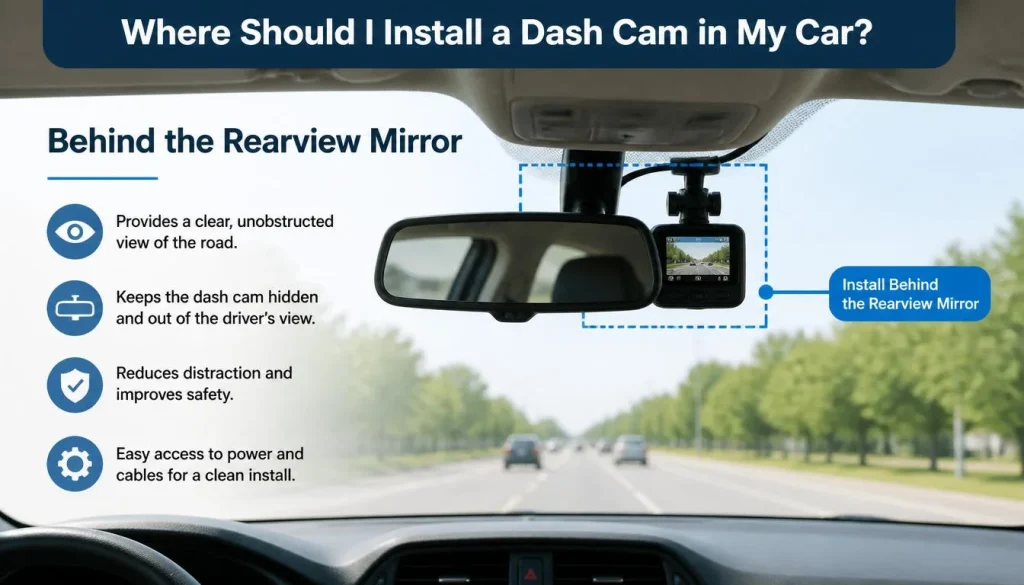
Behind the Rearview Mirror
Mounting the dash cam behind the rearview mirror is usually the preferred option because:
- It provides a wide view of the road.
- It keeps the camera out of your direct sight.
- It looks cleaner and more professional.
- It reduces driver distraction.
This location allows the camera to record important details while keeping your windshield area clear.
Upper Center Area of the Windshield
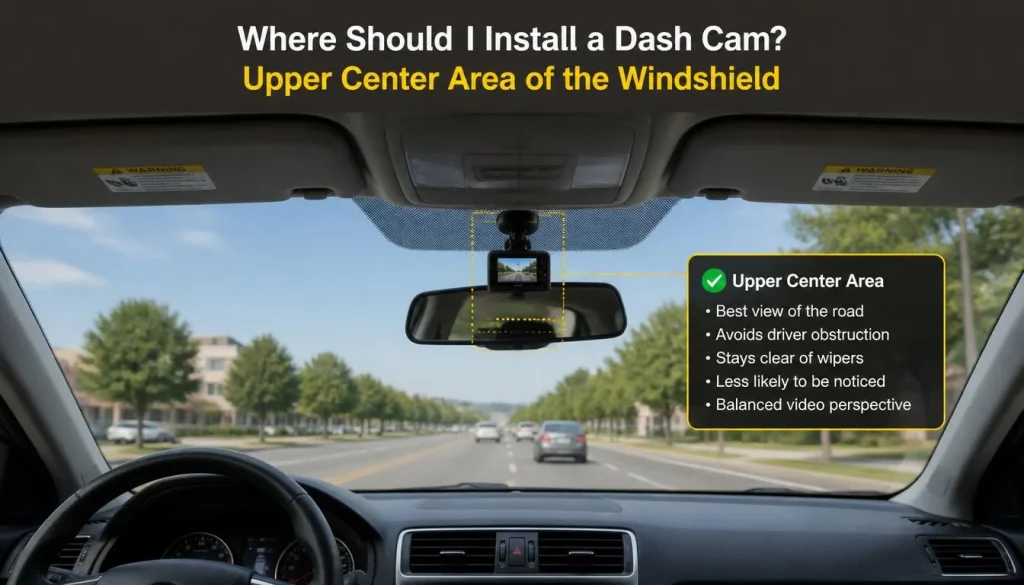
Another common placement is the upper center section of the windshield.
This position helps capture:
- Traffic movement
- Road signs
- License plates
- Lane activity
- Accident details
Make sure the camera is not positioned where it blocks your normal driving vision.
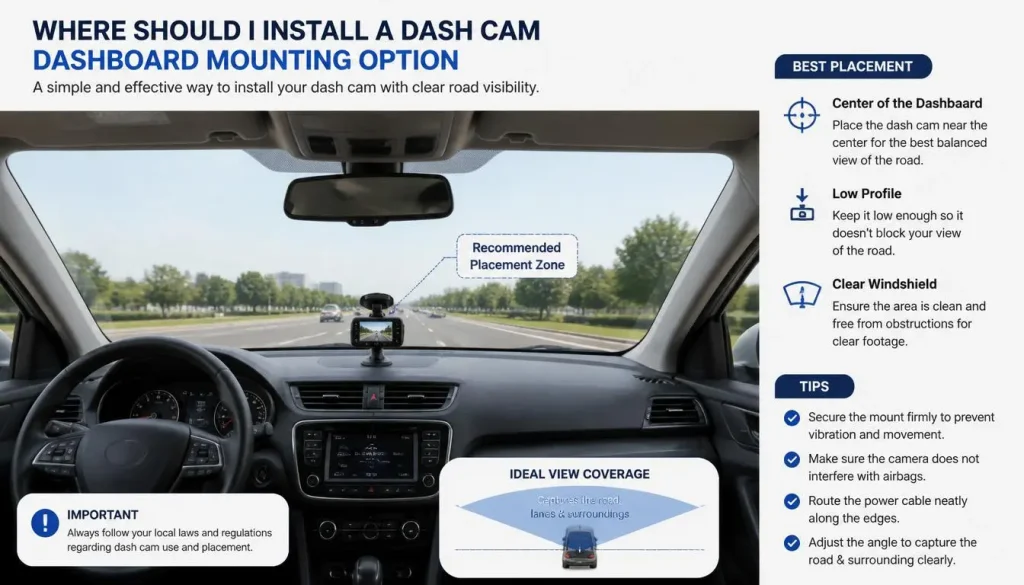
Dashboard Mounting Option
Some drivers prefer mounting the dash cam on the dashboard instead of the windshield.
Dashboard placement can work well for certain vehicles, but it may have disadvantages:
- The viewing angle may be lower.
- The dashboard may appear in the recording.
- The camera may be more visible from outside.
Before choosing this option, test the camera angle to ensure it captures a clear view of the road.
Can a Dash Cam Be Mounted on the Windshield?
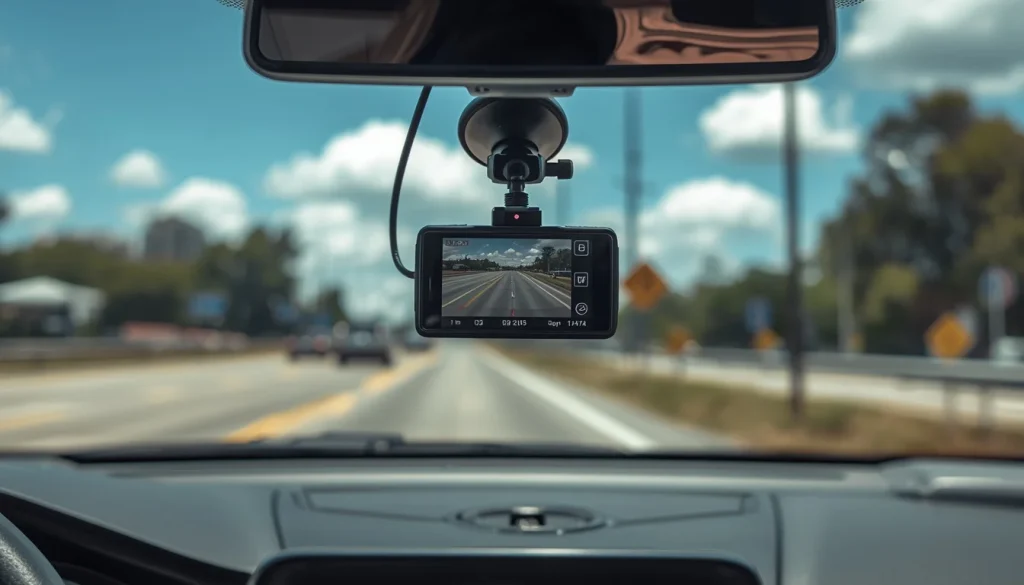
Yes, a dash cam can often be mounted on the windshield, but placement matters. The camera should provide a clear recording area without blocking the driver’s view.
A good windshield installation should:
- Keep the camera away from your direct line of sight.
- Avoid covering important windshield areas.
- Use a secure adhesive mount.
- Keep cables properly hidden.
Many drivers choose windshield mounting because it provides the best viewing angle and easier installation.
Dash Cam Windshield Placement Rules by Country
| Country | Windshield Mounting | Important Consideration |
|---|---|---|
| USA | Usually allowed | Avoid blocking driver visibility |
| UK | Allowed | Must maintain clear road view |
| Canada | Generally allowed | Follow provincial rules |
| Australia | Allowed | Avoid unsafe placement |
The goal is not only legal compliance but also safe driving. A dash cam should improve protection without becoming a distraction.
Can I Install a Dash Cam Myself?
Yes, most drivers can install a dash cam themselves. Many modern dash cameras are designed for simple DIY installation and only require basic setup.
A standard installation usually involves:
- Choosing the correct mounting location.
- Cleaning the windshield area.
- Attaching the camera mount.
- Connecting the power cable.
- Adjusting the camera angle.
- Testing the recording quality.
A plug-and-play dash cam can often be installed within 15 to 30 minutes.
However, professional installation may be better if you want:
- A hidden cable setup.
- Permanent wiring.
- Parking mode functionality.
- A cleaner factory-style appearance.
How Do Dash Cameras Get Power in a Car?
A dash cam needs a reliable power source to record continuously while you are driving. Most dash cameras are designed with simple power options, making installation easier for everyday drivers.
The most common power methods include:
Using the 12V Car Socket
Many dash cams come with a power cable that connects directly to your vehicle’s 12V socket (cigarette lighter port).
Benefits include:
- Easy installation
- No permanent changes to your vehicle
- Simple removal when needed
- Suitable for most drivers
The downside is that the cable may remain visible unless you carefully hide it around the windshield trim.
Using a USB Power Connection
Some newer vehicles include USB ports that can power a dash camera.
This option provides:
- Cleaner installation
- Easy connection
- Less cable clutter
However, some USB ports only provide power when the vehicle is running, meaning your dash cam may stop recording after you turn off the engine.
Hardwire Dash Cam Installation
A hardwire kit connects your dash cam directly to your vehicle’s electrical system.
This method is popular because it provides:
- Hidden wiring
- Automatic power management
- Parking mode support
- A professional appearance
A hardwire installation is often recommended for drivers who want their dash cam to monitor their vehicle even when parked.
Can a Dash Cam Record When My Car Is Turned Off?
Yes, many dash cams can record when your car is turned off if they support parking mode.
Parking mode allows your camera to monitor your vehicle when it is unattended. This feature can be useful for:
- Hit-and-run incidents
- Parking lot accidents
- Vehicle vandalism
- Suspicious activity near your car
However, parking mode requires a proper power solution. If your dash cam is connected incorrectly, it may drain your car battery.
Common power options for parking mode include:
- Hardwire kits with low-voltage protection
- External dash cam batteries
- Smart power adapters
A quality installation ensures your dash cam protects your vehicle without creating battery problems.
Will Installing a Dash Cam Damage My Car?
A properly installed dash cam will not damage your vehicle. Modern dash cameras are designed to work safely with most cars, trucks, and SUVs.
However, problems can occur if installation is done incorrectly.
Potential issues include:
- Poorly hidden cables creating distractions
- Incorrect electrical connections
- Battery drainage from improper parking mode setup
- Damage caused by removing adhesive mounts incorrectly
To avoid these issues:
- Follow the manufacturer’s installation instructions.
- Use the correct power accessories.
- Avoid interfering with airbags or vehicle safety systems.
- Keep cables securely organized.
A professional installation can also reduce risks, especially for hardwired dash cameras.
What Type of Dash Cam Should I Install in My Car?
Choosing the right dash cam depends on your driving needs, budget, and the level of protection you want.
Front Dash Cam
A front-facing dash cam records the road ahead and is the most common type.
It is useful for:
- Recording accidents
- Capturing traffic incidents
- Supporting insurance claims
This option is suitable for drivers who want basic protection.
Front and Rear Dash Cam
A dual-channel dash cam records both the front and rear of your vehicle.
Advantages include:
- Protection from rear-end collisions
- More complete accident evidence
- Better coverage around your vehicle
This option is popular among commuters, rideshare drivers, and people who spend a lot of time on the road.
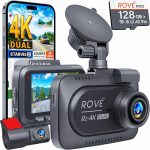
4K Dash Cam
A 4K dash camera provides higher image quality and more detailed recordings.
Benefits include:
- Clearer license plate visibility
- Better night recording
- Improved accident evidence
Higher-resolution cameras usually require larger memory cards and more storage capacity.
How Does Dash Cam Storage and Recording Work?
Dash cameras continuously record video and save footage to a memory card, usually a microSD card.
Most dash cams use loop recording, which means:
- New footage automatically replaces old footage when storage is full.
- Important videos can be locked and protected.
- Recording continues without manual deletion.
The amount of footage stored depends on:
- Camera resolution
- Memory card size
- Recording settings
- Parking mode usage
For reliable performance, use a high-quality memory card designed for continuous video recording.
Does a Dash Cam Affect Car Insurance?
A dash cam can be extremely helpful during insurance claims because it provides real video evidence of what happened.
Benefits may include:
- Faster accident investigations
- Protection against false claims
- Clear proof of fault
- Easier communication with insurance companies
In some regions, insurers may offer discounts for drivers who install safety devices, although this depends on the insurance provider and location.
A dash cam does not automatically reduce insurance costs, but it can help protect your financial interests after an accident.
Can Police Use Dash Cam Footage?
Yes, dash cam footage can often be used as evidence by police, insurance companies, and legal professionals.
Dash cam videos may help with:
- Accident investigations
- Traffic incidents
- Hit-and-run cases
- Disputes about who was responsible
However, the acceptance of dash cam footage depends on factors such as:
- Video quality
- Whether the footage has been edited
- Local laws
- How the footage was obtained
Keeping original recordings and avoiding unnecessary editing can improve the credibility of your footage.
Dash Cam Privacy and Recording Laws
While dash cams are useful safety tools, drivers should understand privacy responsibilities.
Important considerations include:
Recording Audio
Video recording rules are usually simpler than audio recording laws. Some locations have stricter rules about recording conversations without consent.
If your dash cam includes audio recording, check local regulations before using this feature.
Sharing Dash Cam Videos Online
Before uploading dash cam footage publicly:
- Protect private information.
- Avoid exposing personal details.
- Consider blurring faces and license plates.
- Respect privacy laws.
Responsible use helps prevent legal problems.
Common Dash Cam Installation Mistakes to Avoid
Many dash cam problems happen because of incorrect installation or setup.
Avoid these common mistakes:
Installing the Camera Too Low
A low camera position can reduce visibility and capture too much dashboard area.
Blocking Your View
Never place the dash cam where it interferes with safe driving.
Poor Cable Management
Loose cables can become distracting and may create safety issues.
Using the Wrong Memory Card
Cheap memory cards may fail because dash cams constantly record video.
Ignoring Camera Angle
A poorly adjusted camera may miss important details during an accident.
Forgetting to Test the Camera
Always check:
- Video quality
- Recording angle
- Night performance
- Audio settings
- Parking mode functionality
Frequently Asked Questions About Can I Put a Dash Cam in My Car
Is it legal to have a dash cam in my car?
Yes, dash cams are legal in many countries, including the USA, UK, Canada, and Australia. However, drivers must follow local rules about placement, visibility, and privacy.
Where is the best place to put a dash cam?
The best location is usually behind the rearview mirror or near the upper center of the windshield where it provides a clear road view without blocking your vision.
Can I install a dash cam myself?
Yes, most dash cams can be installed by drivers using basic tools. Professional installation is recommended for hidden wiring and hardwire setups.
Can a dash cam record while my car is parked?
Yes, if the dash cam supports parking mode and has an appropriate power source such as a hardwire kit or external battery.
Does a dash cam lower insurance costs?
Some insurance companies may offer benefits for safety devices, but discounts vary by provider and location. The biggest benefit is having video evidence during claims.
Can I put a dash cam in a leased or rental car?
In most cases, you can use a temporary dash cam installation in a leased or rental vehicle. However, avoid permanent modifications unless you have permission from the vehicle owner or leasing company.
Final Thoughts: Should You Put a Dash Cam in Your Car?
Yes, installing a dash cam in your car can be a smart decision for protecting yourself, your vehicle, and your finances. A dash camera provides valuable evidence during accidents, helps prevent false claims, and can give you peace of mind every time you drive.
The most important steps are choosing the right dash cam, installing it correctly, placing it where it does not block your view, and following local recording laws.
Whether you drive in the USA, UK, Canada, Australia, or anywhere else, a properly installed dash cam can become one of the most useful safety tools in your vehicle.
-
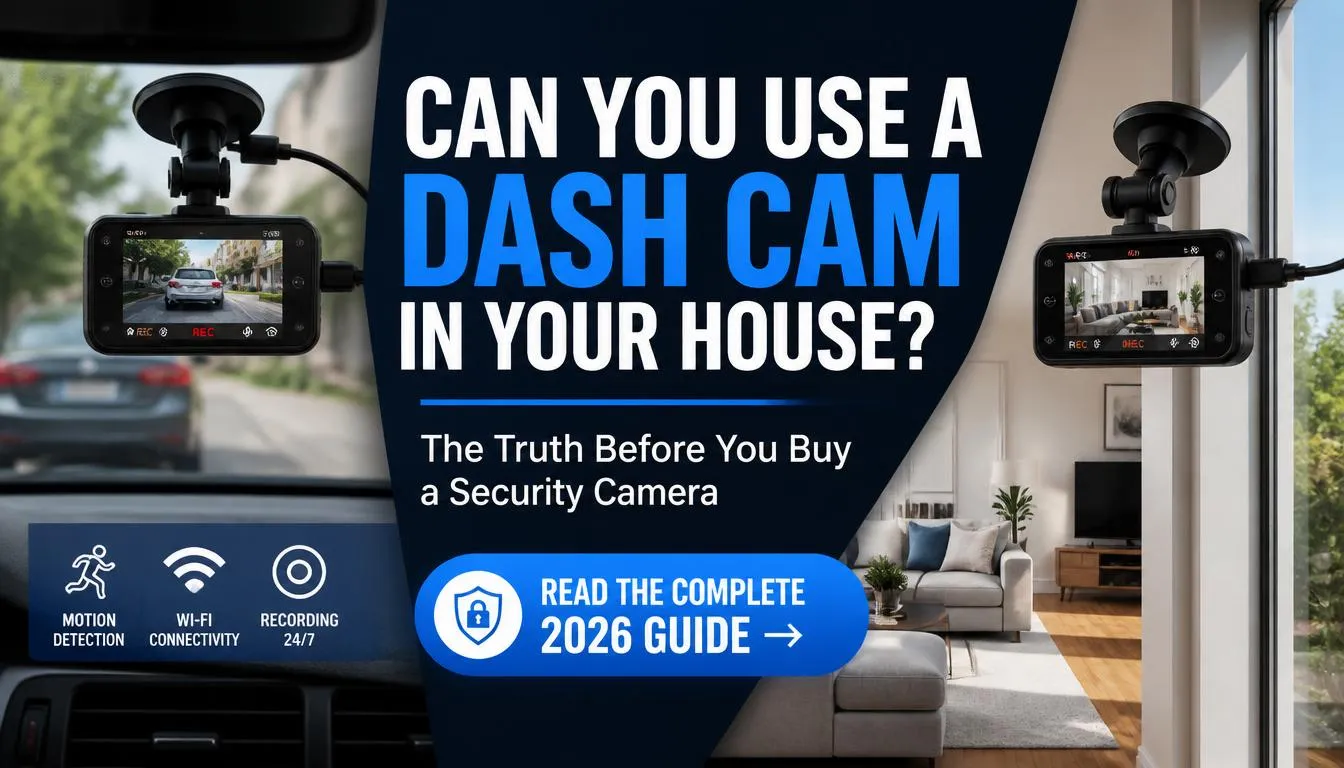
Can I Use a Dash Cam in My House? Complete Guide (2026)
Yes, you can use a dash cam in your house, and it can be a practical solution for temporary indoor monitoring, pet surveillance, or keeping an eye on deliveries. However, while a dash cam can work as a basic indoor security camera, it has limitations compared to a dedicated home security system, especially for 24/7…
-

Can I Use a Dash Cam as a Webcam? Complete Guide (2026)
Yes, you can use a dash cam as a webcam, but it depends on the model and its video output capabilities. Some dash cams support webcam mode natively, while others require a USB video connection, an HDMI capture card, or streaming software to work with your computer. If you’re wondering whether you can save money…
-
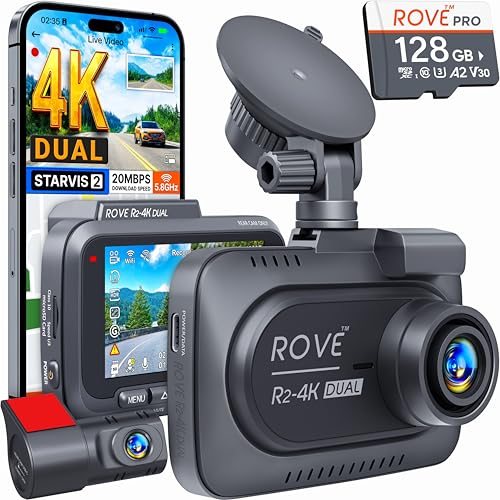
Best Dash Cams 2026: Crystal-Clear Protection for Every Drive
A dash cam is no longer a luxury add-on; it’s an essential piece of safety gear for any driver. From capturing unexpected road incidents to providing crucial evidence in an accident, a reliable dash cam offers peace of mind that’s hard to put a price on. After spending weeks testing the latest models on everything…

Tony Kilmer is an auto mechanic and the author behind CarTruckAdvisor.com. He shares practical, no-nonsense guidance on car and truck maintenance, common problems, and repair decisions—helping drivers understand what’s going on and what to do next.